About this place
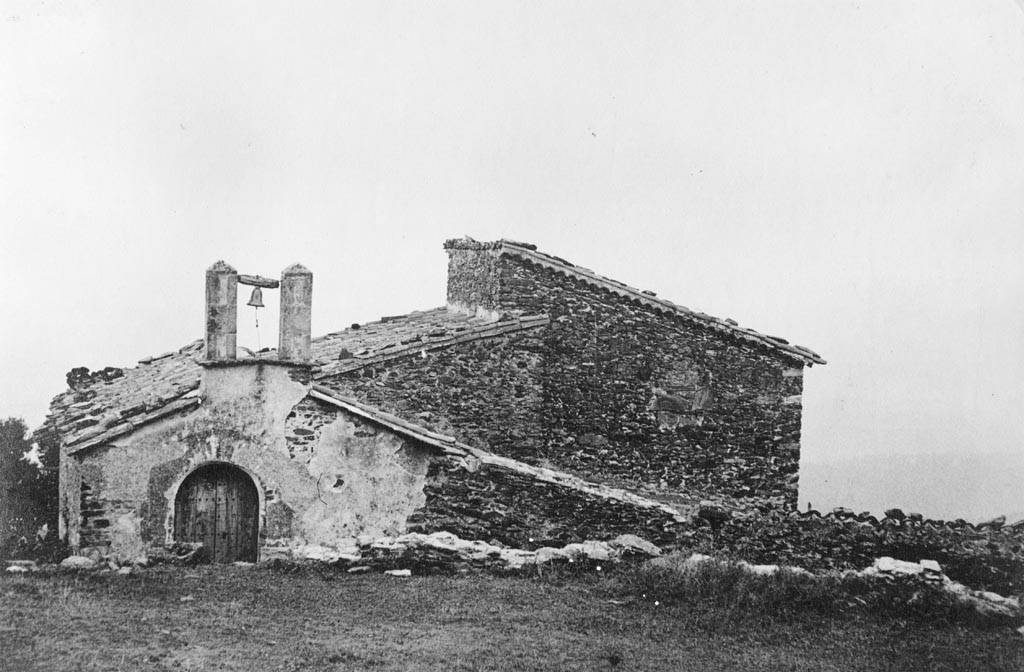
Sant Martí de Riells is a Romanesque parish church standing in the northern part of Riells i Viabrea, in the Selva county of Girona province, Catalonia. Sitting at roughly 510 metres above sea level, the church occupies a valley shaped between the Morou hill and the Fogueres plain, right below the hill that carries Montsoriu Castle, with the Riells stream running through the landscape. It's a quiet corner for anyone tracing Catalonia's Romanesque heritage away from the busier routes.
How do you get to Sant Martí de Riells?
The church sits off the main tourist circuits, tucked among the hills of the Gironès area and the woodlands of the Selva. The easiest approach is by car from the centre of Riells i Viabrea, heading north into the hills through farmland and pasture typical of this stretch of Catalonia. Since Montsoriu Castle — one of the region's most significant medieval fortresses — rises on the adjacent hill, most visitors combine the two stops, adding a short walk along the Riells stream to round out the trip.
What's the history behind the church?
The earliest written record of Sant Martí de Riells dates to 878, when the French king Louis the Bald granted the Bishop of Barcelona rights of possession over the area — placing the church's origins firmly in the early medieval period, before Catalonia's counties had fully taken shape. A turning point came in 1038, with the founding of Breda Monastery: from that year, the church fell under the monastery's direct jurisdiction, a common arrangement for local churches attached to monastic houses at the time. The administrative picture only changed again in 1957, when the parish moved from the Diocese of Barcelona to the Diocese of Girona, part of a broader reorganisation of ecclesiastical boundaries in the region during the 20th century.
What will you actually see there?
The building standing today dates largely from the 12th century, though it has been reworked more than once over the centuries. The single element that survives intact from the original Romanesque church is the entrance portal, built with a plain cylindrical archivolt resting on two columns. The capitals crowning those columns are carved with floral motifs, typical of Catalan Romanesque stonework of the period. Notably, this portal wasn't always in its current spot — it was reinstalled during a renovation of the building in the 1940s, when the rest of the structure took on a more modern appearance. Today the church continues to serve as the parish church of Riells i Viabrea and is listed in Catalonia's inventory of architectural heritage.
When is the best time to visit?
Given its setting in a mountain valley, spring and autumn are the most comfortable seasons, with mild temperatures and the greenery typical of Catalonia's interior hills. In summer, an early visit is worth planning, since the inland parts of Girona province can get considerably hot by midday. The surrounding terrain also lends itself to longer walking routes linking the church with Montsoriu Castle and the trails through the Selva hills.
Frequently asked questions
Is Sant Martí de Riells still an active church? Yes — it functions today as the parish church of Riells i Viabrea, with regular services held on site.
What remains from the original Romanesque building? Only the stone entrance portal survives from the 12th-century structure, with its archivolt and carved capitals; the rest of the building reflects later rebuilding, mainly from the 1940s renovation.
How was the church connected to Breda Monastery? From 1038, following the monastery's founding, Sant Martí de Riells came under its direct ecclesiastical jurisdiction — a typical arrangement for local churches of that era.
Is it worth combining the visit with other nearby sights? Definitely — Montsoriu Castle sits on the neighbouring hill as one of the region's key medieval fortresses, and the area is well suited to walks along the Riells stream and through the Selva hills.
Nearby places

Earn badges for the places you visit
Download NextOnTrip, discover new places and check off your trails.