About this place
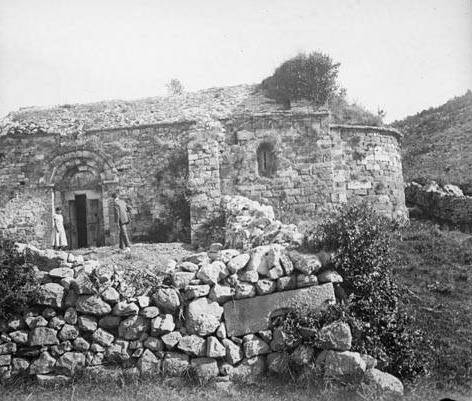
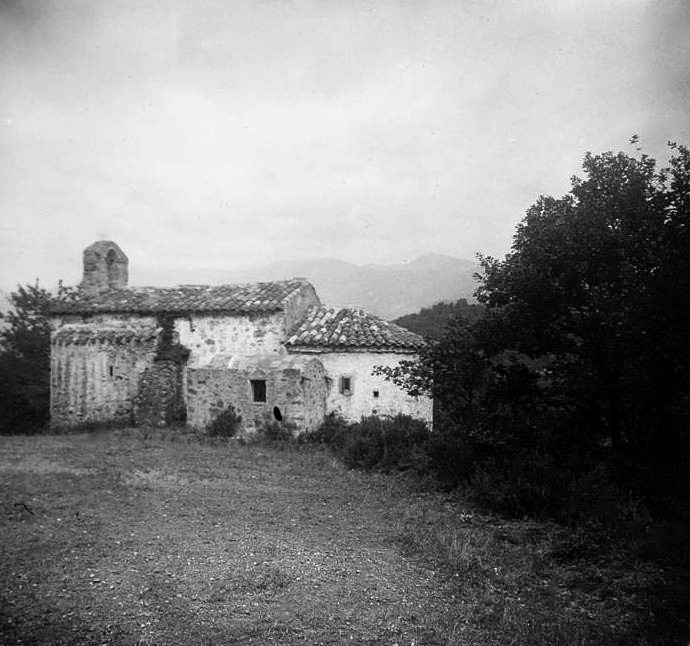
Sant Corneli de Ribelles is a ruined Romanesque chapel in the municipality of Albanyà, in the Alt Empordà comarca of Girona province, Catalonia. Roofless and no longer used for worship, it still preserves enough of its original layout to reward visitors interested in Romanesque architecture and hikers exploring the Alta Garrotxa massif.
Where is it?
The ruins stand in a remote part of Albanyà, in what was once the district of Ribelles, close to a spring known as Font de Sant Corneli, surrounded by meadows at roughly 737 metres above sea level. The site lies within the protected Alta Garrotxa area, a border range separating Girona from the French Vallespir. The nearest roads only reach villages within the municipality — getting to the chapel itself means walking a mountain trail, so this is a destination for a hike rather than a roadside stop.
What will you see?
The chapel follows a single-nave plan, originally covered by a pointed barrel vault. The north and south walls, the triumphal arch, and the apse on the eastern side — rectangular, with a central window — are still standing. The entrance is thought to have been on the west side. Without a roof and worn by weather, the building is now a stable ruin, though its layout remains clear enough to picture the original church. That legibility of plan, despite the missing vault and most of the interior walls, is what draws visitors interested in the region's early medieval religious architecture.
History
The earliest known record of Sant Corneli dates to 1278, when the church appears as "Sancti Corneli de Ribellis" in a deed recording the sale of a farmhouse standing next to it. Bernat Hug de Serrallonga sold the property to Raimond, abbot of the monastery of Santa Maria de Besalú. The chapel was subordinate to the nearby parish of Sant Julià de Ribelles, which by the early 18th century had itself been absorbed into the parish of Sant Llorenç d'Oix — effectively ending independent religious life in this corner of the municipality. The building is also known as Sant Corneli de la Muga, after the Muga river, which rises nearby in this part of the Alta Garrotxa and distinguishes it from other chapels dedicated to the same saint.
When to visit
Given the altitude and terrain — open meadows, mountain paths, no visitor infrastructure of any kind — late spring and summer are the most comfortable seasons for a visit, while early autumn offers cooler walking conditions with fewer people on the trails. Winter access can be difficult, as is typical for the higher reaches of the Alta Garrotxa.
Frequently asked questions
What is Sant Corneli de Ribelles? A ruined Romanesque chapel in the municipality of Albanyà, listed in Catalonia's inventory of architectural heritage.
Can the original architecture still be seen? Yes — the side walls, triumphal arch, and apse survive, making it possible to trace the chapel's original single-nave design.
Where does the name Sant Corneli de la Muga come from? From the nearby Muga river, which rises in the area, distinguishing this chapel from others dedicated to the same saint.
How do you get to the ruins? The nearest roads end in villages within Albanyà; reaching the chapel itself requires walking a mountain trail through the meadows of the Alta Garrotxa.
Nearby places

Earn badges for the places you visit
Download NextOnTrip, discover new places and check off your trails.