About this place
San Julián de los Prados, popularly known as Santullano, is a Pre-Romanesque church in Oviedo/Uviéu, the capital of Asturias in northern Spain. Considered one of the finest achievements of Asturian art, it has been part of the UNESCO World Heritage Site "Monuments of Oviedo and the Kingdom of Asturias" since 1998.
When was the church built, and by whom?
The church dates to the early 9th century and was commissioned by King Alfonso II the Chaste, ruler of the Kingdom of Asturias. It was never an isolated structure — it formed part of a wider suburban royal complex that also included a palace and baths, reportedly raised on the site of an earlier Roman villa. The earliest written references to the church appear in chronicles composed only a few decades after its construction, evidence of the standing it held from the very start within the Asturian monarchy.
Where does the name Santullano come from?
Santullano is a popular contraction of the Latin dedication Sanctus Julianus — the church was consecrated to Saint Julian and Saint Basilissa, martyrs venerated in the Christian tradition. Over time this shortened, colloquial form took hold in everyday speech and now circulates alongside the church's official name.
What makes its architecture distinctive?
San Julián de los Prados is the largest of the surviving Pre-Romanesque churches in Asturias. Its basilical plan with a transept sets it apart from most other buildings of the period in the region, which typically follow simpler layouts. The restrained exterior stands in deliberate contrast with the richness of the decoration inside, a contrast that is itself characteristic of this phase of Asturian art.
What is the highlight of the interior?
The interior holds the best-preserved set of 9th-century mural paintings in Europe. The frescoes were hidden for centuries and only came to light in 1913, when layers of lime plaster covering the walls were removed. The decorative scheme is entirely aniconic — no human figures appear anywhere — with yellow as the dominant tone throughout. The iconographic program is organized across three hierarchical registers inspired by Byzantine models, while the painting style itself draws on the Roman decorative tradition, echoing earlier Pompeian wall-painting styles. The murals underwent two major conservation campaigns during the 20th century, in the early-to-mid 1970s and again in the early 1980s.
Why is the church a UNESCO World Heritage Site?
Recognition of San Julián de los Prados dates back to 1917, when Spain's Ministry of Culture declared it a Historical-Artistic Monument. That national status paved the way for international acknowledgment: in December 1998, UNESCO added the church to the World Heritage List as part of the broader group of Pre-Romanesque monuments in Oviedo and the Kingdom of Asturias. Its significance rests on the rare combination of well-preserved early medieval architecture and a mural program with no real parallel elsewhere on the continent.
Frequently Asked Questions
What sets San Julián de los Prados apart from other Pre-Romanesque sites in Oviedo? Its scale is unmatched — it is the largest surviving Pre-Romanesque church in Asturias — and it retains a complete, aniconic mural program that has no equivalent among the region's other monuments.
Who ordered the church to be built? It was commissioned by King Alfonso II the Chaste as part of a larger suburban complex that also included a palace and baths.
Why are the murals described as aniconic? Because the interior decoration deliberately avoids depicting human figures, relying instead on architectural, geometric and symbolic motifs dominated by the color yellow.
Since when has the church been recognized by UNESCO? Since December 1998, when it was inscribed on the World Heritage List as part of the "Monuments of Oviedo and the Kingdom of Asturias" group; it had already been granted national Historical-Artistic Monument status back in 1917.
Nearby places
-

Monastery of San Pelayo
Oviedo / Uviéu
-
Museo de la Iglesia de Oviedo
Oviedo
-
Metropolitan Cathedral Basilica of the Holy Saviour, Oviedo
Oviedo / Uviéu
-
Church of the Sagrado Corazón de Jesús, Oviedo
Oviedo / Uviéu
-
Iglesia de Santo Domingo
Oviedo / Uviéu
-
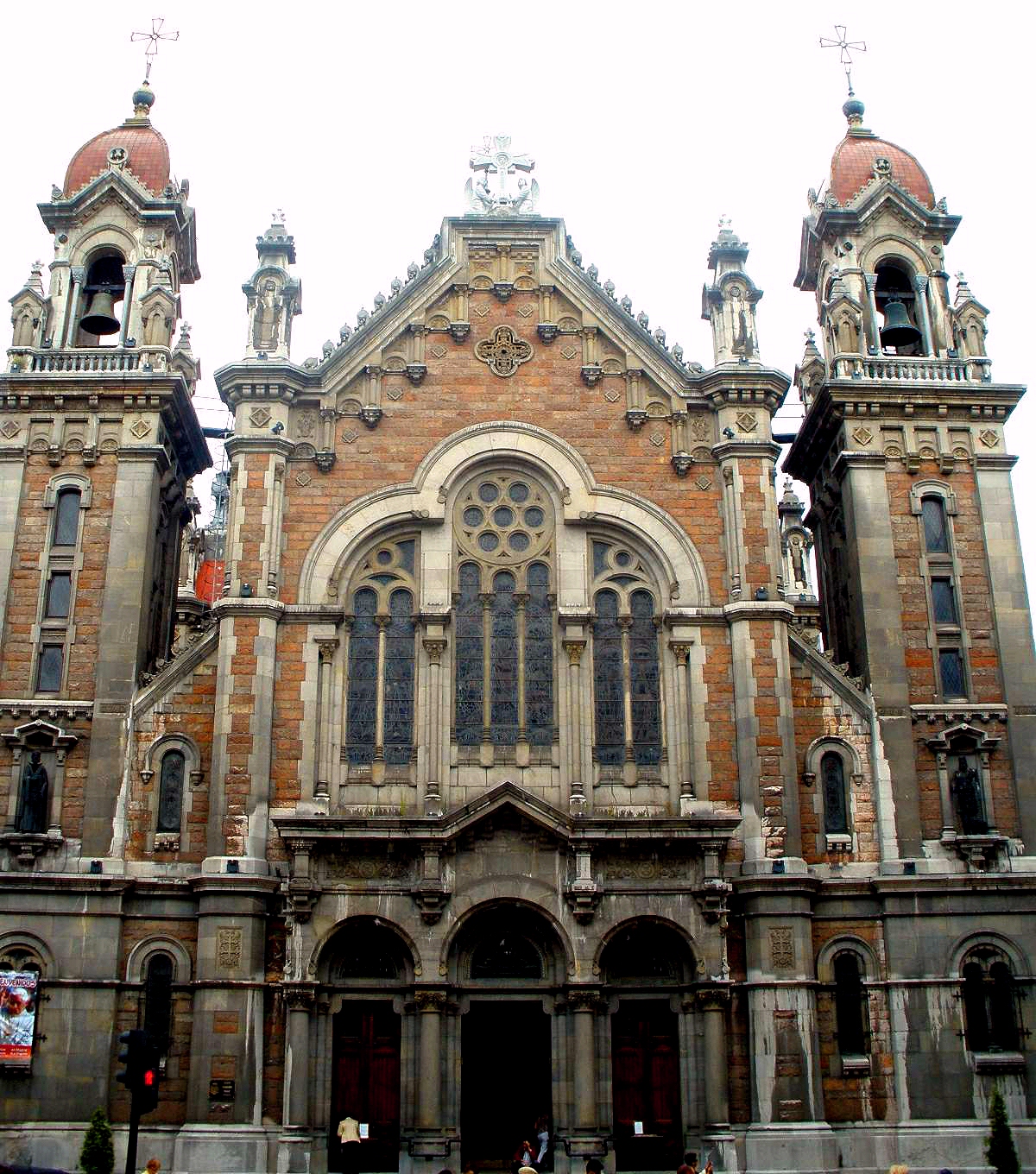
Basilica of St. John the Baptist
Oviedo / Uviéu
Earn badges for the places you visit
Download NextOnTrip, discover new places and check off your trails.