About this place
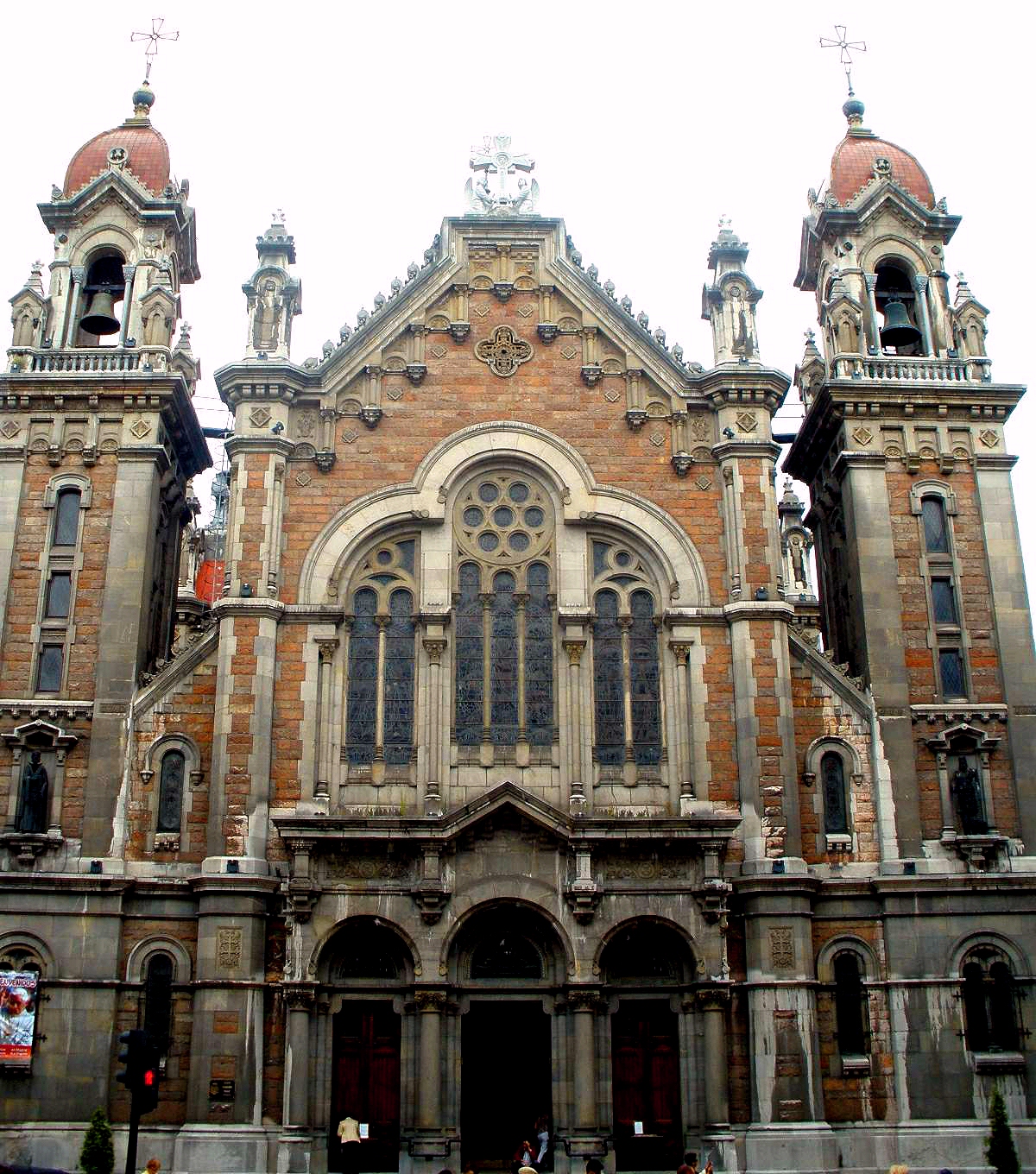
Iglesia de Santo Domingo is a Gothic-Renaissance church in Oviedo (Uviéu), standing on the small Plazoleta de Santo Domingo at the edge of the Campillín gardens, right in the heart of the Asturian capital.
How do you get there?
The church sits in Oviedo's historic centre, within easy walking distance of the cathedral and the old town. The nearby Campillín gardens make orientation simple — this shaded park is one of the city centre's favourite resting spots, and the church stands right next to it, on the small square that bears its name. From the train or bus station it's roughly a fifteen-minute walk through the central streets.
What will you see?
The current church building dates from 1561 and was designed by Juan de Cerecedo el Viejo, one of the most notable builders working in Asturias at the time. Inside, a single nave is covered by five bays of ribbed vaulting resting on slender pilasters, with side chapels opening onto the main nave and a choir placed near the entrance — a layout typical of monastic churches of this period, where the choir served the friars gathered for the liturgy rather than a separate choir of singers.
The church was originally part of a larger monastic complex founded in 1518 by the Dominicans (Order of Preachers). Of that original complex, only the church and part of the cloister have survived to the present day — the rest of the monastic buildings had to be rebuilt after two serious episodes of destruction in the 20th century. The first came in October 1934, during the Asturian revolution, when the building suffered significant damage; the second followed in 1936, during the Spanish Civil War. After the war ended, reconstruction began, and in 1946 a large new building was erected on the site to house a secondary school.
That educational role has continued to this day: the Colegio Santo Domingo now operates right next to the church, and the Dominican community here combines parish work with running the school, serving as its directors and teachers. The church itself has held the status of priory since 1963 and has functioned as a parish since 1969, serving worshippers from this part of Oviedo.
When visiting the interior, it's worth paying attention to the proportions of the single-nave layout and the rhythm of the ribbed vaults — features typical of the Gothic-Renaissance architecture of the period, when Asturian builders were still combining medieval structural schemes with newer, more classicising details.
When is the best time to visit?
Since the church functions as an active parish, it's best to plan a visit outside Mass times, unless attending a service is part of the plan. Oviedo is at its most pleasant in spring and autumn, when temperatures are mild and the city sees fewer visitors than in the height of summer. Given its location next to the Campillín gardens, it's worth pairing the visit with a relaxed walk through the greenery, whatever the season.
Frequently Asked Questions
Who founded the Iglesia de Santo Domingo in Oviedo? The monastic complex was founded in 1518 by the Dominicans (Order of Preachers), and the church building in its current form was erected in 1561 to a design by Juan de Cerecedo el Viejo.
Does anything survive from the original monastery besides the church? Yes, part of the cloister has also survived. The rest of the complex had to be rebuilt after the damage suffered in 1934 and 1936.
Is the church still an active place of worship today? Yes, it has served as a parish since 1969, and the Dominican community continues both pastoral and educational work on the site.
What is located next to the church today? A school, the Colegio Santo Domingo, operates directly beside the church, in a building erected in 1946 on the site of the rebuilt monastic complex.
Nearby places

Earn badges for the places you visit
Download NextOnTrip, discover new places and check off your trails.