About this place
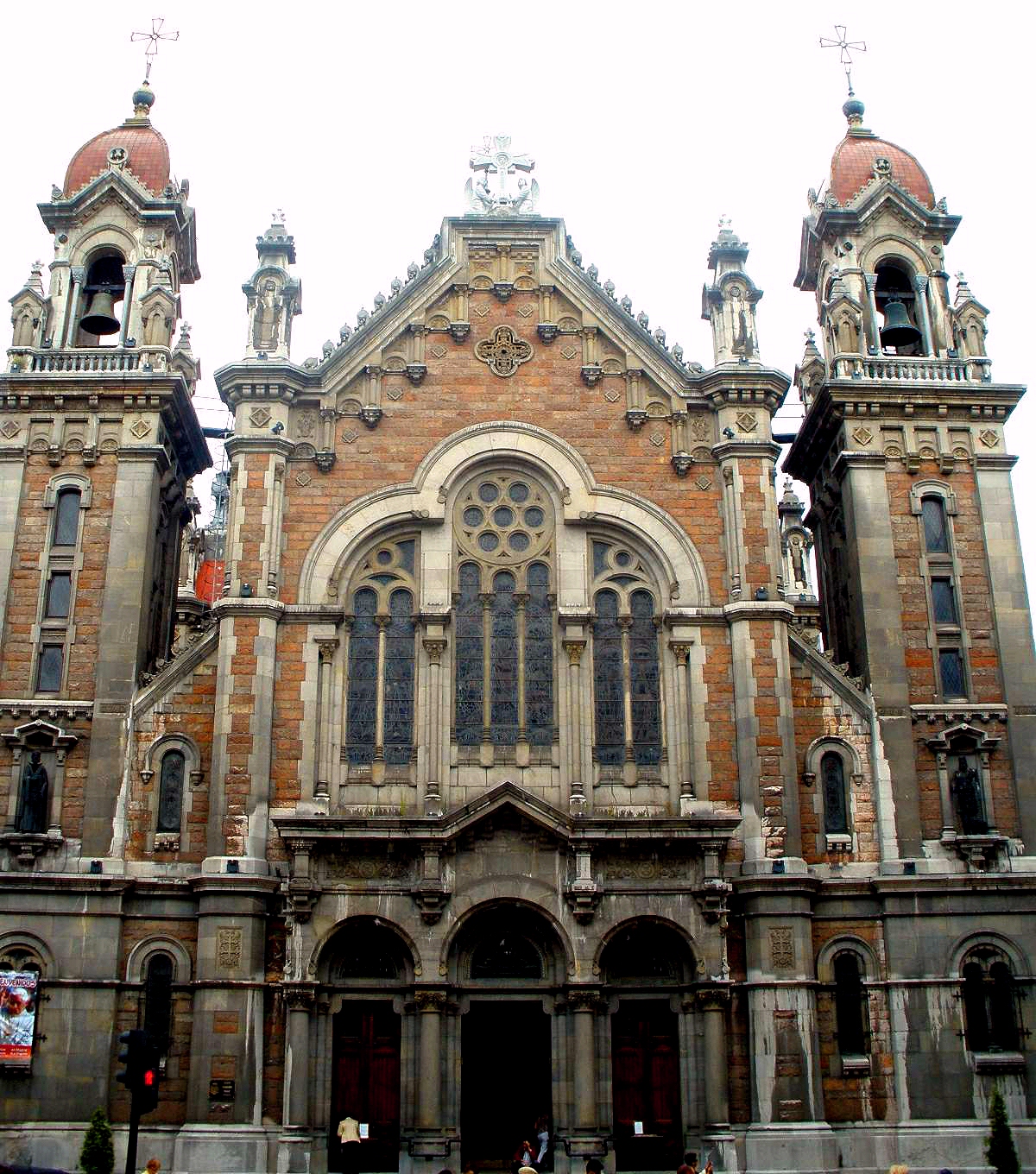
Basílica de San Juan el Real (Basilica of St. John the Baptist) stands in the historic center of Oviedo, the capital of Asturias in northern Spain, a short walk from the city's cathedral. The building visitors see today is not medieval — it dates from the early twentieth century — but the parish it houses traces its origins back to the era of the Kingdom of Asturias.
Where does the parish come from?
The story begins in the ninth century. King Alfonso III the Great had an altar dedicated to St. John the Baptist built next to his palace in Oviedo in the year 862. In 1006, King Alfonso VI granted the site to establish a hospital for the poor and for pilgrims, an institution that cared for travelers on the routes passing through the city. Over time, this hospital gave rise to the first parish of San Juan el Real. The parish changed location more than once over the following centuries: it started out beside the old royal palace next to the cathedral, later moved into the building of the former Franciscan convent of Oviedo, which no longer stands today. The old parish church was finally abandoned in the first days of April 1902, with services relocating first to the church of Santa María de la Corte and then to San Tirso el Real.
When was the current basilica built?
Construction of the new church at its present site, then an expanding district of Oviedo, began in 1912 and finished in 1915, to a design by architect Luis Bellido. The building follows a Latin cross plan, with side chapels and a dome — a layout suited to the ambitions of what was meant to become the new, permanent home of the San Juan el Real parish. Its style is generally described as historicist, drawing on earlier architectural periods, a common approach in Spanish religious architecture at the turn of the twentieth century.
What makes this basilica historically notable?
The Basílica de San Juan el Real is remembered in Spanish history chiefly for one event: on 16 October 1923, General Francisco Franco married Carmen Polo here. King Alfonso XIII acted as a witness to the wedding, represented at the ceremony by General Antonio Olsada. This episode is still cited today whenever the church's history is discussed, and it remains one of the most frequently mentioned facts about the building.
What is the building's status today?
The basilica is listed as a Bien de Interés Cultural (BIC), Spain's designation for property of cultural interest, which grants it legal protection and safeguards its conservation. The church continues to function as an active parish and remains a meaningful stop on Oviedo's religious landmarks, even though it is not the city's main tourist draw the way the Cathedral of San Salvador is. It sits close to the historic quarter, surrounded by the narrow streets that still reflect the medieval layout of this part of Oviedo.
Frequently Asked Questions
Is the Basílica de San Juan el Real the same building as the medieval church? No. The current church was built between 1912 and 1915 to a design by Luis Bellido. The parish of San Juan Bautista existed in medieval times, but it occupied earlier, different locations in Oviedo before moving to today's building.
Who designed the basilica? Spanish architect Luis Bellido designed it. The building was constructed in a historicist style, on a Latin cross plan with a dome and side chapels.
Why is this church known outside Asturias? Mainly because of the wedding of Francisco Franco and Carmen Polo, held here on 16 October 1923, with a representative of King Alfonso XIII in attendance as witness.
Does the building have any legal heritage protection? Yes, the basilica holds Bien de Interés Cultural (BIC) status, Spain's classification for properties of special cultural significance.
Nearby places
-

Church of the Sagrado Corazón de Jesús, Oviedo
Oviedo / Uviéu
-
Church of San Pedro de los Arcos, Oviedo
Oviedo / Uviéu
-
Monastery of San Pelayo
Oviedo / Uviéu
-
Metropolitan Cathedral Basilica of the Holy Saviour, Oviedo
Oviedo / Uviéu
-
Church of Inmaculado Corazón de María, Oviedo
Oviedo / Uviéu
-
Museo de la Iglesia de Oviedo
Oviedo
Earn badges for the places you visit
Download NextOnTrip, discover new places and check off your trails.