About this place
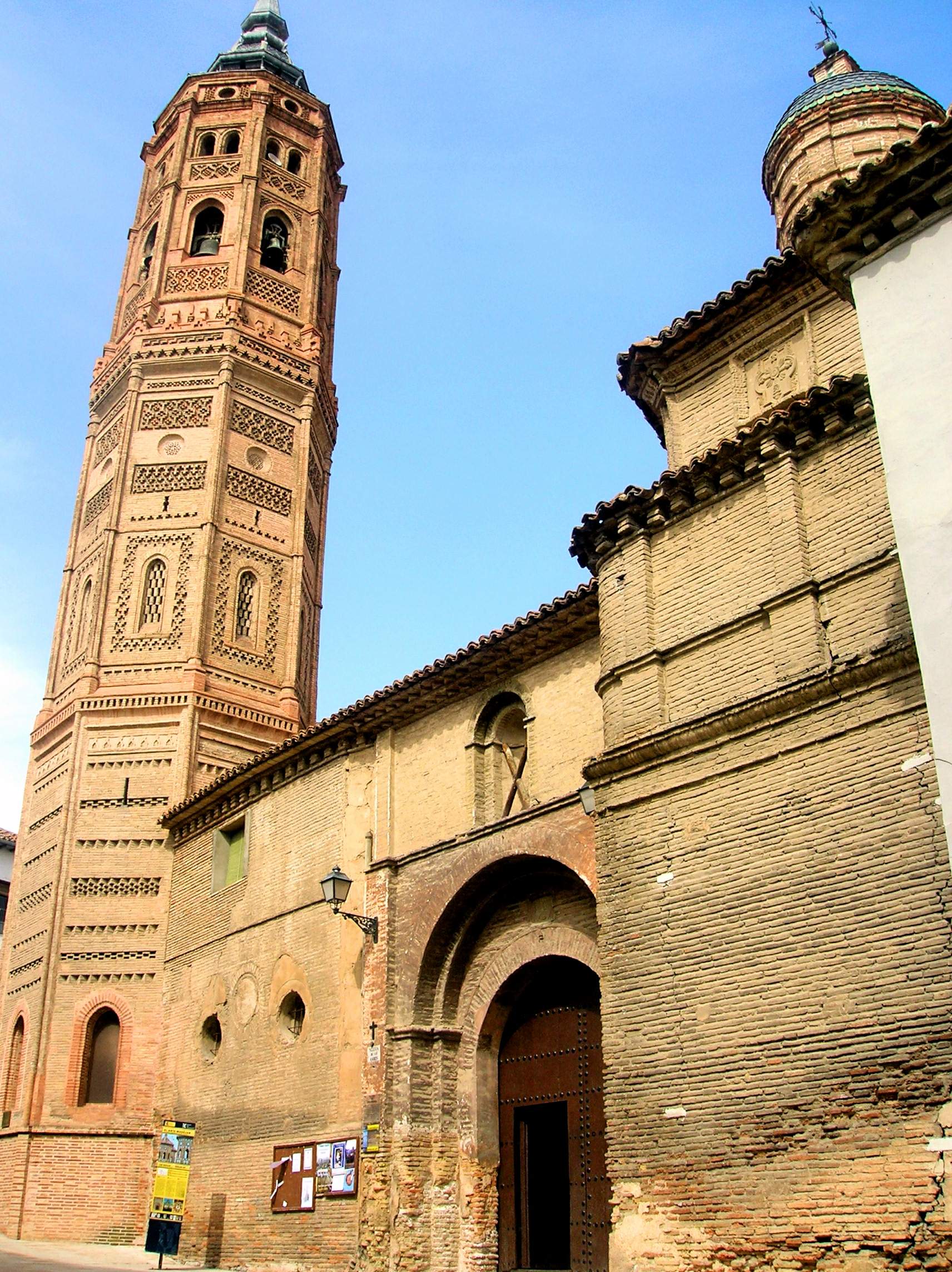
The Church of San Andrés stands in Calatayud, a town in the province of Zaragoza, in the Aragón region of Spain.
What is this building?
The Iglesia de San Andrés is a Catholic parish church regarded as the oldest in Calatayud and the second tallest among the town's church towers. It was raised shortly after the Christian reconquest of the area, traditionally associated with Alfonso I "the Battler," whose campaigns after 1120 secured Calatayud and Daroca for the Christian kingdoms. Local tradition holds that the church may occupy the site of an earlier mosque.
What does the architecture look like?
The original structure, dated to the 14th-15th centuries, is Gothic-Mudéjar: three naves - the central one taller and wider than the two side aisles - each divided into three bays and covered with ribbed vaulting. Slightly horseshoe-shaped pointed arches separate the naves, a three-nave layout that is unusual among the Mudéjar churches of the region.
The building's most recognizable feature is its 14th-century octagonal Mudéjar tower, decorated with geometric brickwork and counted among the finest examples of its kind in Aragón. A surviving document dated 2 February 1508 records that the parishioners of San Andrés authorized representatives to have a belfry built and bells cast; the bell ensemble now housed in the tower dates from that commission.
How did the church change over time?
In the 16th century, in a Renaissance-era expansion, the church gained an additional bay matching the height of the three naves, and its original flat-walled chancel was replaced with a five-sided polygonal apse. The crossing was remodeled at the same time. The church was granted protected status as a site of historic and artistic interest in 1966, and in December 2001 it was included when UNESCO extended its World Heritage declaration to cover the Mudéjar architecture of Aragón.
Where is the church located?
The church sits in the historic center of Calatayud, a town known for its Mudéjar heritage blending Islamic and Christian influences. Its distinctive octagonal tower is visible from many points across the old town and is one of the recognizable landmarks of the Calatayud skyline.
Frequently Asked Questions
What makes San Andrés stand out among Mudéjar churches? Mainly its three-nave layout separated by horseshoe-shaped pointed arches - a rare arrangement for the region's Mudéjar architecture - together with its octagonal 14th-century tower with elaborate brick decoration.
Is San Andrés the oldest church in Calatayud? Yes, it is considered the town's oldest church, with origins tracing back to the period immediately following the Christian reconquest of the area in the 12th century.
Is the building protected as heritage? Yes. It was declared a site of historic and artistic interest in 1966, and since December 2001 it has fallen under UNESCO's extended World Heritage declaration for the Mudéjar architecture of Aragón.
Has the tower always looked the way it does today? Not entirely - the octagonal core of the tower dates from the 14th century, while the current bell ensemble and belfry were completed after 1508, when the parish commissioned their construction.
Nearby places

Earn badges for the places you visit
Download NextOnTrip, discover new places and check off your trails.