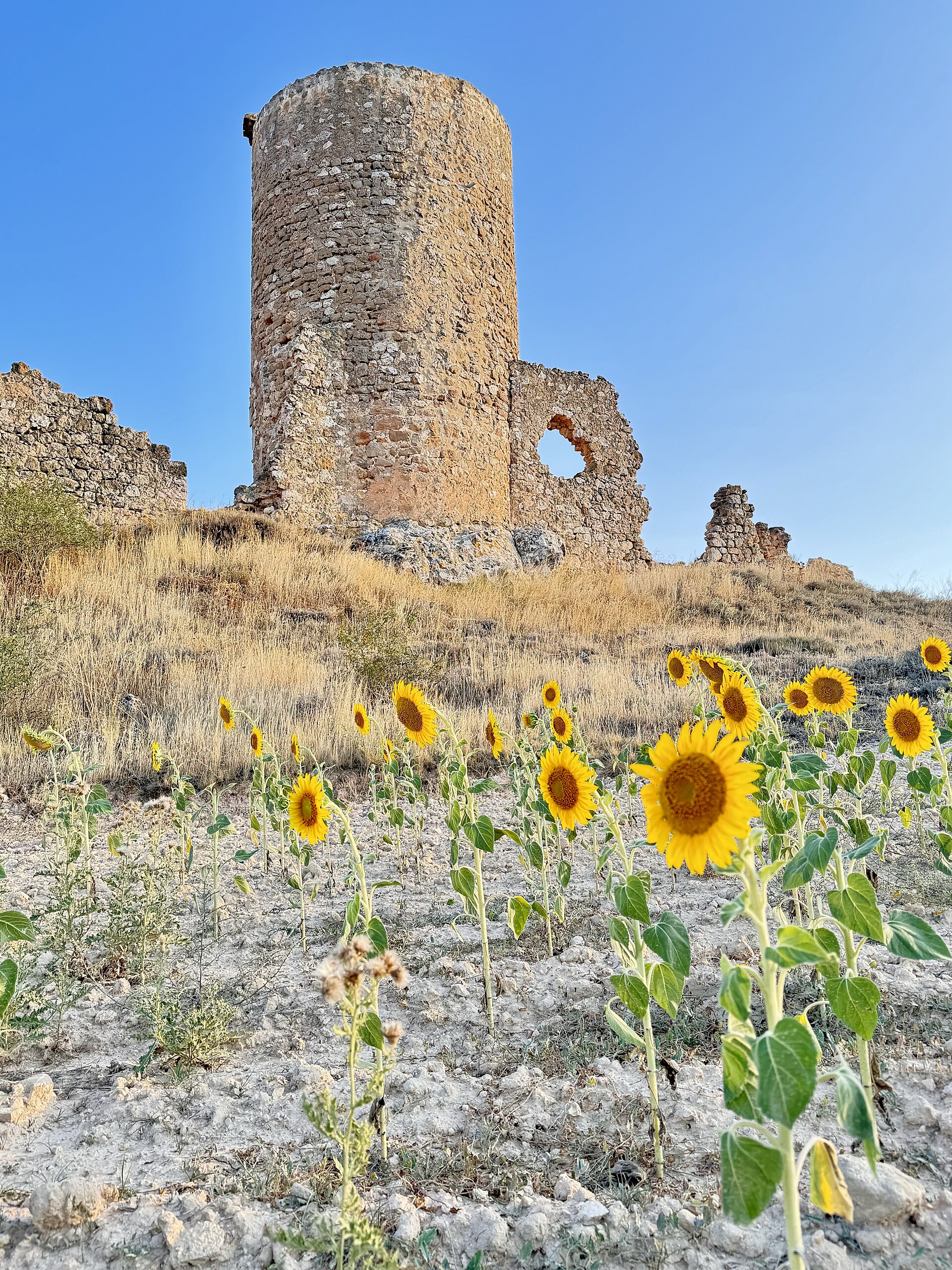
About this place
The Monasterio de Santa María de Cántabos is a small, half-forgotten Cistercian ruin in the municipality of Fuentelmonge, in the province of Soria. Despite its modest remains, the site holds real historical weight: it is the original foundation from which the famous Monasterio de Santa María de Huerta, one of Spain's most important Cistercian monuments, later grew.
How do you get there?
Fuentelmonge sits in a sparsely populated corner of Soria province, in the Castilla y León region. A car is by far the easiest way in — the nearest larger towns are Soria itself, the provincial capital, and Almazán, from where local roads lead toward the village. The ruins stand outside the village, in open countryside, so it's worth carrying an offline map or GPS, since signposting is minimal. The final stretch has to be covered on foot, over unpaved ground.
What will you see?
Only a small part of the original monastery survives: a rectangular structure with visible interior divisions, attached to a round watchtower dating back to Muslim-era construction in the 10th century. It's precisely this combination of medieval Cistercian building work and an earlier Muslim defensive tower that makes the site unusual. There's no visitor infrastructure here, no ticket office, no marked trails — this is a raw, unmanaged archaeological site, appreciated mostly by medieval history enthusiasts and fans of abandoned places.
A brief history
The monastery was founded in 1142 on the initiative of King Alfonso VII, fulfilling a vow he had made during the siege of Coria. A community of Cistercian monks was brought in from the abbey of Berdoues in Gascony, France, led by Abbot Rodulfo, and they settled in a modest building at a place known as Cántabos — one of the very first Cistercian foundations on the Iberian Peninsula.
The community didn't stay long, however. As early as 1162, the monks relocated to Huerta de Ariza, where they built a far grander monastery — today's Monasterio de Santa María de Huerta. The abandoned site at Cántabos was sold in 1176 to the Council of Soria, and later bought by Rodrigo Ximénez de Rada, the noted Archbishop of Toledo. From that point on, the building gradually fell into ruin.
When should you visit?
Spring and early autumn are the best times to come, when temperatures across Castile are mild and the landscape around Fuentelmonge — dry and harsh in summer — turns green. It's worth avoiding midsummer, when the heat in this region can be intense and the site offers no shade whatsoever. The visit pairs naturally with a trip to the nearby Monasterio de Santa María de Huerta — seeing the "origin" and the "continuation" of the same monastic community side by side is a rewarding experience for history lovers.
Frequently asked questions
Can you go inside the ruins? The site has no formal visitor management — no ticket office, no guides. The surviving wall fragments can be viewed from outside; caution is advised, as this is an unsecured archaeological site.
Is there an entrance fee? No, the site is open access and free, since no organization manages visits here.
How long does a visit take? Given how little remains standing, 20–30 minutes is enough, including the walk from the parking area.
Is it worth combining with another nearby site? Absolutely — the Monasterio de Santa María de Huerta, a short drive away, is the direct "successor" to the Cántabos monastery and a far better preserved, nationally protected monument.
Nearby places

Earn badges for the places you visit
Download NextOnTrip, discover new places and check off your trails.