About this place
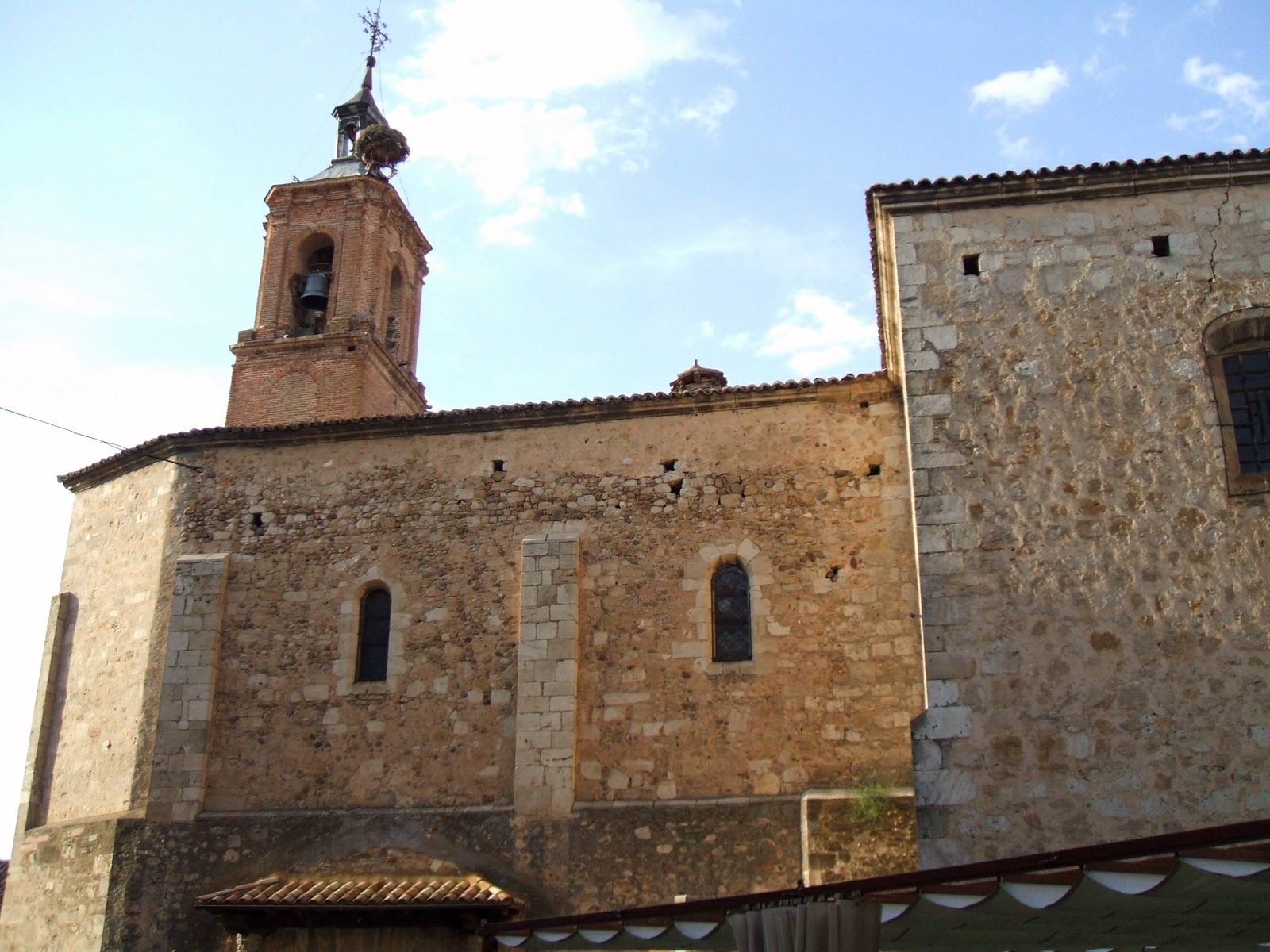
The Church of Santa María de Calatañazor is a Gothic-Renaissance parish church in Almazán, in the province of Soria, standing on the Plaza de Santa María. Despite a name pointing to Calatañazor, a village dozens of kilometres away, the building itself is firmly in Almazán — this is not a data error, but a deliberate historical dedication.
Why does it carry the name of another village?
The first church on this site was built in 1332 in honour of the settlers who came to Almazán from Calatañazor during the reign of Alfonso VII. Their origins are what the church's dedication commemorates, which explains why a town from another part of the province appears in its name, even though the building has always stood in Almazán itself. Little survives from that original Romanesque structure. The church you see today largely dates from a 16th-century rebuilding that reused stone and elements from the earlier building while adding substantial new work.
What will you see inside?
The interior is organised around a slender main nave and a wide transept. Cylindrical pillars are set against the walls, and the ribbed vaults form striking star-shaped patterns overhead. This vaulting style is linked to the building system of the Rasines family, a group of Cantabrian architects active in the region, and the exact same decorative vault combinations appear in the collegiate church of Berlanga de Duero — a clue that the same workshop of builders was active across this part of Soria at the time.
The church's standout feature is its main altarpiece, carved by Juan Sanz and Juan de Orihuela, craftsmen who also worked on the altarpiece of Sigüenza Cathedral. The retable combines painting, relief carving, and free-standing sculpture, and its rich iconographic programme makes it a notable example of the late-16th-century Romanist style.
How do you get there?
The church stands at Plaza de Santa María 12, right in the historic centre of Almazán, postcode 42200. Almazán sits on the main route linking Soria with Madrid and is easy to reach by car — roughly half an hour from Soria itself. The old town has a compact layout, so once you arrive the church is within walking distance of the town walls and Almazán's other historic sites.
When is the best time to visit?
Spring and early autumn are the most comfortable seasons, with mild weather for walking around Soria's old towns and fewer visitors, making it easier to take time over the interior and the altarpiece. It's worth checking local opening hours and Mass times before you go, since access inside can be limited outside of services.
Frequently asked questions
Is the Church of Santa María de Calatañazor actually located in Almazán, not Calatañazor? Yes. The building stands in Almazán; its name commemorates settlers who arrived there from Calatañazor under Alfonso VII. Calatañazor has its own separate parish church, Santa María del Castillo.
How old is the church? The first church on the site dates from 1332. Most of the current structure comes from a 16th-century rebuilding that partly reused elements of the earlier Romanesque church.
What is the most important artwork inside? The main altarpiece by Juan Sanz and Juan de Orihuela, richly decorated with sculpture and painting in the late-16th-century Romanist style.
Do the church's vaults have parallels elsewhere in the region? Yes — the same star-shaped ribbed vault patterns, attributed to the Rasines family of architects, also appear in the collegiate church of Berlanga de Duero.
Nearby places

Earn badges for the places you visit
Download NextOnTrip, discover new places and check off your trails.