About this place
Salt d'aigua del Tenes is one of the most striking waterfalls in Catalonia's Vallès Oriental, sitting right where three municipalities meet — Bigues i Riells, Sant Feliu de Codines and Sant Quirze Safaja. The Tenes river, which rises near Sant Quirze Safaja itself, plunges here off the Fitó cliff, dropping roughly 100 metres in a single curtain of water. The site sits within the natural area surrounding the Sant Miquel del Fai sanctuary and is one of the best-known landmarks of the Cingles de Bertí range.
How do you get there?
The waterfall lies in hilly, sparsely populated countryside about 50 km north of Barcelona. Most visitors reach it on foot, with trails starting from Riells del Fai or from Font de la Pineda and running along the Tenes river valley toward Sant Miquel del Fai. Along the way you'll pass other natural highlights of the valley, including the Gorg Blau and Gorg Negre pools, the remains of old water-powered mills, and well-preserved ice pits once used to store ice through the summer. Sant Quirze Safaja, the southernmost village of the Moianès comarca, makes a convenient base for planning a day out in this part of Vallès Oriental.
What will you see?
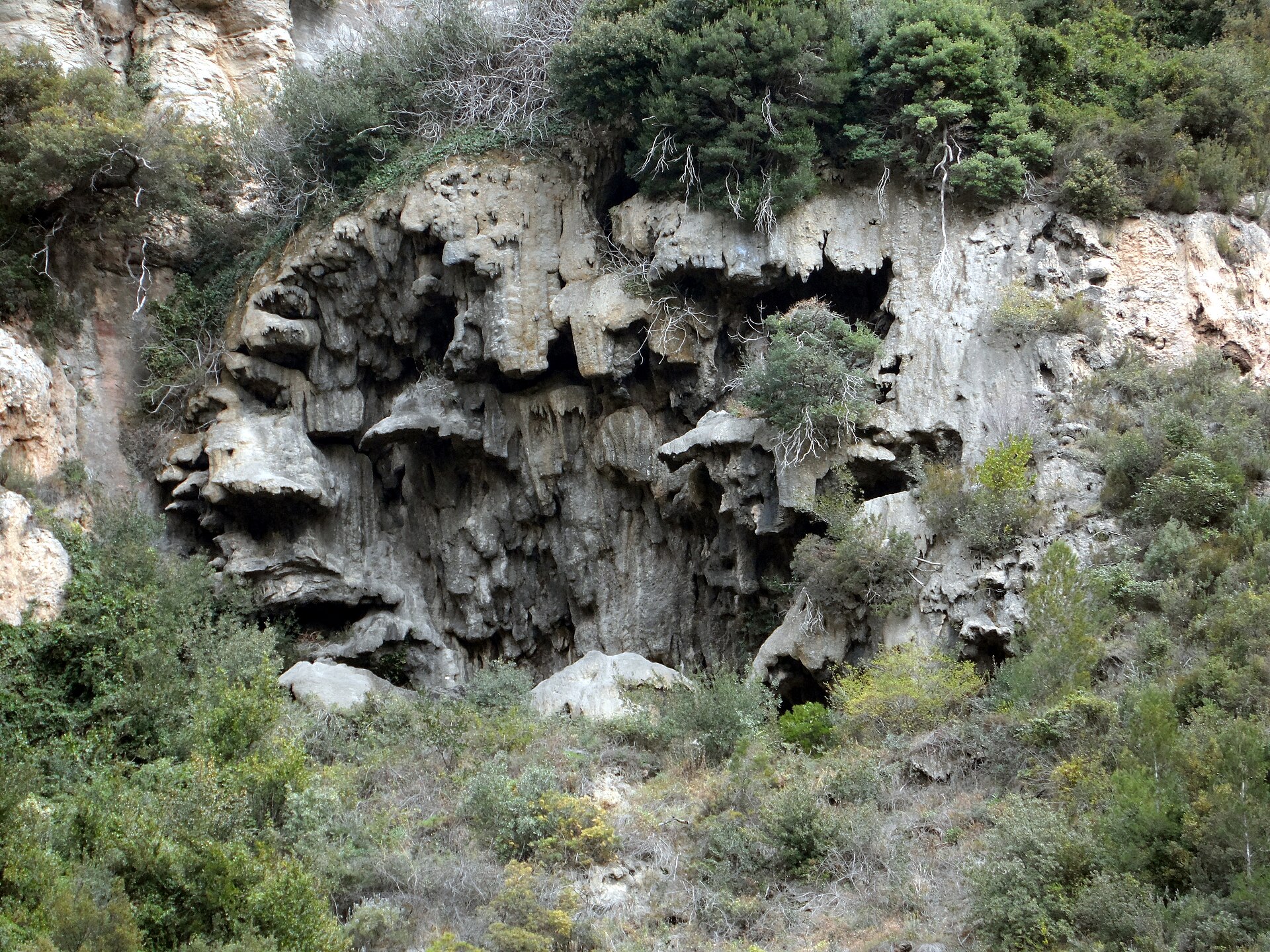
The main draw of Salt d'aigua del Tenes is the chance to walk behind the falling water itself: a natural gallery carved into the rock lets you pass right through to the other side of the waterfall. Inside, you'll find stalactites, stalagmites and rock "curtains" built up from calcium carbonate deposits — tufa formations that are still actively growing today, making this a living example of karst processes at work. The constant spray at the base of the falls sustains a lush, shade-loving plant community, with mosses and ferns thriving wherever moisture lingers, including delicate maidenhair fern (Adiantum capillus-veneris) clinging to the wet rock.
When is the best time to visit?
How dramatic the waterfall looks depends heavily on rainfall and season — it's at its most powerful in spring and after autumn rains, when the Tenes river carries more water. In summer, during Catalonia's typical dry spells, the flow can shrink considerably, though the rock gallery and tufa formations remain worth seeing year-round. The terrain is uneven and hilly, so sturdy footwear is essential, especially after rain when the rocks near the water turn slippery.
Frequently Asked Questions
Where exactly is Salt d'aigua del Tenes located? The waterfall sits on the Tenes river at the boundary of Bigues i Riells, Sant Feliu de Codines and Sant Quirze Safaja, close to the Sant Miquel del Fai sanctuary in the Vallès Oriental region.
Can you actually walk behind the waterfall? Yes — that's the main highlight. A natural rock gallery lets you pass behind the water curtain and see the stalactites and calcareous formations up close.
How long is the hike to reach it? It depends on your starting point. The most common approaches begin at Riells del Fai or Font de la Pineda and join the path toward Sant Miquel del Fai, passing other natural pools of the Tenes valley on the way.
Are there other attractions nearby worth combining with the visit? Yes. The Tenes valley also holds the Gorg Blau and Gorg Negre natural pools, ruins of old flour mills, and historic ice pits, all set against the scenic backdrop of the Cingles de Bertí range.
Nearby places

Earn badges for the places you visit
Download NextOnTrip, discover new places and check off your trails.