About this place
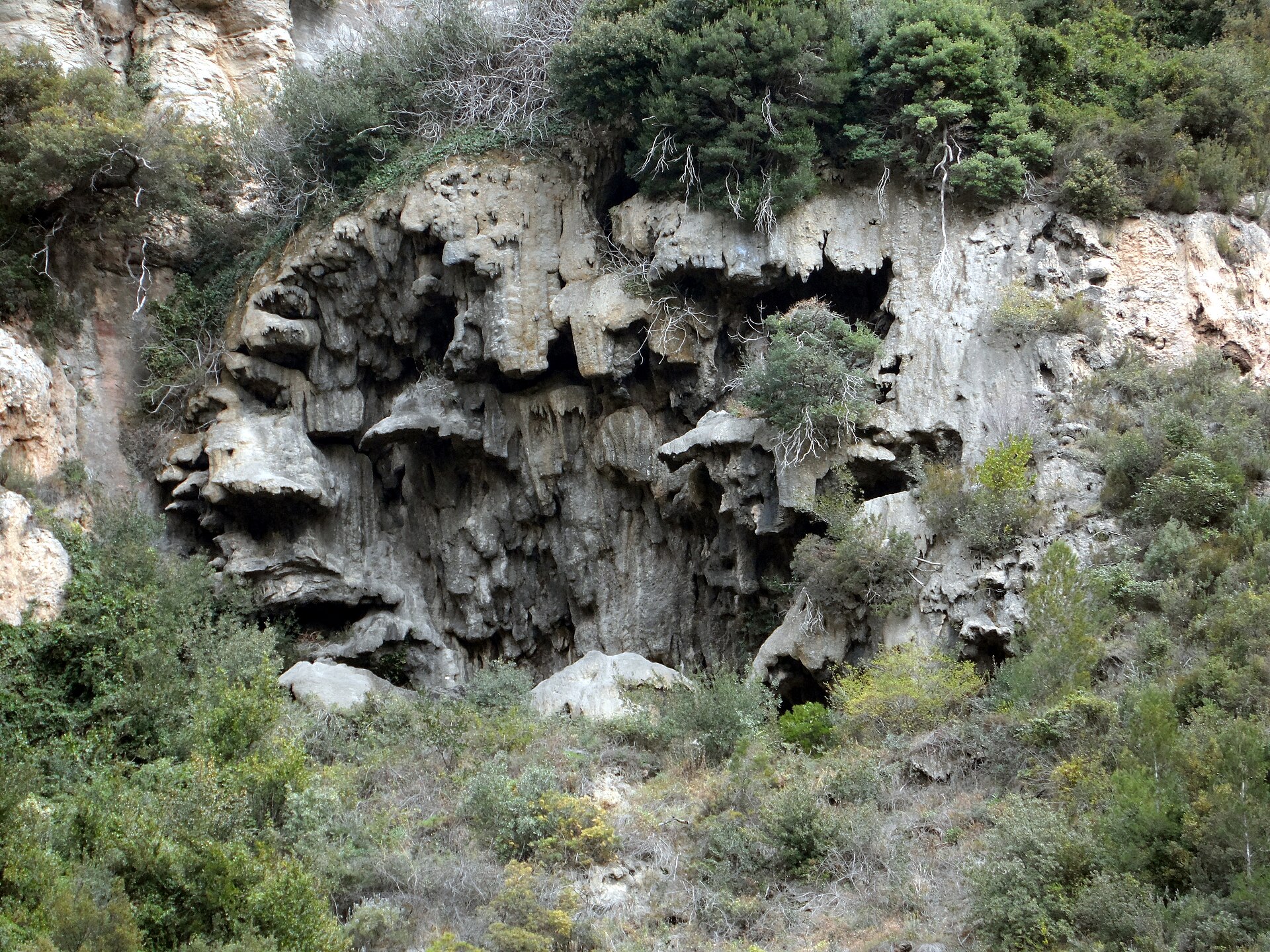
El Barbot Negre – a travertine spring in the Cingles de Bertí massif
El Barbot Negre is a small but striking rock formation near Sant Quirze Safaja, tucked into the limestone massif of Cingles de Bertí, on the border between the Vallès Oriental and Moianès areas of Catalonia. It's a spot for travelers who prefer quiet, lesser-known trails over crowded viewpoints.
What exactly is El Barbot Negre?
It's a natural spring, or "surgència," where water emerging from limestone rock has deposited layers of travertine over time — a porous rock formed as calcium carbonate precipitates out of flowing water. The result is a set of dark, jagged rock shapes that give the site its somewhat mysterious, raw character, echoed in the name ("negre" meaning black). The spot sits close to several other natural landmarks: Gorg de les Donzelles and the Salt de Llòbrega waterfall are nearby, while the hill of Turó de les Onze Hores and the mountain pass of Grau de les Escaletes rise a short distance to the southwest.
How do you get there?
The most convenient starting point is the village of Riells del Fai, from where a marked hiking trail sets off. The route heads toward Turó de les Onze Hores and then continues along a path known locally as Vall Blanca, which leads directly to the formation. The trail isn't technically demanding, but sturdy hiking shoes are recommended, since the ground is often rocky and uneven, particularly near the limestone outcrops.
What will you see once you arrive?
The main draw is the dark travertine formation itself, shaped by water and time — worth examining up close to appreciate its distinctive, sponge-like texture. The surrounding area offers plenty of other vantage points: nearby ridges give views over the valley and the Cingles de Bertí range, one of the more recognizable limestone escarpments in the Vallès region. It makes for a good day hike combining several stops — the spring itself, the nearby Salt de Llòbrega waterfall, and various lookout points along the way.
When is the best time to visit?
Keep in mind that the neighboring Grau de les Escaletes pass is periodically closed to hikers, typically from mid-January to mid-June, to protect nesting birds. If your route includes that stretch, check the posted signage on site before setting out. Beyond that restricted section, the area around El Barbot Negre itself is accessible year-round, though spring and autumn offer the most comfortable hiking conditions — summers can be hot and dry, while winter rains can leave the paths slippery.
Frequently asked questions
Is the hike to El Barbot Negre difficult? No, the route from Riells del Fai is moderately easy and doesn't require special preparation, though proper footwear is recommended given the rocky terrain.
Are there other attractions nearby worth visiting? Yes — within a short distance you'll find Gorg de les Donzelles, the Salt de Llòbrega waterfall, and the hill of Turó de les Onze Hores, which offers views over the Cingles de Bertí massif.
Is the trail open all year? The formation itself is accessible year-round, but the adjacent Grau de les Escaletes pass closes from January 15 to June 15 — worth factoring in if you're planning a longer loop.
Do you need a guide to visit? Not necessarily — the trail is marked, but since foot traffic is light, it's worth carrying a map or GPS app, especially since several paths intersect in the area.
Nearby places

Earn badges for the places you visit
Download NextOnTrip, discover new places and check off your trails.