About this place
Salt d'aigua del Rossinyol is a waterfall straddling the border between the municipality of Sant Quirze Safaja (Moianès) and Bigues i Riells (Vallès Oriental), one of three striking cascades in the Sant Miquel del Fai valley.
Where exactly is it?
The waterfall sits at roughly 360-460 metres above sea level, right on the western edge of the Sant Miquel del Fai monastery grounds. The upper section of the fall — where the Rossinyol stream begins its drop — actually lies within Sant Quirze Safaja, while the lower part cascades down into the territory of Bigues i Riells. This split is typical for the area: municipal borders here often follow watercourses and cliff lines, so a single natural feature can technically belong to two towns at once.
The water comes from the Rossinyol stream (locally also known as the torrent de Roca Gironella), which crosses Sant Quirze Safaja before reaching the drop, and later feeds into the Tenes river near Riells del Fai.
What will you see?
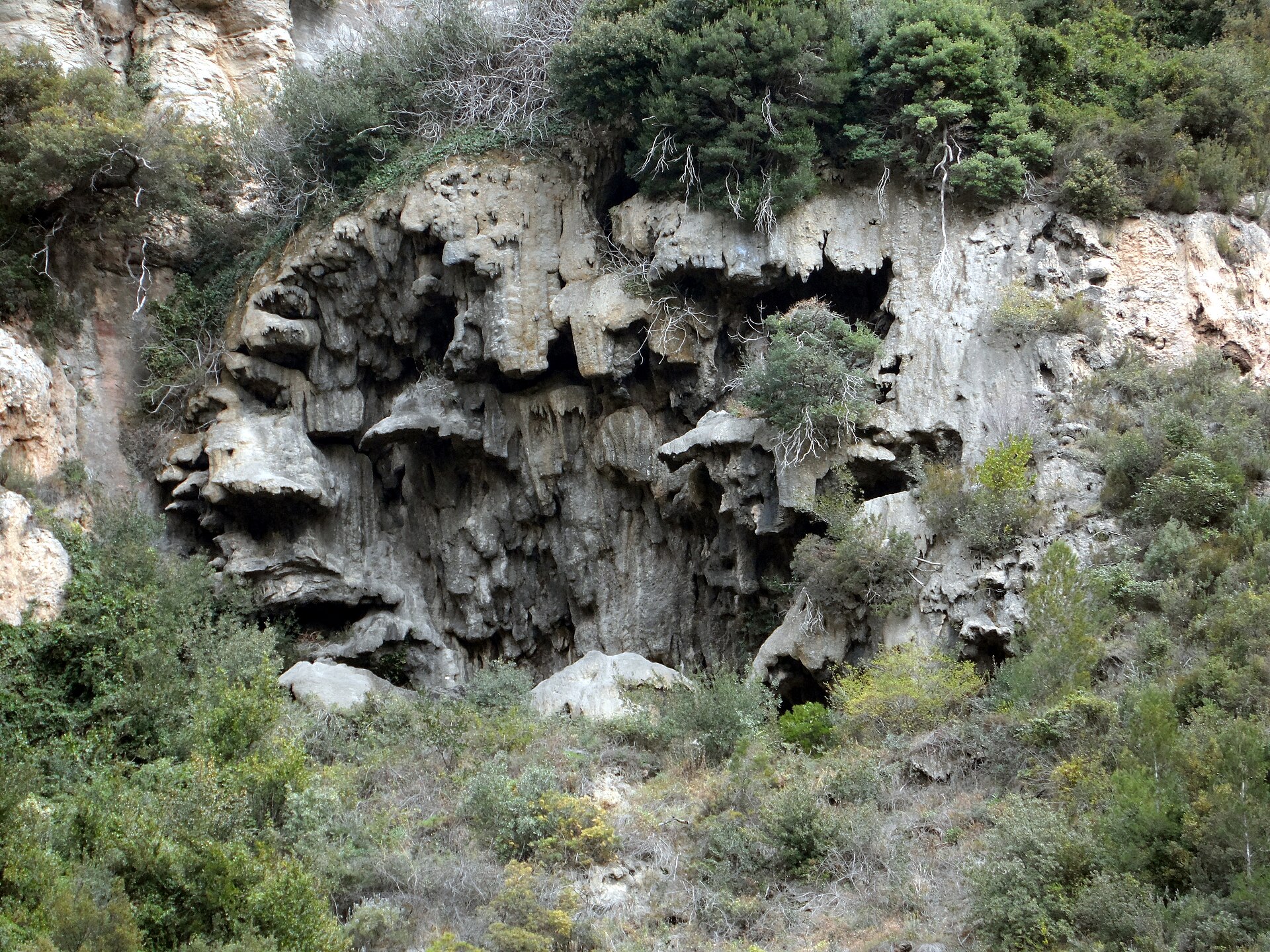
The main draw here is watching how the fall was carved out of the landscape: the stream plunges over the edge of the Cingles de Bertí, a long line of limestone cliffs running through the Moianès and Vallès Oriental. Centuries of falling water have hollowed out a large cave at the base of the cliff, known as the Coves de Sant Miquel — the cave and the surrounding rock walls are as much a highlight as the waterfall itself.
Salt d'aigua del Rossinyol doesn't stand alone. In the same valley, right next to the Sant Miquel del Fai monastery, two other waterfalls drop down, fed by the Tenes stream and the torrent del Gat. Together they create a landscape where several cascades, limestone walls and natural rock hollows sit within a short walking distance of each other — which is why the area draws both visitors touring the monastery and nature photographers.
Water volume depends heavily on the season and recent rainfall, as with most Catalan mountain streams: the fall is at its most dramatic after autumn and spring rains, and can shrink to a trickle during the summer dry season.
How to get there and when to visit?
The Sant Miquel del Fai area and the Rossinyol valley are a popular destination for hikers — trails linking the region's farmhouses (masies), springs, caves and gorges around the Moianès are documented on several hiking-route platforms. Depending on the chosen route, walks typically start from Sant Quirze Safaja, Riells del Fai, or Bigues i Riells.
The best time to visit is spring (March-May) and autumn (October-November), when the Rossinyol stream carries more water and temperatures are comfortable for longer walks along the Cingles de Bertí cliffs. It's worth checking that no heavy rain has just fallen before setting out, since the limestone paths in this area can get slippery when wet.
Frequently Asked Questions
Is Salt d'aigua del Rossinyol located in Sant Quirze Safaja? The upper part of the waterfall lies within Sant Quirze Safaja, while the lower section drops into the neighbouring municipality of Bigues i Riells — the feature effectively straddles both towns.
Which stream forms this waterfall? The water comes from the Rossinyol stream, also known locally as the torrent de Roca Gironella, which later joins the Tenes river.
Are there other attractions nearby? Yes — the waterfall sits next to the Sant Miquel del Fai monastery and two other cascades in the same valley, and at its base is the Coves de Sant Miquel, a cave carved out by the falling water.
When does the waterfall look most impressive? After significant rainfall, especially in spring and autumn — in summer the flow is often much weaker.
Nearby places

Earn badges for the places you visit
Download NextOnTrip, discover new places and check off your trails.