About this place
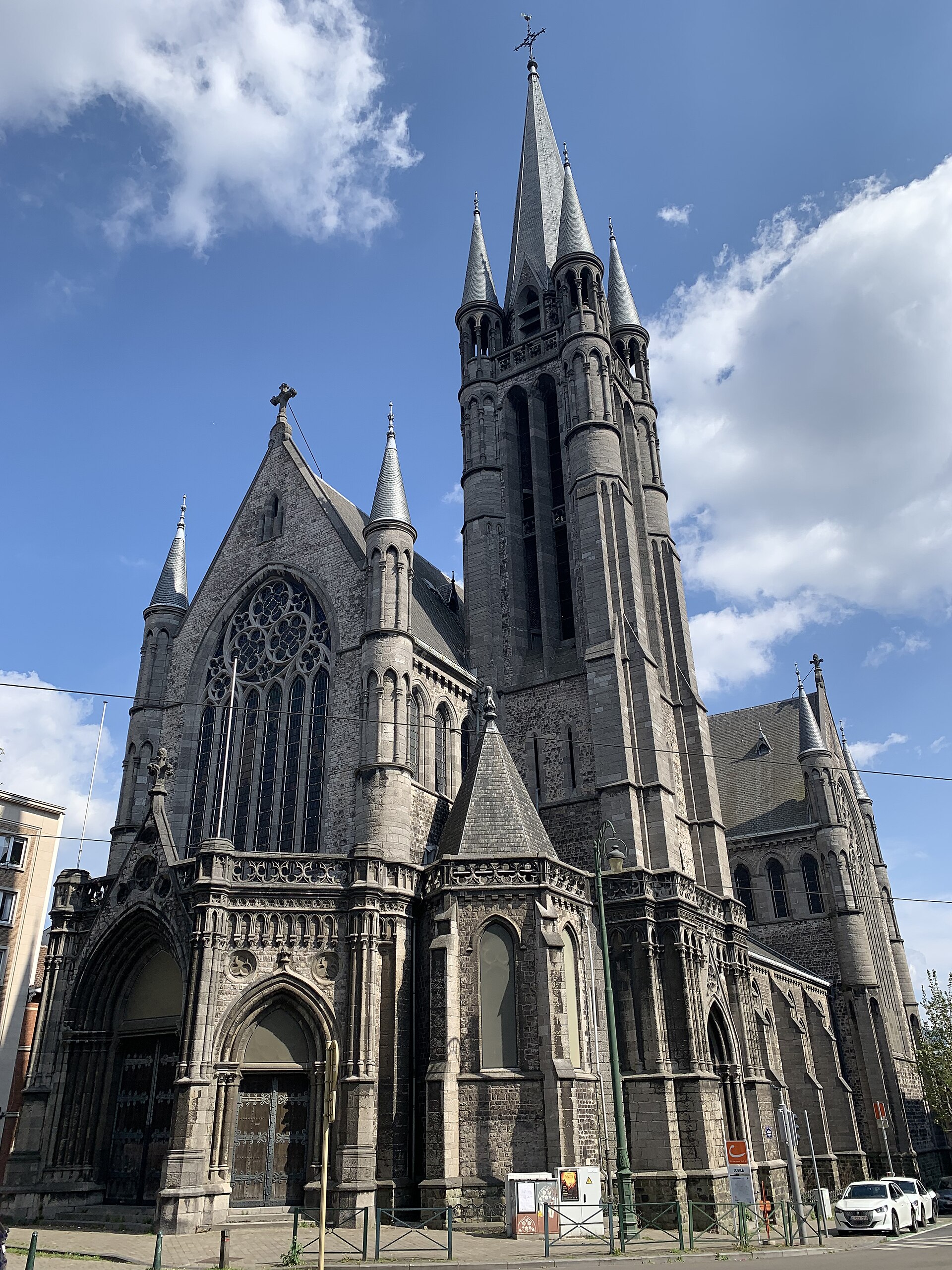
Saint Sava Church is a Serbian Orthodox church at Rue des Etangs Noirs 100 in Molenbeek-Saint-Jean (Sint-Jans-Molenbeek), one of the nineteen municipalities of the Brussels-Capital Region. The building's story, though, doesn't start with an Orthodox congregation — it began decades earlier as a Roman Catholic parish church.
Where did this building come from?
The church was designed by architect Victor Degand and built in brick in 1924 as the Église Notre-Dame Médiatrice (Our Lady Mediatrix). Its cornerstone was laid on 25 March 1925, and the completed building was consecrated by Monseigneur Tessens on the last Sunday of January 1926. For most of the 20th century it operated as an ordinary Catholic parish serving this part of Molenbeek.
How did it become an Orthodox church?
The change of use came at the end of the 20th century: since 1999, the building has housed the Serbian Orthodox community as Saint Sava Church (also known as Saint Sava Serbian Orthodox Church). The name honors Saint Sava, founder of the autocephalous Serbian Orthodox Church and one of the most significant figures in Serbian religious tradition — churches bearing his name exist in Serbian communities across the world. Repurposing former Catholic churches for other Christian denominations is not unusual in Brussels, a city with more church buildings than practicing Catholic congregations to fill them, which has opened space for other communities.
Is it a protected heritage site?
Yes — the building was added to the architectural heritage inventory of the Brussels-Capital Region on 19 August 2024. The listing concerns the original 1920s architecture designed by Degand rather than its later Orthodox use, underlining that the building's heritage value lies in its interwar-era design and detailing.
Where exactly is it located?
The church stands at Rue des Etangs Noirs 100, in a densely built, urban section of Molenbeek-Saint-Jean close to central Brussels. Its coordinates are approximately 50.855°N, 4.328°E, an area well served by public transport from the Belgian capital's center.
Frequently asked questions
Is this a Catholic or an Orthodox church? Today it is a Serbian Orthodox church, but it was built between 1924 and 1926 as the Roman Catholic Notre-Dame Médiatrice. The change to Orthodox use took place in 1999.
Who designed the building? Architect Victor Degand, whose design dates to 1924.
Why is it named after Saint Sava? Saint Sava is the founder and patron saint of the Serbian Orthodox Church, which is why many Serbian Orthodox churches around the world, including this one in Brussels, carry his name.
Is the building officially protected as heritage? Yes, it has been listed in the Brussels regional architectural heritage inventory since August 2024.
Nearby places

Earn badges for the places you visit
Download NextOnTrip, discover new places and check off your trails.