About this place
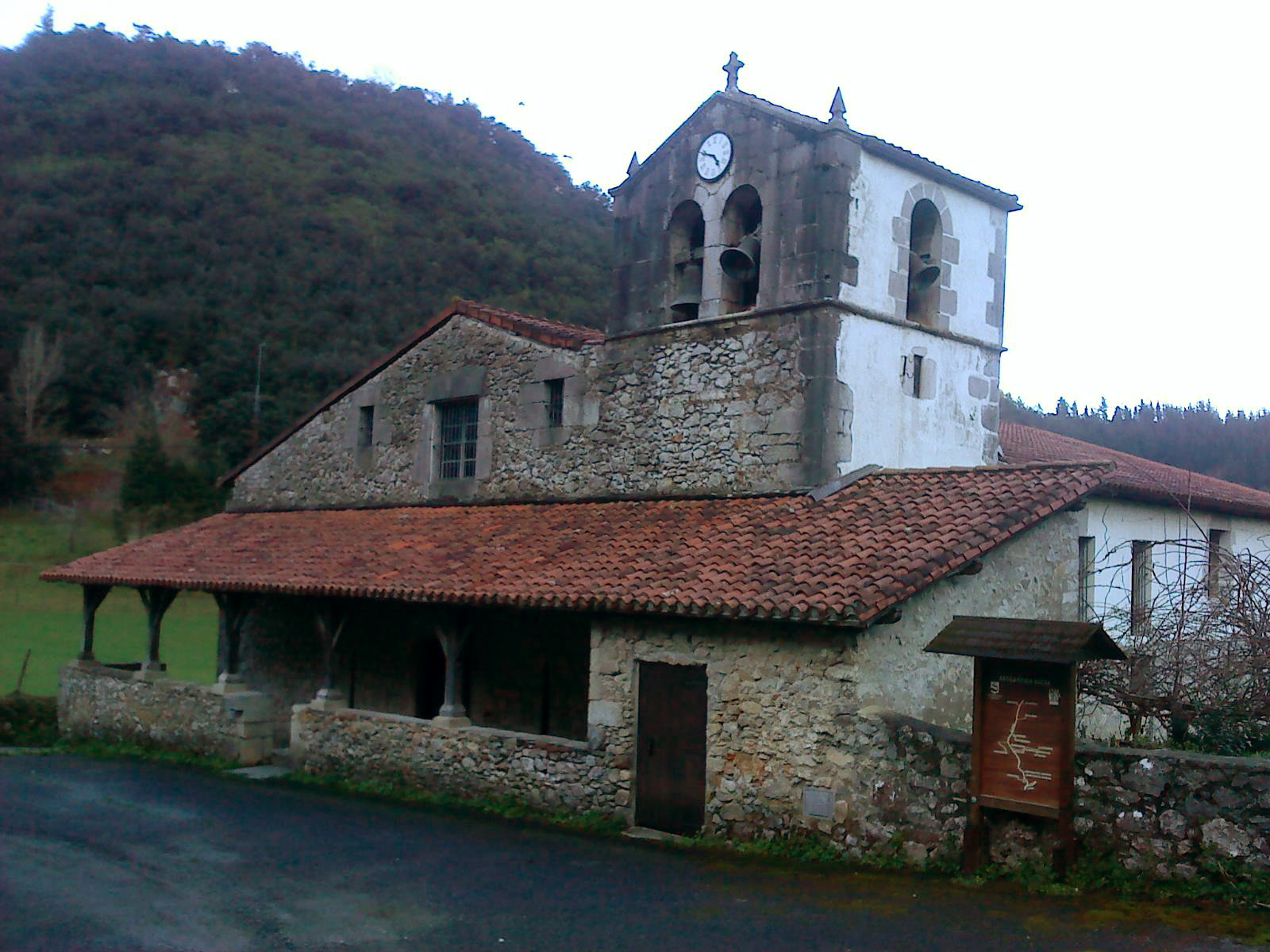
The Church of San Andrés de Astigarribia is a modest parish church in the Astigarribia district of Mutriku, a coastal town in the Basque Country. From the outside it looks like an unassuming rural chapel, but it holds one of the oldest and most significant religious buildings in the whole province of Gipuzkoa.
What makes this church so special?
Archaeological surveys uncovered three overlapping construction phases beneath the current structure: an early Visigothic or Mozarabic-style temple, a later Romanesque church, and the building standing today. This layered history is why Astigarribia is considered one of the very few surviving examples of pre-Romanesque architecture anywhere in Gipuzkoa.
The standout architectural feature is a horseshoe-shaped window set into the apse wall of the oldest, early medieval section of the church. It is the only known element of this kind in the entire province — a rare trace of Visigothic and Mozarabic influence reaching this far north on the Iberian Peninsula.
Where exactly is it located?
The church sits on the left bank of the Deba river, near its final stretch before reaching the sea, facing the old Sasiola hospital-convent on the opposite bank. Its position is no coincidence: the building stands right at the edge of the Camino de Santiago, along one of the route's Basque Country sections. Because of this connection, the church has been catalogued as part of the Monumental Complex within the Camino de Santiago cultural heritage listing.
How do you get there?
Astigarribia lies on the outskirts of Mutriku, a small fishing town on the Gipuzkoa coast. The easiest way to reach it is by car from central Mutriku or nearby Deba, following the scenic road along the Deba river valley — a route lined with green hills, scattered Basque farmhouses (baserriak), and small bridges. Pilgrims walking the Camino de Santiago pass by naturally, since the church lies directly on a marked section of the trail.
What can you see on site?
Beyond the horseshoe-arch window in the apse, it's worth taking in the overall shape of the building itself — plain and unadorned, typical of rural churches in this region, yet visibly shaped by successive rebuilding over the centuries. The setting, overlooking the river valley and the former hospital complex at Sasiola, completes the picture of a place that for centuries served as a stop for rest and prayer for pilgrims heading toward Santiago de Compostela.
When is the best time to visit?
As an active place of worship and a stop along the pilgrimage route, the church is accessible year-round, though it's worth checking local opening hours or the occasional guided visits organized by the Mutriku town hall. Spring and autumn are especially good seasons for walking this stretch of the Camino de Santiago, as the mild Basque coastal climate makes both sightseeing and hiking comfortable.
Frequently asked questions
What sets the Astigarribia church apart from other churches in Gipuzkoa? It is one of the few surviving pre-Romanesque buildings in the province, featuring a unique horseshoe-arch window in the apse — the only architectural element of its kind known in the region.
Which architectural styles can be identified here? Studies revealed three overlapping construction phases: Visigothic/Mozarabic, Romanesque, and the current one, making the church a physical record of the region's religious architecture over time.
Why is the church located along the Camino de Santiago? It stands directly on one of the pilgrimage route's sections, on the left bank of the Deba river, opposite the former hospital at Sasiola, which once received travelers on their way to Santiago de Compostela.
Can visitors go inside the church? The Mutriku town hall occasionally organizes guided tours; outside of those, access depends on the parish's current opening hours, so it's worth checking before visiting.
Nearby places

Earn badges for the places you visit
Download NextOnTrip, discover new places and check off your trails.