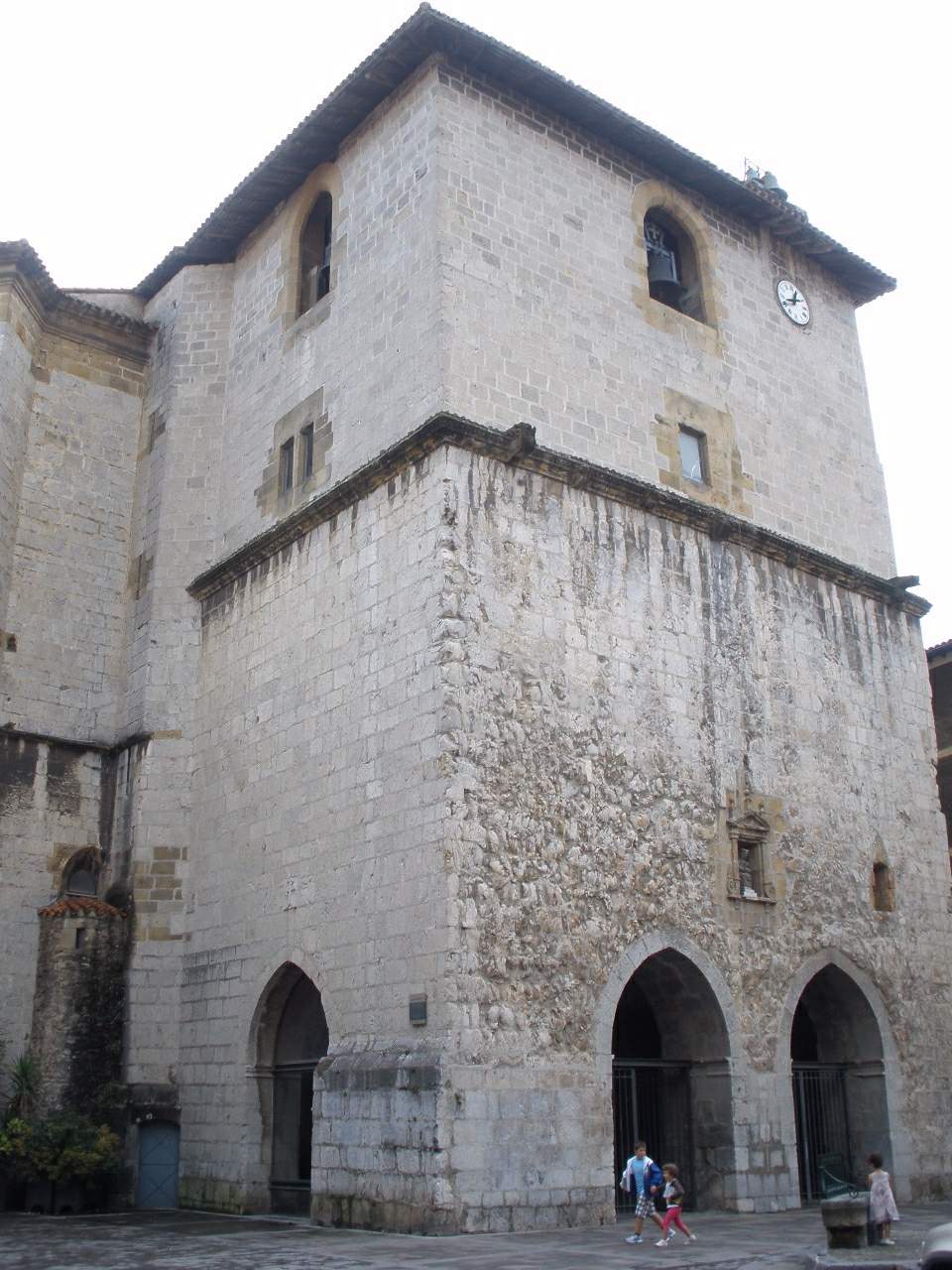
About this place
The Church of Santa María stands in the historic old town of Deba, a small coastal town in Gipuzkoa, in Spain's Basque Country. Rated a national monument, it is widely regarded as one of the outstanding examples of Basque Gothic architecture.
When was the church built?
Construction started in the late 14th century. The earliest phase produced the side chapels attached to the buttresses and the west portal, both of which survive largely unchanged. A major rebuilding campaign followed in the 16th century, reshaping most of the rest of the building. As a result, the church seen today combines work carried out across more than a century, raised on the site of an even older structure.
What makes the building's layout distinctive?
The church follows a hall-church plan, with three naves of equal height rather than a taller central nave flanked by lower aisles. Basque Gothic architecture favours this arrangement, and it gives the interior an unusually wide, open feel compared with more conventional basilica layouts. Several chapels line the buttresses, and the complex also includes a cloister considered the oldest surviving example in this part of Gipuzkoa.
Why is the west portal so significant?
The building's standout feature is its polychrome west portal. The stone figures were carved in 1465, while the coloured decoration was added considerably later, in 1682. Five archivolts frame a complete cycle of apostle figures, and the tympanum depicts scenes from the life of the Virgin Mary. That combination of dense iconography and well-preserved colour makes the portal one of the most recognisable pieces of Gothic stone carving in the region.
Where exactly is the church located?
The church sits at the heart of Deba's old town, near the mouth of the Deba river on the Cantabrian coast. Because of its central position, it works as a natural landmark for anyone exploring the town, since most of the historic streets and squares radiate out from the square in front of it.
Frequently Asked Questions
What is the church's full name? Its formal name is Iglesia de Santa María la Real, though it is commonly referred to simply as Santa María.
How old is the church? Building work began in the late 14th century, with a substantial rebuilding phase in the 16th century; the west portal and side chapels date from the earliest construction period.
What should visitors look out for inside and outside the church? The main highlights are the polychrome Gothic portal, with its five archivolts and apostle figures, and the cloister, considered the oldest in the surrounding region.
Is the church officially protected as a heritage site? Yes, it holds national monument status and is considered one of the key works of Basque Gothic architecture.
Nearby places

Earn badges for the places you visit
Download NextOnTrip, discover new places and check off your trails.