About this place
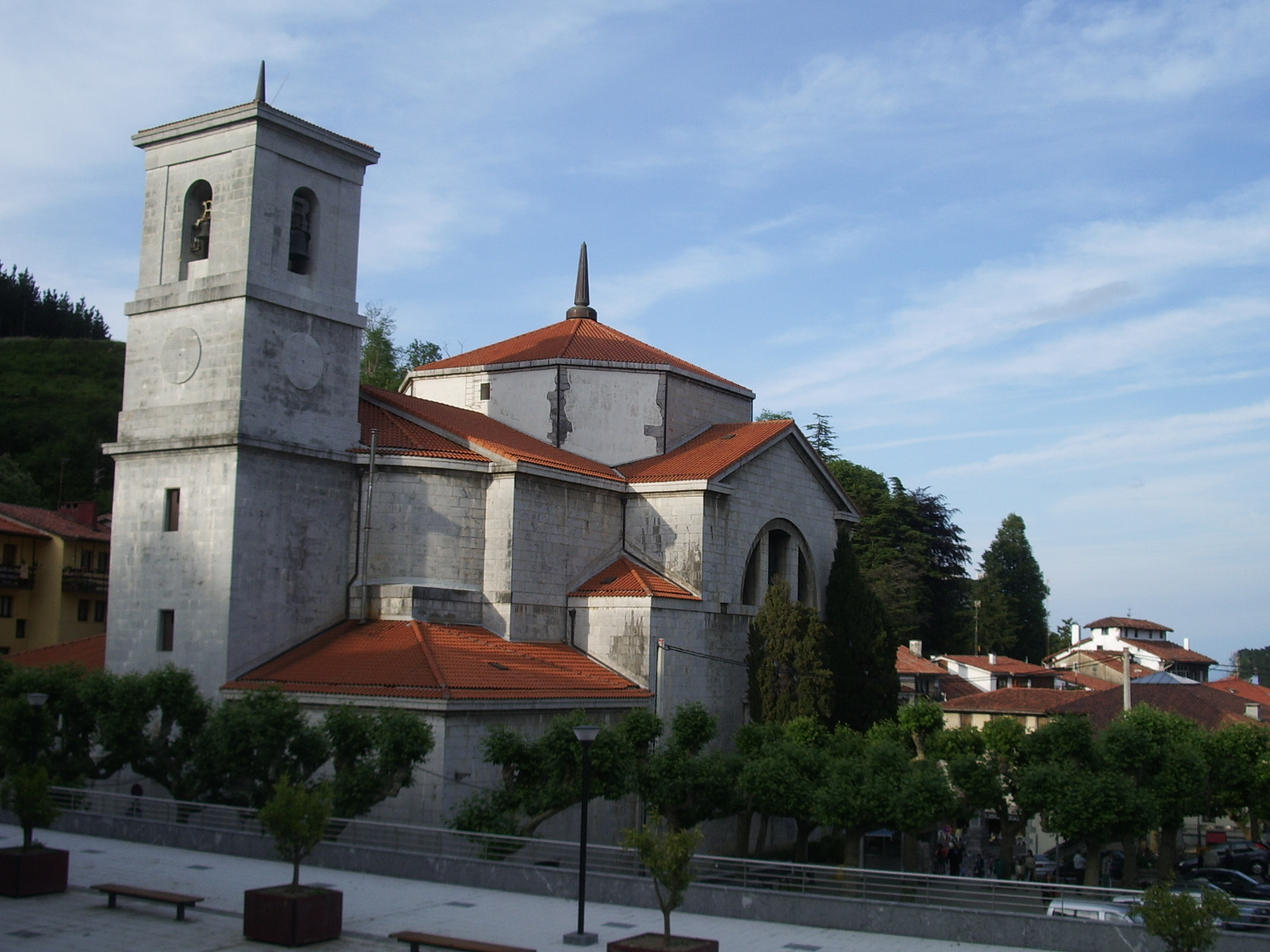
The Church of Nuestra Señora de la Asunción sits right in the heart of Mutriku, a small fishing town on the Basque coast. It is the town's principal religious building and one of the natural stops on a walk through the old quarter, just a short stretch from the harbor.
When was the church built?
Construction began in 1803 to a design by architect Silvestre Pérez y Martínez. On-site building work was overseen by Manuel Vicente Laca and Mariano José de Lascurain, two architects trained at the Academy of San Fernando who lived locally in Mutriku. The church was finally ready for services on December 8, 1843 — a construction span of roughly four decades. Long build times like this were not unusual for parish churches in the region at the time: funding gaps and shifting local priorities routinely stretched projects of this scale over generations.
What architectural style does it represent?
The church is regarded as one of the clearest examples of neoclassical architecture in Gipuzkoa. The facade makes the case on its own: a portico raised on six Doric columns supporting a plain entablature gives the building the restrained, monumental look typical of neoclassicism at the turn of the 19th century. The exterior walls are built from dressed ashlar stone, and the same material continues inside, where columns and arches alternate with masonry walls.
What makes the interior unusual?
Rather than the elongated Latin-cross layout common in Catholic churches, this building follows a Greek-cross plan — four arms of equal length meeting at a central point. That choice gives the interior a more compact, centralized feel and changes how daylight moves through the space compared with a typical long nave. The ashlar columns and arches repeat at regular intervals, giving the whole interior a consistent rhythm.
What protected status does the building hold?
The church is listed as a cultural heritage asset of the Basque Country, a designation that safeguards its structure and facades from alterations that would depart from the original design. That protection is a large part of why the building has kept its neoclassical character essentially intact since the mid-19th century.
How do you get to the church?
The church stands in Mutriku's historic center, close to the old town's main streets and the fishing harbor. Mutriku itself lies on the Cantabrian coast in the province of Gipuzkoa, roughly between San Sebastián and Bilbao, making it an easy stop while touring the Basque coastline. Given its central position, the church is reachable on foot from anywhere in the old quarter.
Frequently Asked Questions
How long did construction take? Work started in 1803 and the church opened for services on December 8, 1843 — a total build time of about forty years.
Who designed the church? The design is attributed to architect Silvestre Pérez y Martínez, with construction supervised locally by Manuel Vicente Laca and Mariano José de Lascurain.
What makes its layout different from most churches? It follows a Greek-cross plan, with four equal arms, rather than the more common Latin-cross layout with an elongated main nave.
Is the church officially protected? Yes, it is listed as a cultural heritage asset of the Basque Country, which protects its original architecture from unauthorized changes.
Nearby places

Earn badges for the places you visit
Download NextOnTrip, discover new places and check off your trails.