About this place
Ruínas da cidade velha de Santa Luzia, also called Citânia de Santa Luzia, is an Iron Age fortified settlement on the hill above Viana do Castelo in northern Portugal. The ruins sit on top of Monte de Santa Luzia, with views over the mouth of the Lima river and the Atlantic coast. It is one of the most important archaeological sites in the Minho region.
What is a citânia?
In northern Portugal, a citânia is a fortified pre-Roman hillfort settlement. Santa Luzia belongs to the same family of sites as Briteiros and Cividade de Âncora. Its builders chose an elevation that gave them command of the surrounding land and natural protection.
How old is the site?
Archaeological finds suggest the settlement was occupied in different phases from the 8th century BC. It grew during the Roman period, and life continued here until at least the 5th century AD. That is more than a thousand years of settlement, making it a fine example of the shift from the hillfort culture to Roman rule.
What can you see?
- traces of three lines of defensive walls reinforced by towers,
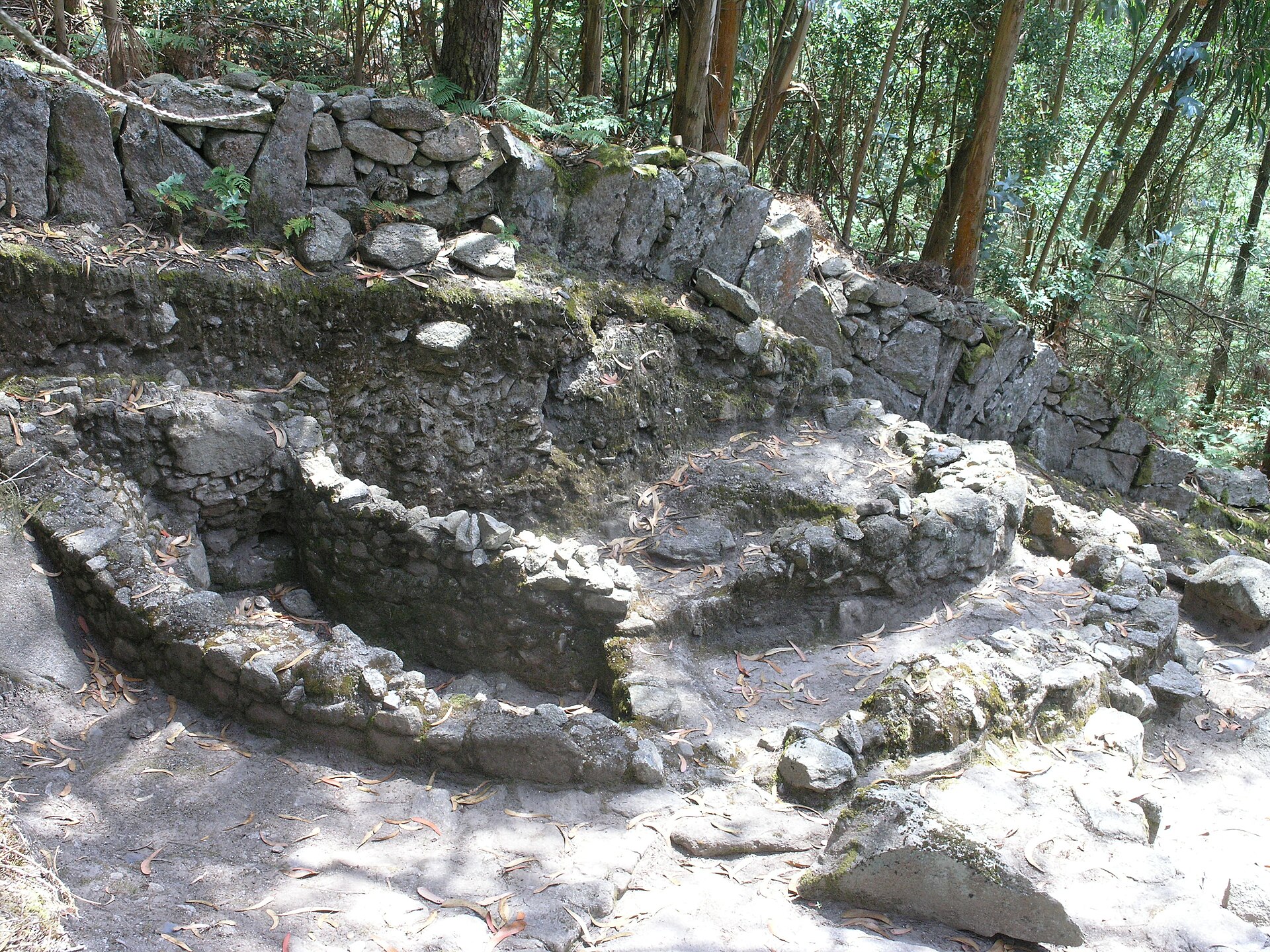
- foundations of many houses with different layouts,
- a wide view over the town, the Lima estuary and the coast.
Only about one third of the original area is uncovered today. A large part was lost when the Hotel de Santa Luzia and its access roads were built.
History of research
The site has been known since 1722. The first excavations took place in 1876, led by Joaquim Possidónio Narciso da Silva. Since 1926 it has held the status of a National Monument of Portugal.
Frequently asked questions
Where are the ruins? On Monte de Santa Luzia in Viana do Castelo, in the Minho region of northern Portugal.
What period is the settlement from? It was inhabited from the 8th century BC, through the Roman era, until at least the 5th century AD.
Is it a protected monument? Yes, it has been a National Monument since 1926.
Has the whole settlement been excavated? No, about one third of the former area is exposed.
Why visit? For the mix of archaeology and panorama: from the top you can see why the ancient inhabitants picked this spot. Before going, check current opening hours and access conditions with Património Cultural or the city council, as access to the hill has changed at times.
Santa Luzia hill combines ancient heritage with one of the best views in the area, so it fits naturally into a visit to Viana do Castelo. Visitors can walk among the remains of houses and walls and picture daily life in a settlement that lasted from the Iron Age into late antiquity. It witnessed long cultural change, from local hillfort communities to Roman influence, and its layout of walls and towers shows how much defence mattered.
Nearby places

Earn badges for the places you visit
Download NextOnTrip, discover new places and check off your trails.