About this place
Rotunda da Boavista garden is the green centre of a large roundabout in the Boavista district of Porto, Portugal. At its heart stands one of the city's most recognisable monuments. The site lies at roughly 41.1579 N, 8.6291 W, within the united parish of Cedofeita, Santo Ildefonso, Sé, Miragaia, São Nicolau e Vitória.
What is this place?
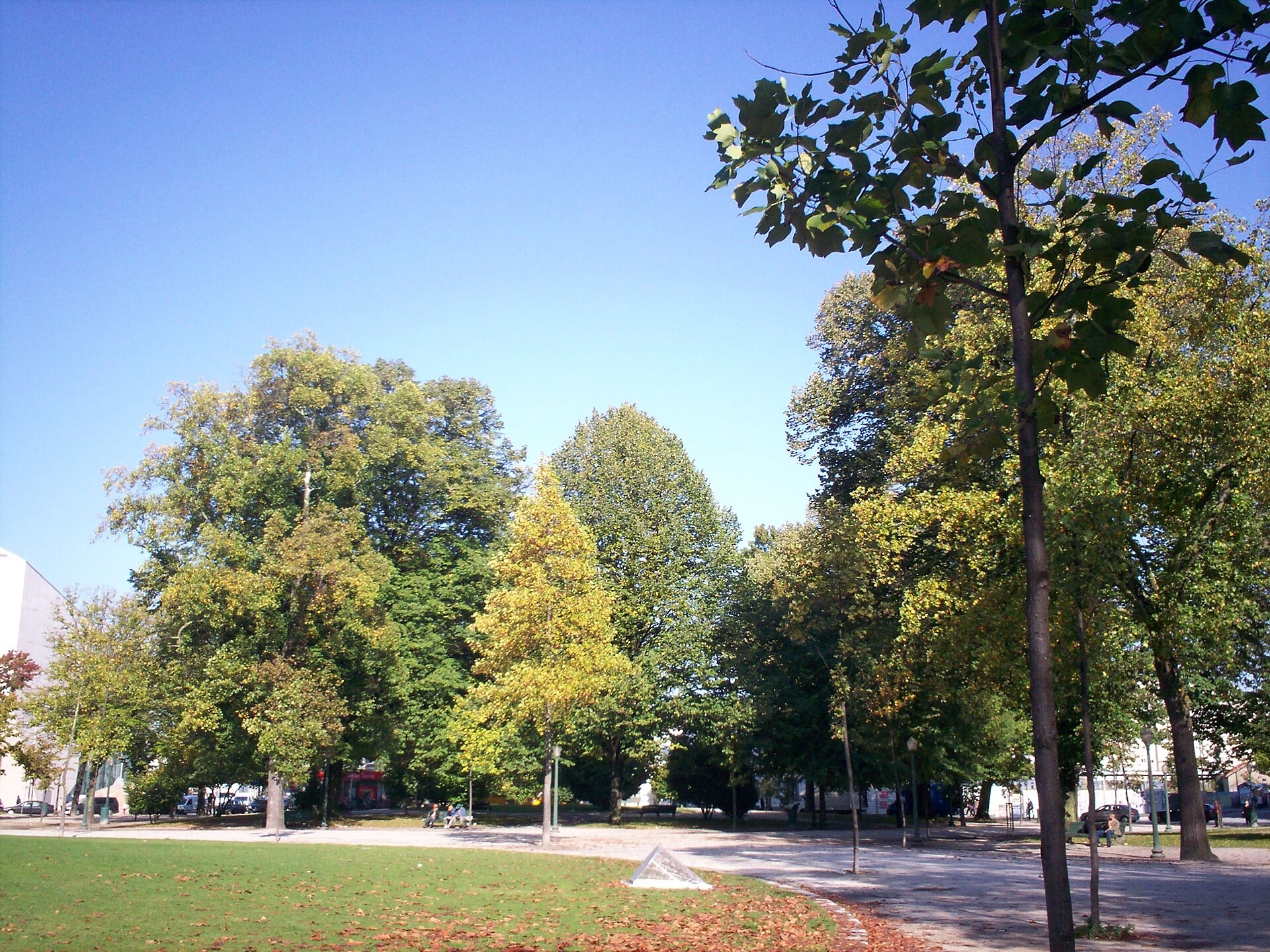
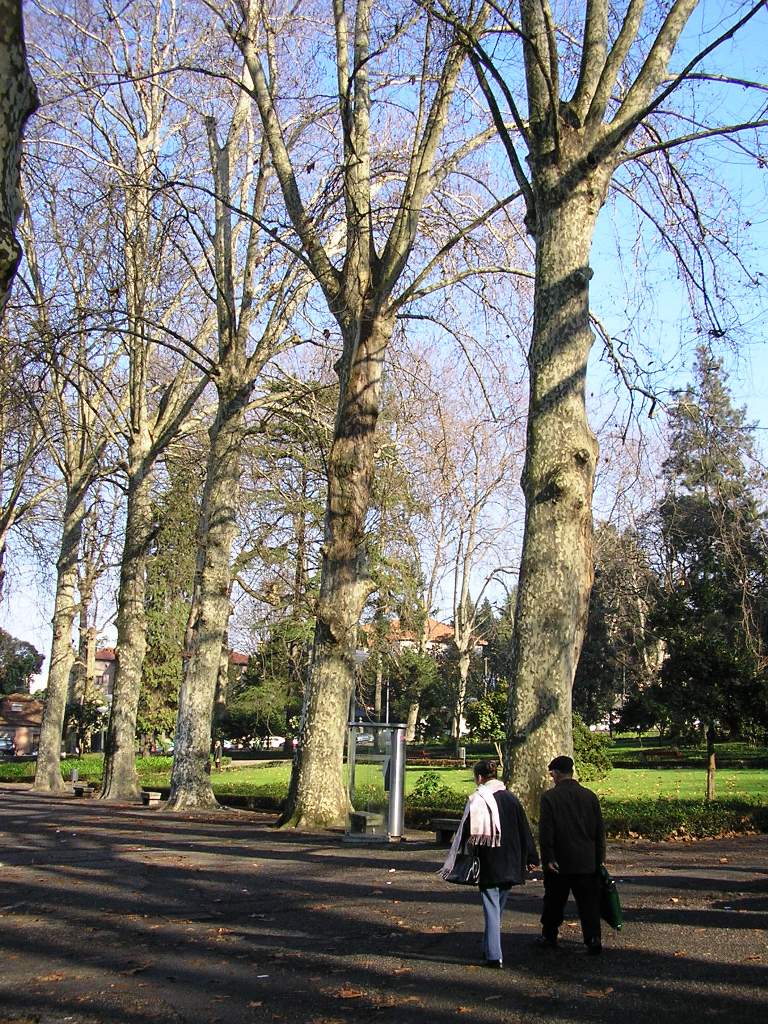
The rotunda is a traffic roundabout with a public garden inside it, working at once as a small park, a landmark and a place of remembrance. City traffic circles around it, but the garden itself offers a short pause among the trees. Winding paths cross the island from one side of the roundabout to the other, and wooden benches line them.
What was the square called in the past?
The square was built in the late 1700s and was first named Praça de Boavista. In 1903 it was renamed Praça de Mouzinho de Albuquerque, honouring a Portuguese soldier who fought in Africa in the 19th century. In everyday speech, locals and visitors simply say Rotunda da Boavista.
What does the column at the centre commemorate?
The main feature of the garden is the Monument to the Heroes of the Peninsular War (Monumento aos Heróis da Guerra Peninsular). It is a column about 45 metres (148 ft) tall, built to celebrate the victory of Portuguese and British forces over the French troops who invaded Portugal between 1807 and 1814. Construction was unusually slow, running from 1909 to 1951. The design came from the well-known Porto architect José Marques da Silva, working with the sculptor Alves de Sousa.
The column is crowned by a lion, the symbol of the joint Portuguese and British victory. The lion is shown bringing down the French imperial eagle, a clear image of the invaders' defeat.
How to visit
No ticket or booking is needed. The best approach is to stroll the paths around the column, look at it from several angles and rest on one of the benches. Because the garden sits inside a roundabout, you reach it via the pedestrian crossings around the square, so take care with traffic. A visit usually takes a quarter of an hour or so, and the spot fits well as a stop on a walk through Boavista.
Why stop here?
- The column is one of Porto's characteristic landmarks.
- The monument tells a story of early 19th-century Europe and the Portuguese-British alliance.
- It was made by creators tied to Porto, and its construction spanned more than forty years.
- The green centre offers a break from city traffic.
Frequently asked questions
Is the garden free to enter? Yes, it is an open public garden.
How tall is the column? About 45 metres (148 ft).
What does the lion on top represent? It symbolises the Portuguese and British victory, and it brings down the French imperial eagle.
When was the monument built? Work ran from 1909 to 1951.
Is there somewhere to sit? Yes, wooden benches stand along the garden paths.
What was the square formerly called? First Praça de Boavista, and from 1903 Praça de Mouzinho de Albuquerque.
Who designed the monument? Architect José Marques da Silva and sculptor Alves de Sousa.
Rotunda da Boavista is a simple but meaningful stop: a few minutes among greenery and a compact history lesson in the middle of the city's traffic.
Nearby places

Earn badges for the places you visit
Download NextOnTrip, discover new places and check off your trails.