About this place
Ronov is a striking medieval castle ruin perched on a basalt hill near the village of Litice, on the edge of the Kokořínsko – Máchův kraj landscape area in the Česká Lípa district (Liberec Region). The site combines a layered history with genuinely rewarding views, and its quiet approach trails make it a good pick for travelers who prefer uncrowded corners of northern Bohemia.
How do you get to Ronov?
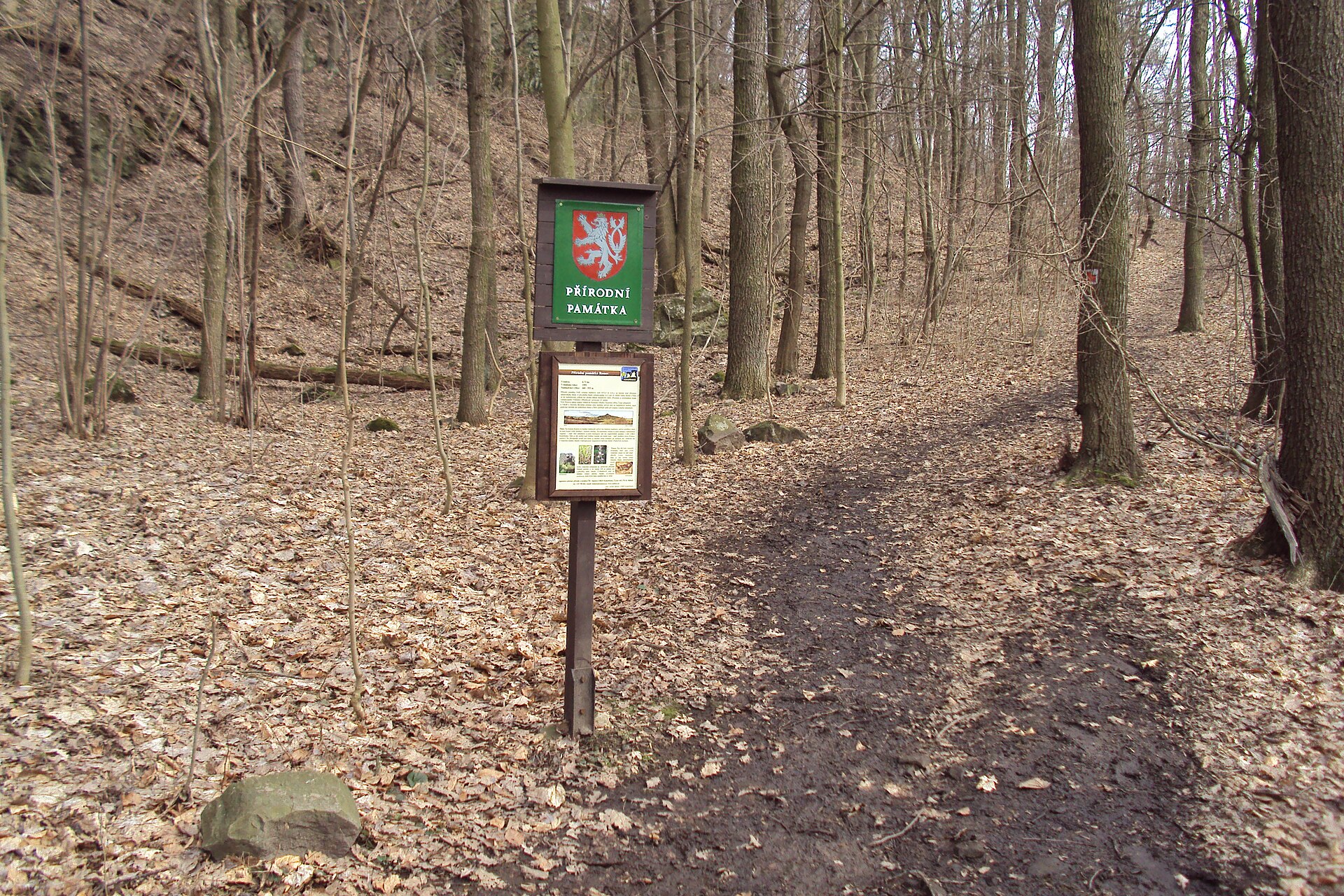
Two marked trails lead to the ruins. The more convenient option is a red-marked trail connecting the villages of Stvolínky and Blíževedly, with a signposted branch leading directly up to the castle site. Alternatively, a green trail starts at the Kravaře railway station and leads to the foot of the hill. Both approaches are straightforward for most walkers, though the final stretch up to the summit gets noticeably steeper. It's worth planning a longer loop, combining the climb with a walk through the nearby villages of Stranná and Kravaře.
What will you see there?
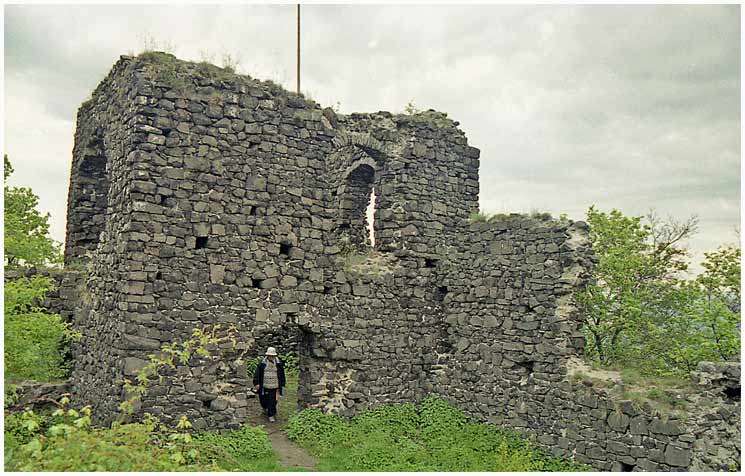
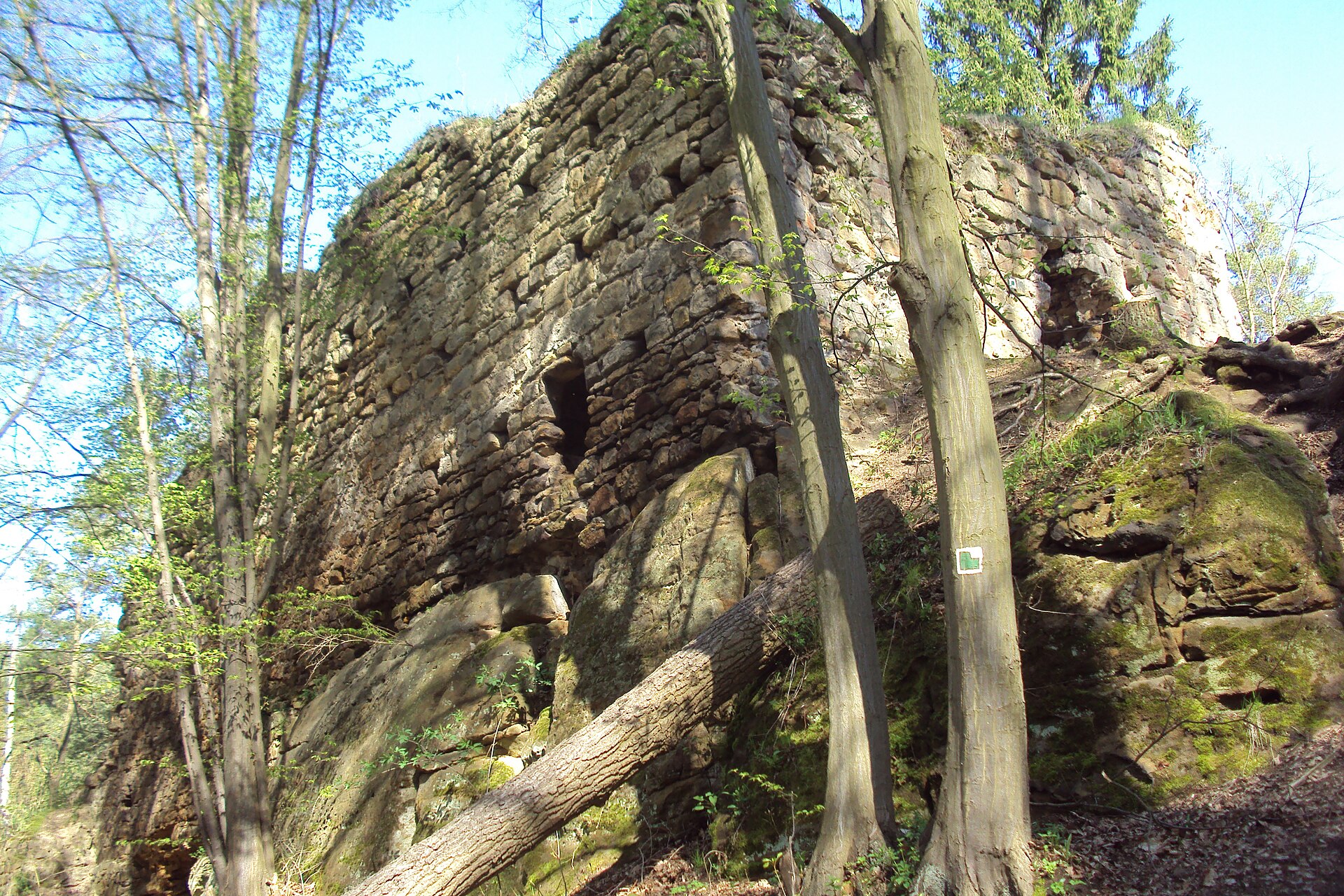
The castle itself survives only as a ruin — fragments of walls and building outlines are what remain of the original stronghold — but the setting, not the masonry, is the main draw. From the hilltop, a wide panorama opens up over the surrounding villages of Stvolínky, Stranná and Blíževedly, and on clear days the view extends across much of the rolling Ralská Pahorkatina landscape. The hill's distinctive cone shape, formed of basalt, is itself a small geological curiosity in a region where volcanic hills alternate with the sandstone rock formations typical of the Kokořínsko area.
Nearby, toward the village of Hvězda, the remains of an unidentified 13th-century stronghold have also survived — local researchers believe it may have served as a guard post protecting the approach to Ronov itself. It's a lesser-known extra stop for anyone interested in tracing the area's older history off the main trail.
A bit of history
The castle was most likely built in the 14th or early 15th century, and its construction is traditionally linked to the Ronovci — one of the oldest and most influential Czech noble families, whose roots trace back to the late 12th century. The first written mentions of the stronghold date to around 1427. Its heyday came under Vilém z Ilburka, who took over the castle in 1438 and carried out a substantial rebuilding.
After 1538, when the seat of local administration moved to nearby Stvolínek, Ronov gradually lost its importance and began falling into ruin. Further damage came during the Thirty Years' War, when Swedish troops burned the castle in 1643. Later still, in 1845, a wayside cross standing near the former palace building was damaged — a small trace of the site's later, purely symbolic use.
When should you visit?
The best months to visit run from April to October, when the trails are dry and the views from the summit are at their clearest. Spring and autumn show off the surrounding forests and meadows at their most scenic, and lighter foot traffic means more solitude at the top. In summer, an early morning or late afternoon visit is worth considering, since the exposed, rocky summit offers little shade during the hottest hours.
Frequently asked questions
Is there an entrance fee for the Ronov ruins? No, the site is freely accessible and there is no admission charge.
How long does it take to reach the top? Depending on the trail and pace, the walk up from Blíževedly or from Kravaře station typically takes between 30 and 60 minutes.
Is the trail suitable for families with children? Yes, the approach trails are easy, though the final, steeper stretch just below the summit calls for care and sturdy footwear.
What else is worth combining with a visit to Ronov? Extend the trip with a walk through the nearby villages of Stvolínky, Stranná and Blíževedly, and history enthusiasts can also seek out the remains of the 13th-century stronghold near the village of Hvězda.
Nearby places

Earn badges for the places you visit
Download NextOnTrip, discover new places and check off your trails.