About this place
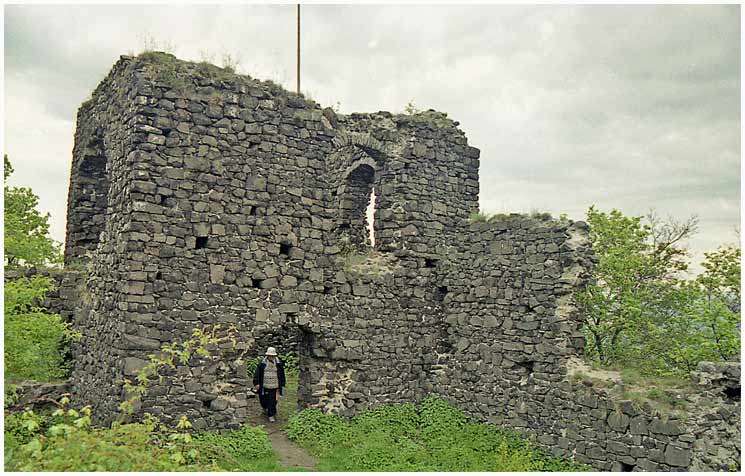
Helfenburk is a ruined rock castle hidden in the forest roughly 3 kilometres east of Úštěk, in the Bohemian Uplands (České středohoří) of northern Czechia. Only fragments of walls and a tower remain of the once-important stronghold, but the site still draws hikers looking for history and sweeping views over the surrounding hills.
How do you get to Helfenburk?
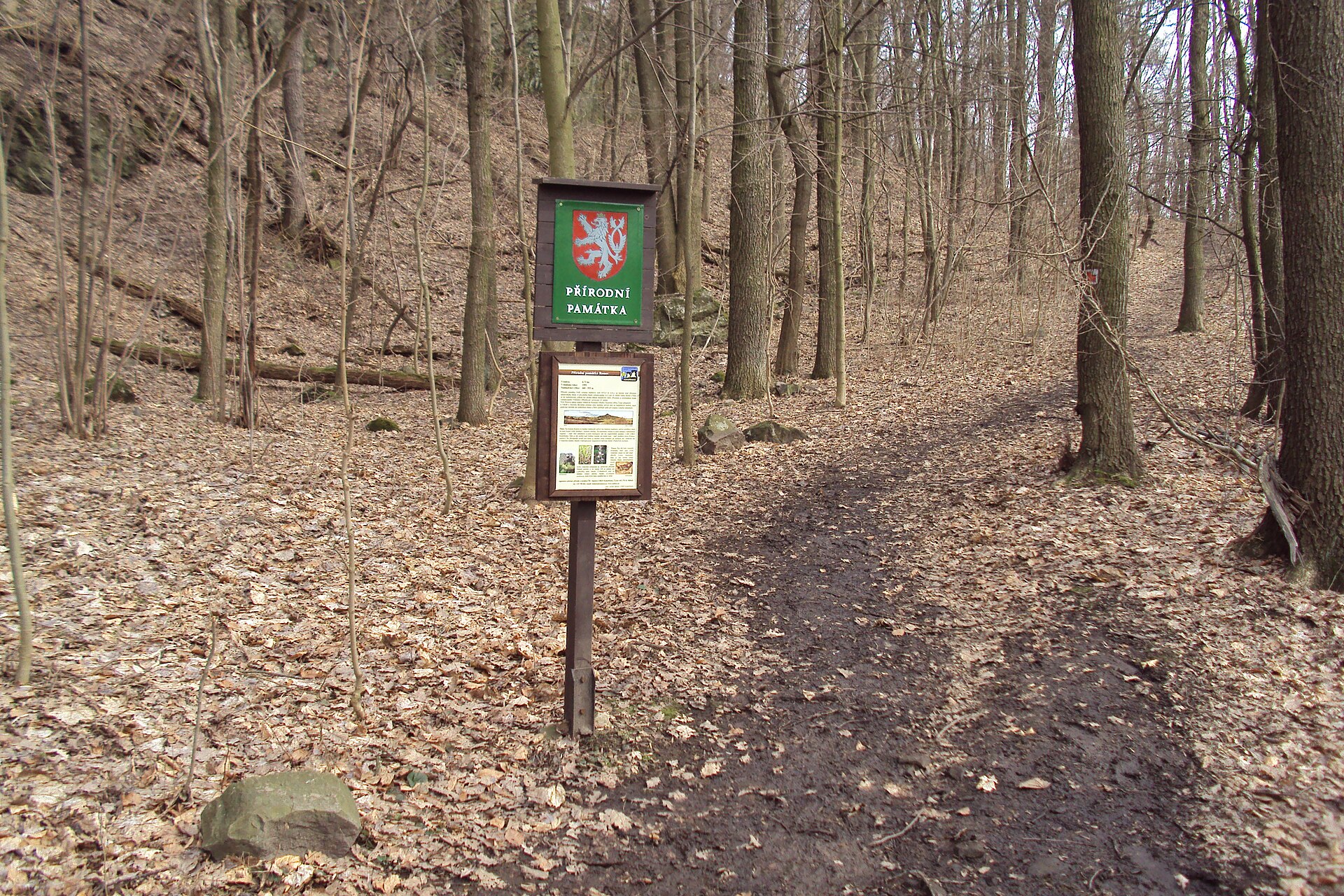
The castle sits on a hiking and cycling route connecting Úštěk with nearby villages such as Rašovice. The easiest approach is to drive or take a bus to Úštěk and cover the rest on foot — the final stretch runs through forest for a few kilometres and there is no paved access road for cars. As a result, a visit to Helfenburk feels like a genuine woodland hike to a ruin rather than a stroll from a car park at the gate.
What is the history behind the castle?
Helfenburk was most likely built in the 13th or 14th century by the Berka of Dubá family (a branch of the Ronovci), who took their name from the castle itself. In 1374 or 1375, Hans of Helfenburg sold his seat to the Prague archbishop Jan Očko of Vlašim, bringing the castle into the hands of the Church and turning it into an archiepiscopal residence.
Očko's successor, Archbishop Jan of Jenštejn, invested heavily in the fortifications, raising defensive walls up to 12 metres high. During unstable times, Helfenburk was used to safeguard precious treasures, relics and manuscripts moved from St Vitus Cathedral in Prague — a clear sign of how much trust was placed in its defences.
Ownership changed hands repeatedly over the following centuries, passing through the hands of Jan Smiřický of Smiřice, Zdeněk of Šternberk, King George of Poděbrady, Wilhelm of Ilburg, Heinrich II of Kurzbach and Sezima of Ústí. From the 16th century onward the castle's importance declined steadily, and it was eventually inhabited only by servants. The Thirty Years' War delivered the final blow: in 1622, in the aftermath of the Battle of White Mountain, imperial troops under Marshal Buquoy plundered and burned the castle, and in 1623 the confiscated estate was handed over to the Jesuits of Liběšice.
In the late 19th century, industrialist Count Josef von Schroll bought the ruins and carried out substantial restoration work, rebuilding the collapsed third floor of the main tower and turning it into a summer residence.
What will you see on site?
The main draw today is the still-imposing set of defensive walls and the tower, from whose top visitors can take in a panorama of the Bohemian Uplands. The rock-castle construction — partly carved directly into the natural bedrock — illustrates how medieval builders used the terrain itself to reinforce a stronghold's defences. The ruin is protected as a cultural heritage site.
Helfenburk also comes with a local legend about monkeys said to have lived there in the early 17th century, multiplying and frightening nearby villages until imperial troops finally "pacified" them — a story local guides still like to tell.
When is the best time to visit?
The castle grounds are freely accessible all year round, so a trip can be planned in almost any season. Access to the tower, however, is limited to weekends, so if the panoramic view is the goal, it is worth timing the visit for a Saturday or Sunday.
Frequently asked questions
Is there an entrance fee for Helfenburk? The ruins themselves are freely accessible, though climbing the tower is usually only possible on weekends.
How long does the hike to the castle take? The route from Úštěk runs through forest for a few kilometres and typically takes around an hour on foot.
Can you drive right up to the castle? No — there is no paved access road, so the final section has to be covered on foot.
What is Helfenburk best known for? Its tall defensive walls built under Archbishop Jan of Jenštejn, and the view over the Bohemian Uplands from the tower.
Nearby places

Earn badges for the places you visit
Download NextOnTrip, discover new places and check off your trails.