About this place
Reserva Natural Integral de Ijuana is a strictly protected nature reserve on the easternmost edge of Tenerife, forming part of the Anaga massif within the municipality of Santa Cruz de Tenerife. Covering just under 919 hectares, it is regarded as one of the most inaccessible and best-preserved corners of this side of the island.
Where exactly is the reserve located?
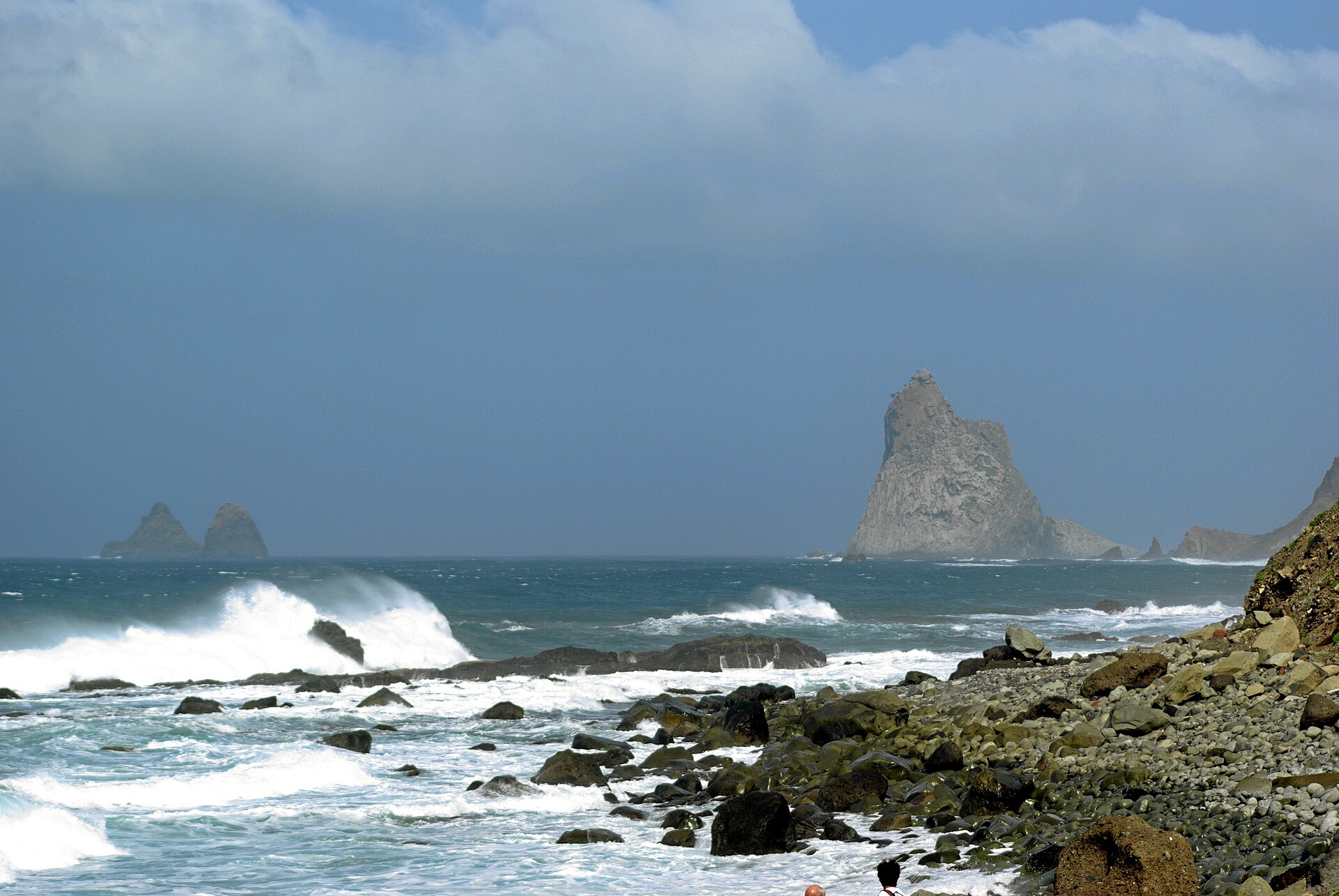
Ijuana occupies the southeastern tip of the Anaga peninsula, a rugged, deeply folded stretch of terrain at the eastern end of Tenerife. The reserve's boundaries take in the entire Palmital ravine along with sections of the Anosma and Ijuana ravines. The landscape is defined by steep, deep gorges separated by jagged ridges, out of which isolated peaks occasionally rise, standing sharply apart from the surrounding terrain. This rugged relief, shaped by long-term erosion of the volcanic bedrock, has kept the area difficult to reach — and, as a result, unusually well preserved.
What makes this place ecologically significant?
Ijuana protects one of the finest surviving examples in Tenerife of cardón-tabaiba scrub, a plant community of succulents and drought-adapted shrubs suited to a dry, sun-exposed, rocky environment. Similar vegetation once covered vast stretches of the African mainland as well. Despite its small size, the reserve holds a high concentration of endemic species, including protected plants, some of which are threatened with extinction. The area's isolation and difficult access have limited human pressure over the decades, allowing these plant communities to persist in a near-natural state.
What legal protection does the reserve hold?
The area was designated a nature reserve and zone of ecological sensitivity under Canary Islands regional law 12/94, a status later upheld and consolidated by Legislative Decree 1/2000 on land planning for the Canary Islands. This places Ijuana in the strictest protection category applied in the archipelago, more restrictive than the rules governing natural parks or protected landscapes elsewhere on the islands.
Can visitors actually go there?
Not in the usual sense. Conservation regulations for protected natural spaces in the Canary Islands do not permit human presence inside integral nature reserves for any purpose other than scientific research, so no hiking trails or access points have been marked or developed within Ijuana. In practice, the reserve functions mainly as a reference site for research into Anaga's endemic flora and as a biodiversity reservoir for the surrounding Anaga Rural Park, where hiking is permitted.
Frequently asked questions
Is Ijuana the same thing as Anaga Rural Park? No — it is a separate, much smaller area under the strictest protection category, situated within the larger Anaga Rural Park, which surrounds the reserve and operates under more permissive access rules.
Why is entry restricted? Because of its status as an integral nature reserve, whose purpose is to safeguard natural processes and unique plant communities without human interference — only activities of a scientific nature are permitted.
What defines the landscape here? Steep ravines separated by jagged ridges, with isolated rocky peaks rising above them, the product of long-term erosion acting on the volcanic Anaga massif.
What kind of vegetation dominates the reserve? Cardón-tabaiba scrub formations made up of succulents and shrubs adapted to a dry, sun-exposed climate, with a significant share of species endemic to the Canary Islands.
Nearby places

Earn badges for the places you visit
Download NextOnTrip, discover new places and check off your trails.