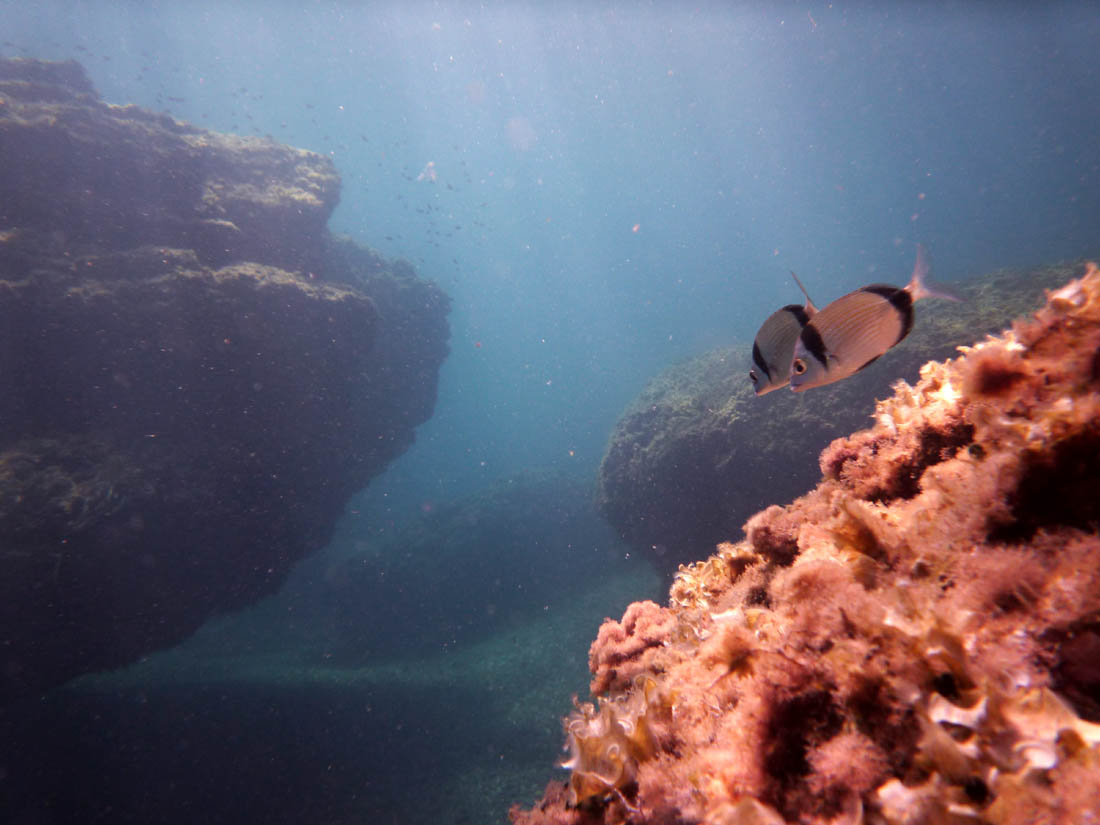
About this place
Reserva Marina de Cabo de Palos-Islas Hormigas is an underwater nature reserve off the coast of Cartagena, in the Murcia region of Spain, covering roughly 19 km² of the Mediterranean Sea around Cabo de Palos and the small Islas Hormigas archipelago. Established in 1995, it ranks among Spain's oldest marine reserves, created to preserve the biodiversity of the seabed and to safeguard populations of commercially important species relied upon by local fisheries.
How is the reserve organized?
The protected area is divided into zones with different levels of protection. At its core lies a fully protected zone covering the waters around Isla Hormiga, El Bajo, El Mosquito, and the islets of El Hormigón and La Losa, where human interference is kept to an absolute minimum. Surrounding it are an inner-waters zone, managed by the regional government of Murcia, and an outer-waters zone under the authority of Spain's national administration. This layered structure allows the most valuable seabed habitats to receive strict protection while permitting controlled access to the rest of the area.
What makes the seabed here so distinctive?
The reserve is known for its well-preserved meadows of Posidonia oceanica, a seagrass native to the Mediterranean that forms dense underwater "meadows" providing habitat for numerous fish and invertebrate species. These meadows are accompanied by coral colonies, which together build a complex ecosystem structure that supports rich biodiversity. It is precisely this combination of healthy posidonia meadows, coral formations, and rocky seabed that makes the waters around Cabo de Palos among the most ecologically rich in this part of the Mediterranean.
Why is it such a popular diving destination?
Reserva Marina de Cabo de Palos-Islas Hormigas is considered one of the most important and most visited diving areas in Spain, drawing divers from both within the country and abroad. Beyond its abundant marine life and impressive posidonia meadows, the reserve is known for numerous historic shipwrecks resting on the seabed near the cape — the remains of vessels that sank over the years along this busy stretch of coast. The varied underwater terrain, including rocky shoals such as El Bajo, further diversifies dive routes, so that every dive in the area offers a different experience.
Where exactly is it located?
The reserve sits at the edge of the Costa Cálida, by Cabo de Palos, close to Cartagena, where the Mediterranean Sea meets the rugged, rocky coastline typical of the Murcia region. The geographic coordinates at the heart of the reserve are approximately 37.654°N, -0.651°E.
Frequently asked questions
Can visitors swim or bathe within the reserve? The reserve is primarily a nature protection area, and access to its different zones — especially the fully protected core zone — is restricted in order to safeguard the ecosystem.
What can divers expect to see? Divers can encounter posidonia meadows, coral colonies, abundant fish life, and historic shipwrecks scattered around the Islas Hormigas.
When was the reserve established? Reserva Marina de Cabo de Palos-Islas Hormigas was established in 1995.
How large is the reserve? It covers an area of approximately 19 km² of Mediterranean waters.
Nearby places

Earn badges for the places you visit
Download NextOnTrip, discover new places and check off your trails.