About this place
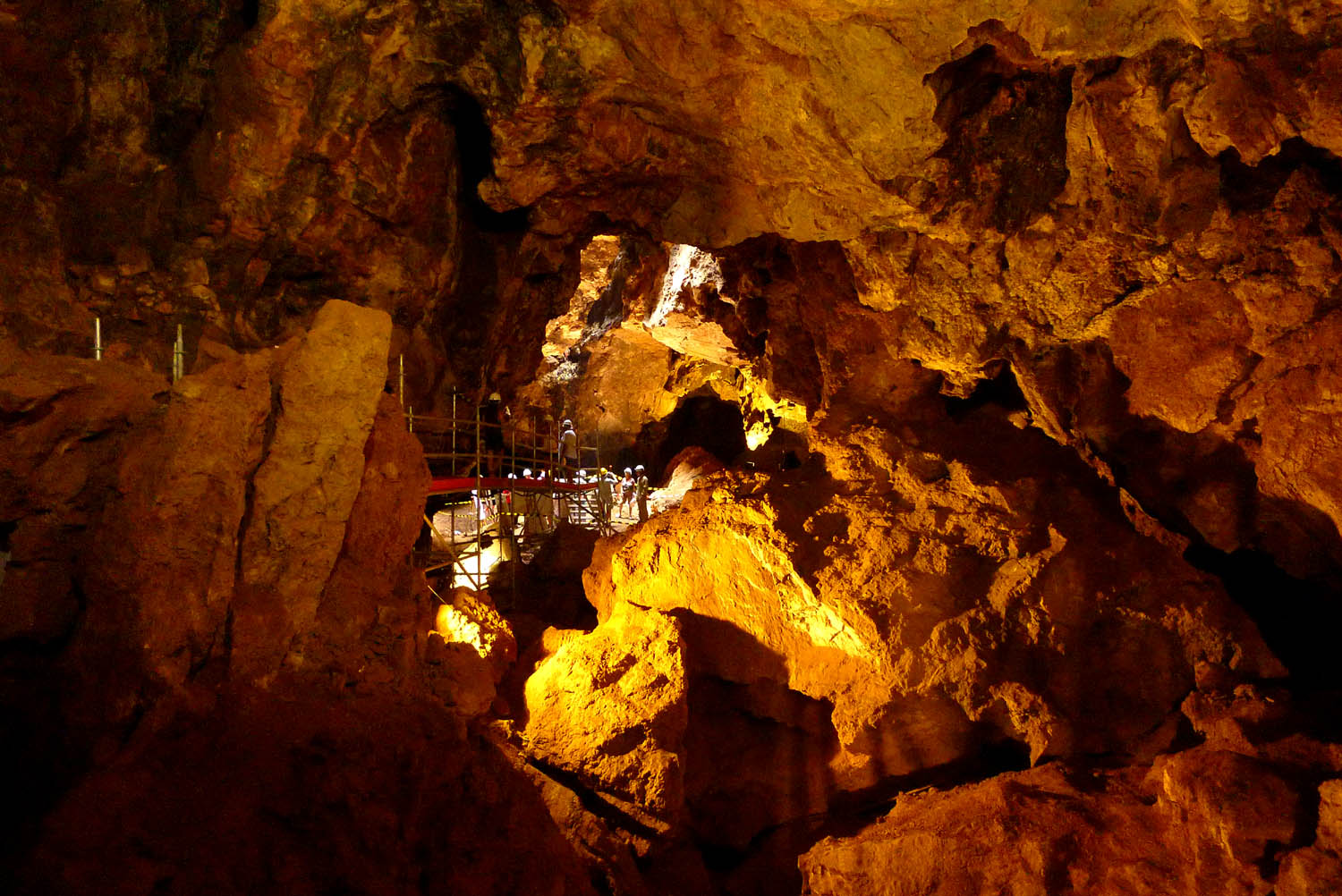
Cueva Victoria is one of the most significant Early Pleistocene paleontological sites on the Iberian Peninsula, located on the southern slope of Cabezo de San Ginés hill, in the Llano del Beal district within the municipality of Cartagena, Region of Murcia. The cave forms part of a karst system stretching over 3 km, filled with Quaternary sediments extraordinarily rich in vertebrate fossils.
What will you see?
Exposed sediment layers hold thousands of fossilized animal remains dating between 130,000 and 1.2 million years old. This is the only known European site with remains of Theropithecus oswaldi — an extinct primate related to modern gelada baboons that normally lived in Africa. Researchers also found a fragment of a human finger bone here, one of the oldest known in Europe, which some scientists link to the hypothesis that hominids crossed from Africa via the Strait of Gibraltar over a million years ago.
The site itself bears traces of past mining activity — the cave was actually discovered during manganese extraction using explosive methods, before its scientific value was recognized. Today Cueva Victoria holds Geosite status, marking it as a place of international geological significance.
How to get there?
The cave is located in Llano del Beal, within the former mining district of Cartagena-La Unión, near the Mar Menor lagoon. Access is only possible through organized guided visits — for safety reasons, the former mine site is not open for independent exploration.
When to visit?
Guided tours run periodically as part of official educational routes organized by local institutions — it's worth checking the current schedule before planning your trip, as spaces on these tours tend to be limited.
Frequently Asked Questions
Can you visit the cave on your own? No — due to its history as a mine and the sensitivity of the paleontological site, entry is only possible with a guide during organized visits.
Why is Cueva Victoria so scientifically important? It's the only site in Europe with documented evidence of Theropithecus oswaldi, and the human finger bone fragment found here ranks among the oldest traces of humans on the continent.
Does the cave have a mining connection? Yes — it was discovered during manganese mining operations, and traces of that extraction (including from explosives) remain visible alongside the paleontological layers.
What else is worth seeing nearby? The Cartagena-La Unión region offers a mining heritage trail, and the nearby Mar Menor is one of the largest saltwater lagoons in Europe.
Nearby places

Earn badges for the places you visit
Download NextOnTrip, discover new places and check off your trails.