About this place
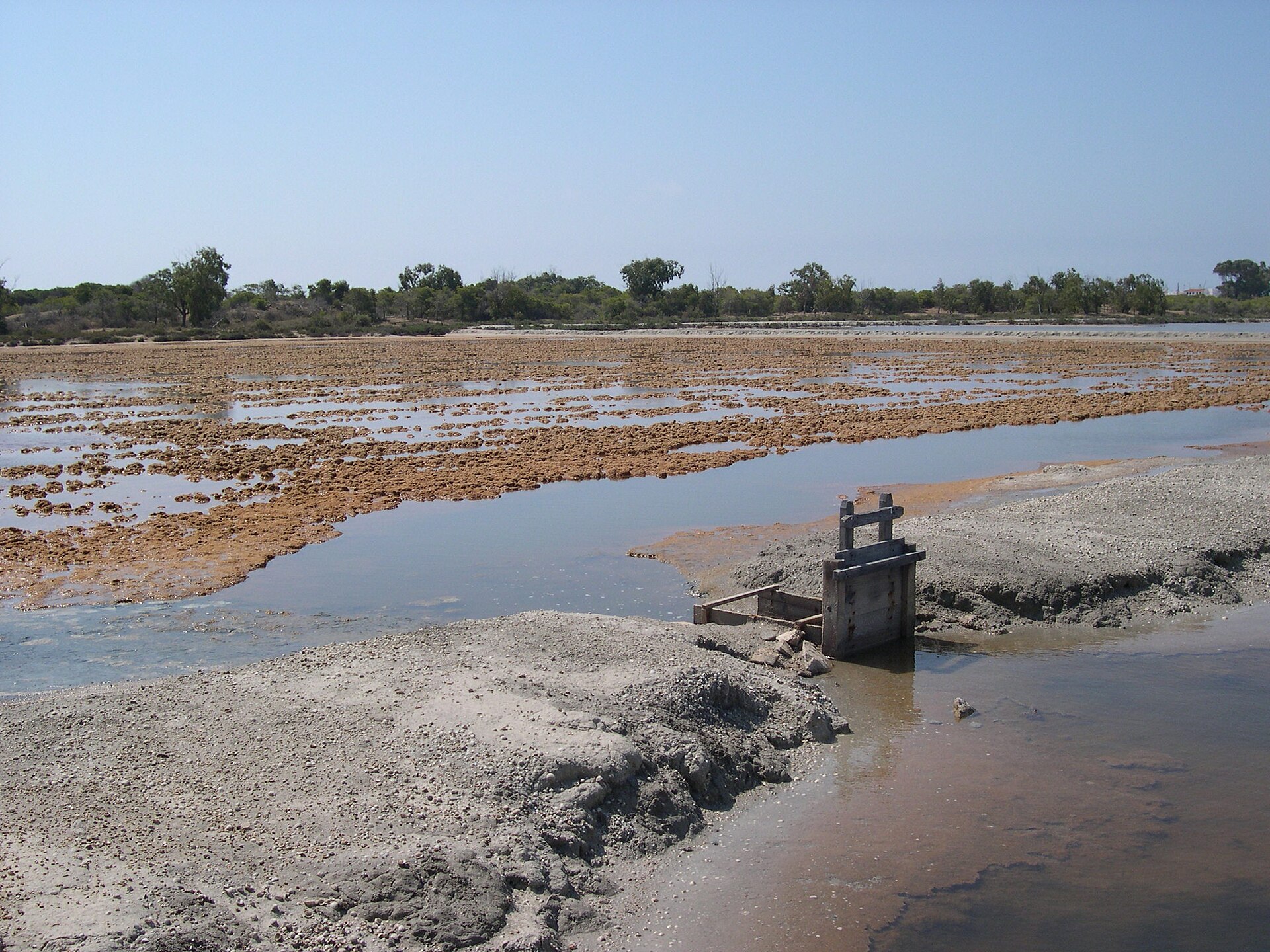
Parque Natural de las Lagunas de La Mata y Torrevieja is a protected natural park in the province of Alicante, within the Vega Baja del Segura region, spanning the municipalities of Torrevieja, Guardamar del Segura, Los Montesinos and Rojales. At its core lie two large lagoons — La Mata and Torrevieja — separated by a small anticlinal ridge known as El Chaparral. A channel connects the two basins, and both are also artificially linked to the sea through a system of canals called the "Acequiones," together forming a single salt-extraction unit that has operated for generations.
Why is the water in the lagoons pink?
It's the first question almost every visitor asks upon seeing these basins from a viewpoint or from above. The pink hue, most visible in summer, comes from the high salinity of the water and the presence of microorganisms adapted to such extreme conditions — these organisms, together with tiny brine shrimp, give the lagoons their distinctive color. The same organisms form the basis of the flamingos' diet: the birds filter the water to extract food rich in carotenoids, which is what gives their feathers their pink tone.
What birds can you see here?
The park ranks among the most important wetlands in Europe for bird life. Together with the neighboring parks of El Hondo and the Salinas de Santa Pola, it forms a wetland triangle that is crucial to the biological cycles of numerous species relying on these sites for migration, breeding and wintering. Birds make up the most significant faunal group in the park, with nearly a hundred recorded species. The greatest draw is the greater flamingo — during the breeding season the population reaches around 2,000 individuals, while the peak concentration occurs between November and March, when numbers in the La Mata lagoon can exceed 6,000–8,000 birds. Besides flamingos, visitors can spot gulls, plovers, black-winged stilts, avocets, terns and black-necked grebes.
What is life in the park like outside the migration season?
While the peak birdwatching season falls in autumn and winter, the park is active year-round. In summer, the lagoons become the setting for intensive salt harvesting — a centuries-old tradition that remains an active part of the local economy. The landscape shifts with water levels and salt concentration during this period, creating characteristic bands of color ranging from pink to the white of crystallized salt along the shores.
Frequently asked questions
Where exactly is the park located? In the south of Alicante province, in the Vega Baja del Segura region, across the municipalities of Torrevieja, Guardamar del Segura, Los Montesinos and Rojales.
When is the best time to see the flamingos? The largest concentrations, reaching several thousand birds, are observed between November and March in the La Mata lagoon.
Are the lagoons natural or artificial? Both lagoons are natural in origin but are artificially connected to the sea through a canal system, enabling the salt extraction that has taken place here for centuries.
How many bird species can be observed in the park? The park's avifauna includes nearly a hundred species, with gulls, plovers, black-winged stilts, avocets and terns standing out alongside the flamingos.
What is the park's significance at a European level? It is considered one of the continent's most important wetlands, playing a key role in the migration, breeding and wintering of numerous waterbird species.
Nearby places

Earn badges for the places you visit
Download NextOnTrip, discover new places and check off your trails.