About this place
Radotínské skály (Radotín Rocks) is a natural monument on the southwestern edge of Prague, in the Radotín district, covering nearly 28 hectares in total. Rather than forming one continuous area, the protected land is split into three separate sections strung along the valley of the Radotínský stream — stretching between the former Lochkov cement works and Strážovská street, with a further section near K Cementárně street in Radotín itself. That industrial neighbor is no coincidence: much of the rock exposed here is the legacy of old limestone quarries.
Why does this site matter to geologists?
The exposed limestone and shale beds record the development of the Prague Paleozoic basin across three geological periods — the latest Ordovician, the Silurian, and the Lower Devonian. This is far from an ordinary outcrop: Radotínské skály contains a reference section of international significance, recognized as a benchmark for the global stratigraphic boundary between the Silurian and Devonian periods. For researchers studying Earth's history hundreds of millions of years ago, this is one of the key sites in the Czech Republic, drawing geologists and students alike.
What grows and lives among the rocks?
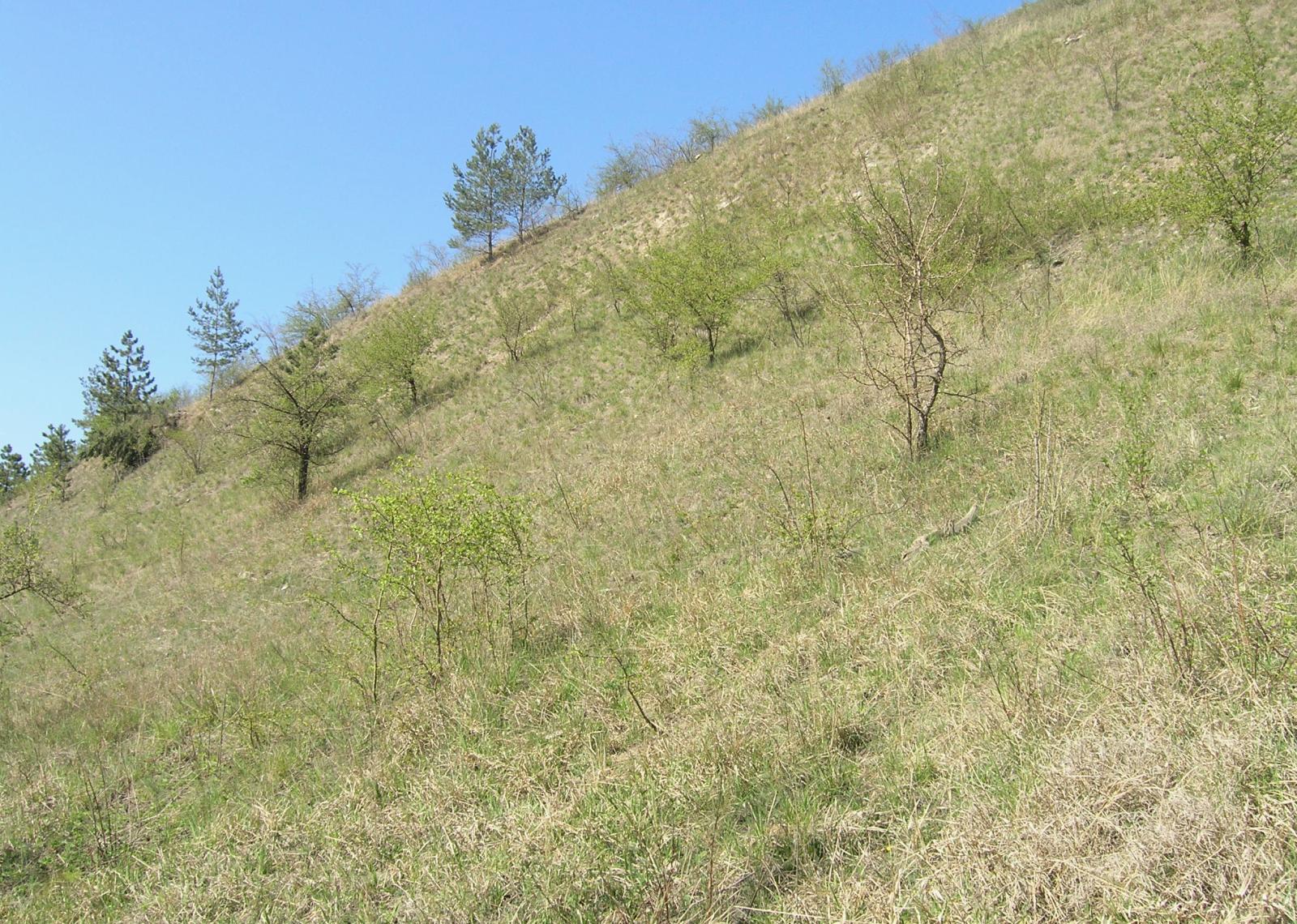
Before quarrying began, the area was covered by a warmth-loving oak forest, traces of which survive today in scattered specimens of downy oak and hawthorn scrub. The site's real character, though, comes from its rocky and steppe grasslands, which thrive on the sun-exposed limestone slopes. For decades, dust drifting from the nearby cement plant took a toll on this vegetation, but measures introduced in the 1990s to curb the dust allowed the plant communities to recover remarkably. Today visitors can find feather grass, pale thistle, silvery cinquefoil, and bearded fescue — species characteristic of dry, warm steppe habitats.
The invertebrate fauna is just as valuable as the flora. The limestone substrate favors heat-loving species, and the most ecologically significant part of the reserve — the limestone section itself — provides a refuge for numerous insects and other invertebrates tied to steppe and forest-steppe communities. This mix of bare rock, open grassland, and pockets of scrub creates a mosaic of habitats rarely found within the boundaries of a major city.
Who is this place for?
Radotínské skály appeals to nature enthusiasts and anyone curious about geology, as well as to people simply looking for a quiet walk away from central Prague. Rocky trails and views over the Radotínský stream valley draw regular visitors, and the proximity of the Slavičí údolí valley means many people combine both spots into a single outing. The site also stands as a good example of how former industrial activity — in this case limestone extraction — can, over time and with proper protection, give way to a valuable ecosystem.
Frequently asked questions
How large is the protected area? Radotínské skály cover roughly 27.64 hectares in total, split across three separate sections.
Why is the site protected? Primarily for its geological value — an internationally recognized reference profile marking the Silurian-Devonian boundary — as well as its valuable steppe grasslands and populations of heat-loving invertebrates.
Was the area once used industrially? Yes, it borders the site of the former cement works in Lochkov, and the rocks themselves are partly the legacy of old limestone quarries.
What else is worth seeing nearby? The Slavičí údolí valley lies close by and is often visited together with Radotínské skály as part of the same walking route.
Nearby places

Earn badges for the places you visit
Download NextOnTrip, discover new places and check off your trails.