About this place
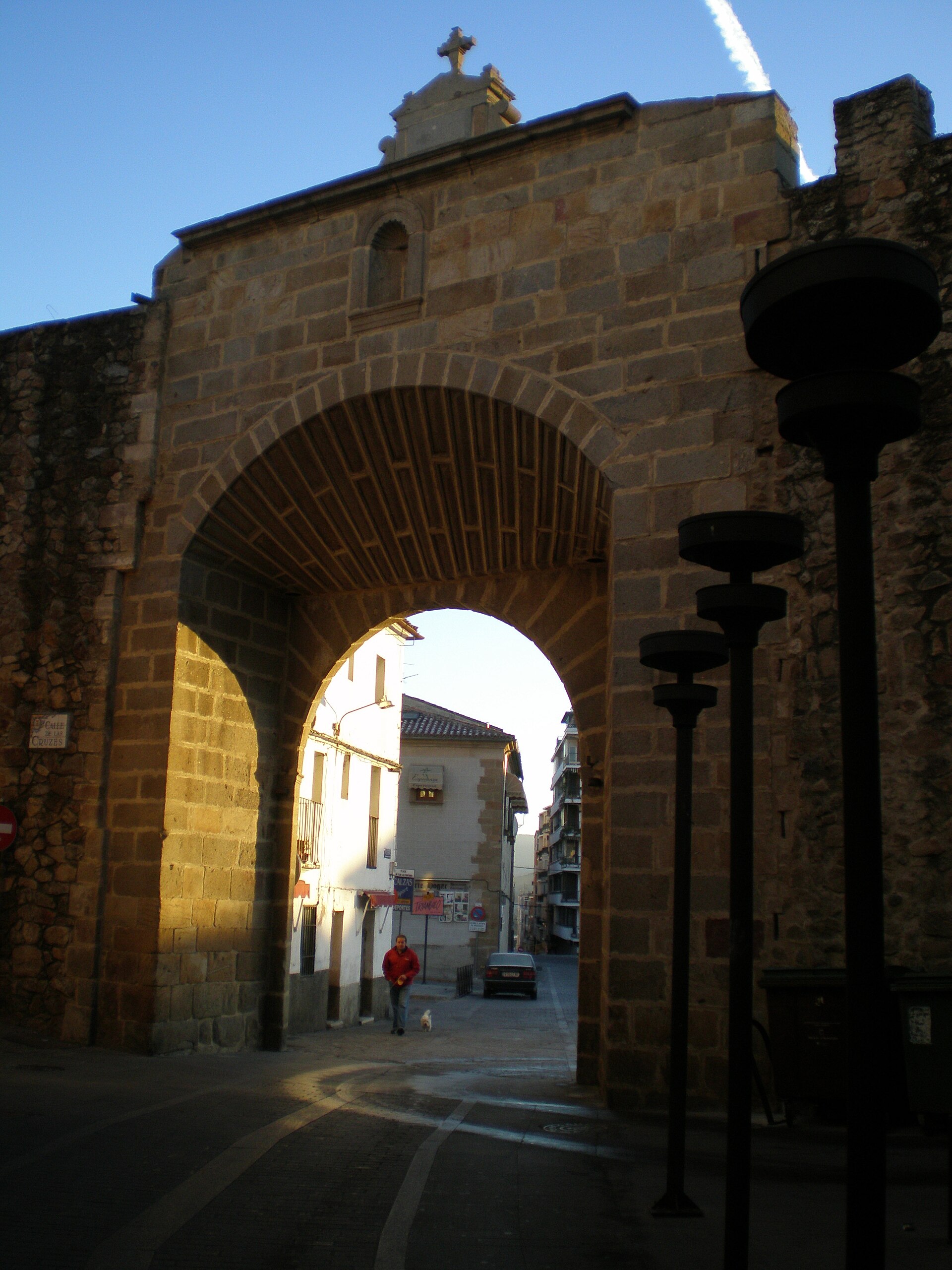
Puerta del Sol is a Renaissance-era gate set into the old city walls of Plasencia, in the Cáceres province of Extremadura. It stands on the eastern edge of the historic centre and links directly to Plaza Mayor via calle del Sol, the street that gave the gate its name.
Where does the gate come from?
Plasencia was founded as a fortified town in the late 12th and early 13th centuries, and Puerta del Sol was built together with the rest of the city wall right from that early period. It originally had a fully medieval character, flanked by two defensive towers that no longer survive. The appearance visitors see today dates from a major renovation carried out in 1573, which gave the gate its current Renaissance form.
What will you see there?
The structure rises in three distinct sections. At street level sits a semicircular archway used for passage, above it a plain, unadorned stretch of wall, and crowning the whole is a third tier featuring Ionic pilasters topped with a stone cross. On the outer face, directly above the arch, is the coat of arms of the Catholic Monarchs, flanked on either side by two shields bearing the arms of Plasencia itself. Below the royal shield sits an inscription in Gothic lettering from 1488 — now largely worn away — commemorating the end of the Zúñiga family's lordship over the city and its return to direct royal control.
Why did this gate matter historically?
During the Middle Ages, Puerta del Sol was one of the city's key gates, since it gave access to the family residences of two prominent local houses: Francisco de Carvajal and the Zúñigas. Just outside the walls stood the church of San Andrés, seat of the cathedral chapter, along with the town hospital. The road leading out from the gate continued on toward the Jewish cemetery of Berrocal and the San Lázaro bridge over the Jerte river.
How do you get there?
Puerta del Sol sits right in the heart of old Plasencia, so reaching it on foot from Plaza Mayor takes only a few minutes along calle del Sol. The gate makes a natural starting point for exploring the surviving stretches of the city wall, much of which still rings the historic centre. It's worth pairing the visit with the other surviving gates — Puerta de Trujillo and Puerta Berrozana — as well as the nearby cathedral.
When is the best time to visit?
Spring and autumn are the most comfortable seasons for exploring Plasencia, since summer temperatures in Extremadura climb high enough to make long walks along exposed walls uncomfortable. The gate's stonework looks its best in late-afternoon light, when the sun catches the coat of arms and other carved details on the facade. It's also worth checking the local calendar of fairs and festivals, since the old town tends to be especially lively during those dates.
Frequently asked questions
Is there an entrance fee for Puerta del Sol? No, the gate is part of the city's public street layout, and you can view it and walk through the archway free of charge at any time.
Can you drive a car through the gate? The archway does allow passage, but given its narrow, historic proportions, vehicle access is limited — exploring this part of the old town on foot is by far the more practical option.
How is this Puerta del Sol different from the famous square of the same name in Madrid? They are entirely different places: Madrid's Puerta del Sol is a large public square at the heart of the capital, while Plasencia's Puerta del Sol is a historic gate built into the medieval and Renaissance city walls.
How long does it take to see the area around the gate? The gate itself is a quick stop, but walking the full stretch of the city walls and visiting several of its gates typically takes around an hour to ninety minutes, depending on your pace.
Nearby places

Earn badges for the places you visit
Download NextOnTrip, discover new places and check off your trails.