About this place
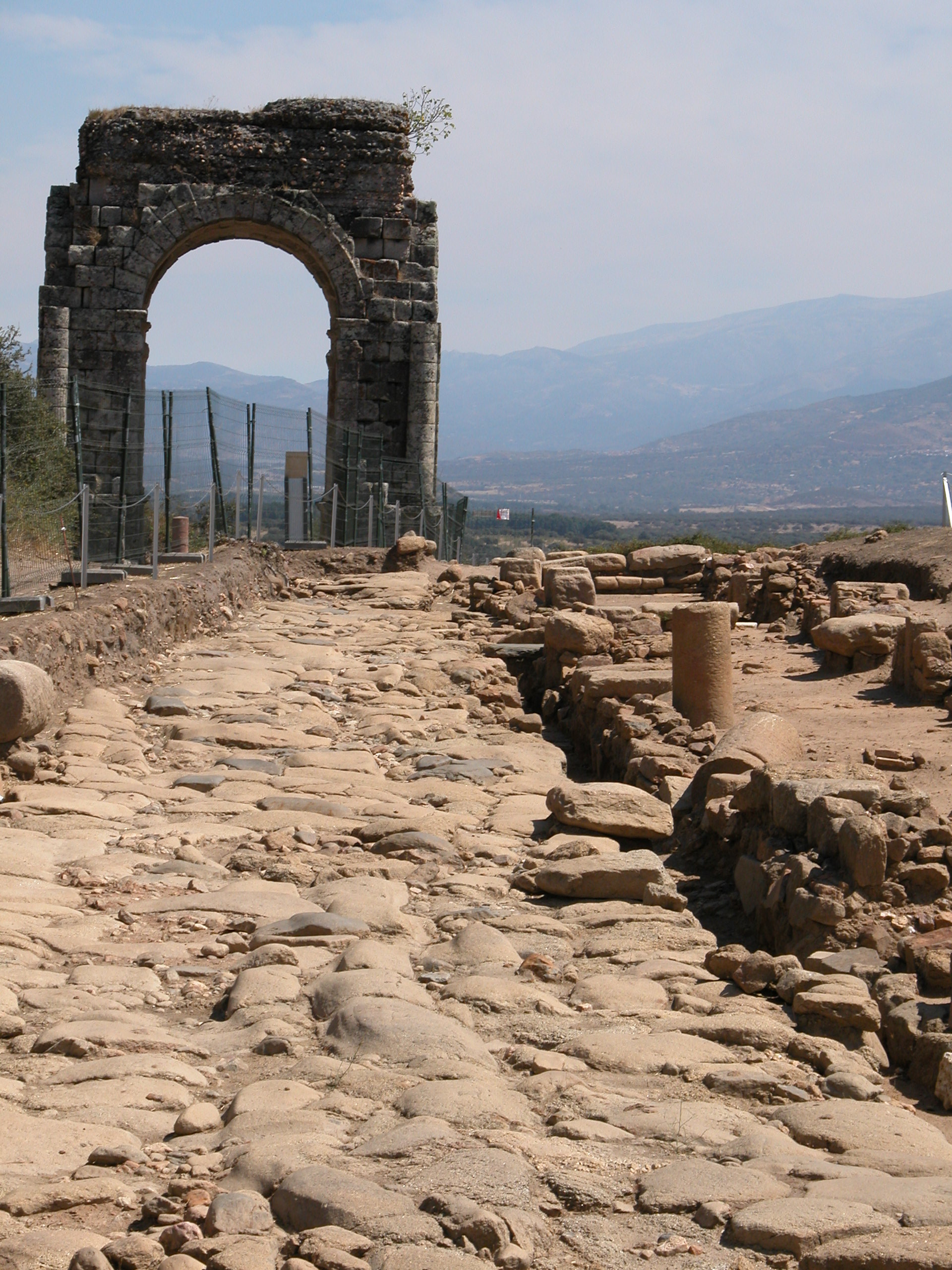
Cáparra is the archaeological site of a Roman city straddling the boundary between the municipalities of Guijo de Granadilla and Oliva de Plasencia, in the province of Cáceres, Extremadura. The site is best known for its remarkably preserved four-arched triumphal gate, the tetrapylon, a unique monument of its kind on the entire Iberian Peninsula.
Where does the name Cáparra come from?
The name Cáparra, recorded in Latin as Capera, predates the Roman era and is linked to the Vettones, a Celtic-origin people who inhabited the area before Roman conquest. The settlement grew in importance because of its position on the Via de la Plata, the ancient route connecting the north and south of Hispania between Asturica Augusta (present-day Astorga) and Emerita Augusta (Mérida). In 74 AD, under Emperor Vespasian's edict granting Latin rights to the Hispanic provinces, Cáparra was elevated to the rank of municipium, marking a decisive step in its growth as an administrative and commercial center within the province of Lusitania.
What remains can visitors see at the site today?
Excavations at Cáparra have uncovered a central forum, a stretch of the original Via de la Plata roadway, public baths, gates in the city walls, and an amphitheater. A surviving section of the decumanus, the main east-west street, still shows traces of its ancient paving, flanked by the remains of porticoes and the facades of Roman houses. The forum itself consisted of a rectangular plaza bordered by a basilica, a curia, and three temples, forming the heart of the city's public life, with documented activity continuing until the third century AD.
What makes Cáparra's arch so significant?
The site's most iconic feature is the tetrapylon, a four-way triumphal arch standing precisely at the crossing point of the city's main streets. It is the only surviving structure of this type in present-day Spain, making it a landmark of national, not merely regional, importance.
How is the Cáparra site set up for visitors?
An Interpretation Center has been built near the archaeological area, where visitors can learn about the city's history, its development under Roman rule, and its role in trade and communication along the Via de la Plata. The exhibition helps put the layout of the ancient city into context before walking through the ruins themselves.
Frequently asked questions
Where exactly is Cáparra located? The ruins lie between the towns of Guijo de Granadilla and Oliva de Plasencia, in the province of Cáceres, in the Extremadura region of Spain.
Why was Cáparra important in Roman times? The city thrived thanks to its location on the Via de la Plata, a key route linking the north and south of Hispania, and its status as a municipium, granted in 74 AD, strengthened its administrative role.
What is the site's main attraction? The tetrapylon, a four-arched triumphal gate standing at the crossroads of the ancient city's main streets, unique on the Iberian Peninsula.
Is there a visitor center on site? Yes, an Interpretation Center near the ruins provides background on the city's history and significance.
Nearby places

Earn badges for the places you visit
Download NextOnTrip, discover new places and check off your trails.