About this place
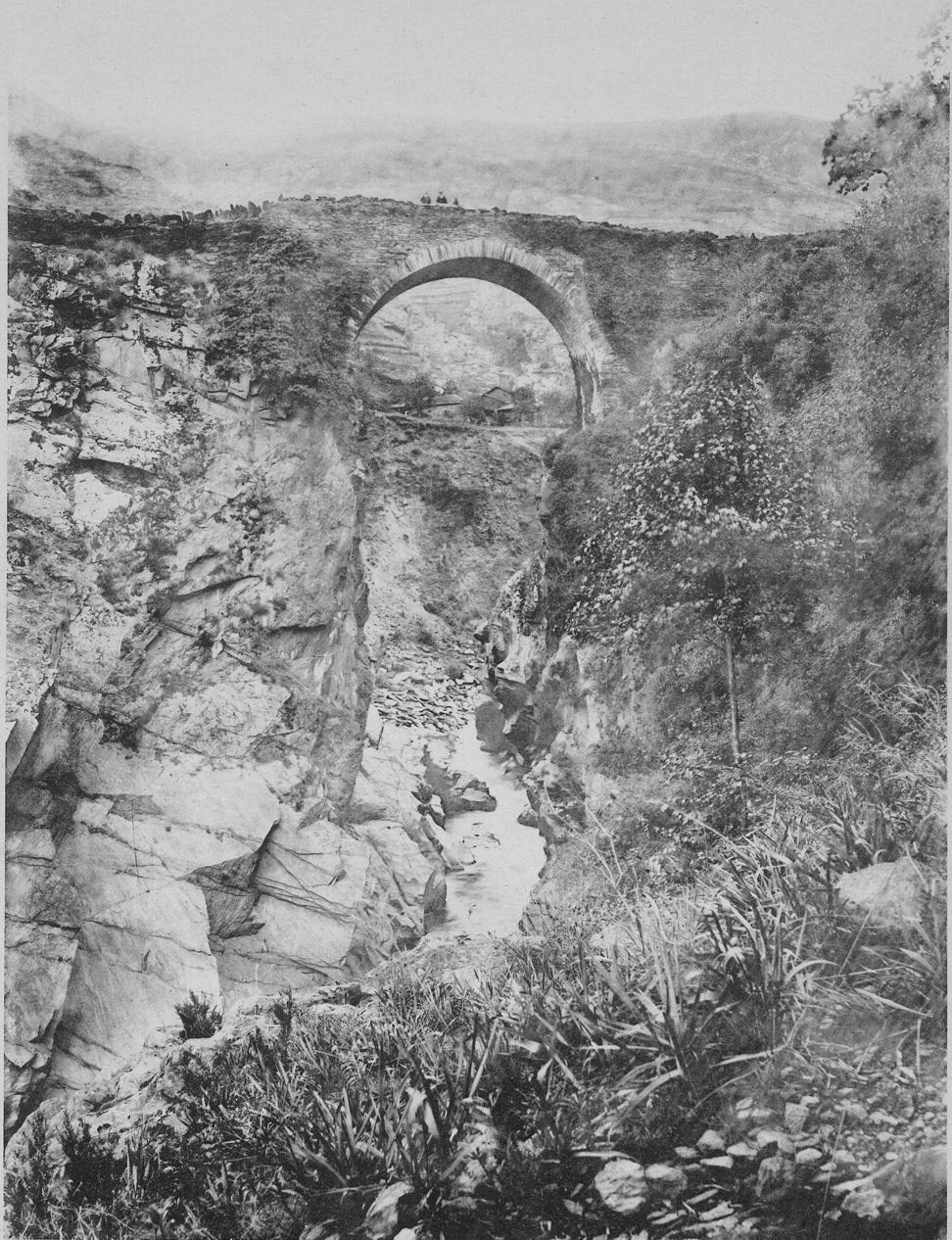
Ponte de Salime (Puente de Salime), a historic bridge over the Navia River in the municipality of Grandas de Salime in western Asturias, no longer exists in its old form – it now lies at the bottom of the Embalse de Salime reservoir, flooded in 1953. For visitors, the site combines a striking piece of engineering history with the dramatic landscape of one of twentieth-century Spain's largest hydroelectric projects.
What is left to see at the site today?
The original bridge dates back to 1548, built during the reign of Philip II: a single stone arch spanning 16 metres, suspended nearly 50 metres above the riverbed. For more than three centuries it was the only crossing over the Navia along the final seventy kilometres of its course, a vital link between Asturias and Galicia. In October 1936 the bridge collapsed after a landslide, killing two people who were crossing it at the time. It was rebuilt in 1938 in an entirely different technique: four articulated reinforced-concrete semi-arches, each weighing around six tonnes, joined with lead hinges, spanning 20 metres between abutments with a 3.6-metre width and a 2.5-metre roadway. The work was overseen by engineer José María González del Valle, third Marquis of Vega de Anzo, at a cost of 11,000 pesetas. That rebuilt bridge lasted barely fifteen years – by 1953 it had vanished beneath the rising waters of the reservoir.
What travellers see today instead is the dam and the Embalse de Salime reservoir itself, built between 1946 and 1954. On completion it was the largest reservoir in Asturias and, at the time, the largest in Spain and in Europe. Flooding the valley ended more than a dozen settlements, including Salime itself – the municipal capital until 1836 – along with Subsalime, San Feliz, Albeira, Salcedo, Doade, Veiga Grande, Saborín, A Quintá, Ríodeporto, Vilagudín, A Barqueiría, San Pedro de Ernes and Barcela. The dam and its power station are adorned with artwork by architects Joaquín Vaquero Palacios and his son Joaquín Vaquero Turcios, whose reliefs and large mural inside the turbine hall rank among the finest examples of industrial heritage in Spain.
How do you get to Grandas de Salime?
Grandas de Salime sits deep in western Asturias, close to the Galician border, along the Camino Primitivo, one of the historic paths of the Camino de Santiago. Driving is by far the easiest option: from Oviedo the journey takes roughly two hours along winding mountain roads through the Navia River valleys. The nearest larger towns are Ribadeo and Fonsagrada on the Galician side, and Pola de Allande on the Asturian side. There is no direct rail access, so a private car or a local bus from Oviedo is essentially the only way in.
When should you visit?
Late spring and early autumn are the best times to visit, when temperatures suit walking along the reservoir's shoreline and water levels reveal the distinctive contours of the flooded valley. Summer brings heat and crowds of pilgrims walking the Camino Primitivo, while winter often makes the mountain access roads difficult because of rain and fog.
Frequently Asked Questions
Can you still see the Ponte de Salime bridge today? No – both the original bridge and its twentieth-century reconstruction disappeared under the reservoir's waters in 1953. What stands at the site today is the Embalse de Salime dam and reservoir, built over the old riverbed the bridge once crossed.
Why was the bridge historically important? For more than 300 years it was the only crossing over the Navia River along a seventy-kilometre stretch, linking Asturias with Galicia and enabling trade and pilgrim traffic through this remote mountainous region.
What else is worth seeing around the reservoir? Besides the dam itself and its viewpoints over the reservoir, it's worth seeing inside the hydroelectric power station, decorated with reliefs and murals by architects Joaquín Vaquero Palacios and his son Joaquín Vaquero Turcios, ranked among the finest examples of industrial heritage in Spain.
Are there hiking trails nearby? Yes – the Camino Primitivo passes through the area, and local paths follow the shoreline of the Embalse de Salime, offering views over the mountains and the submerged valley of the Navia River.
Nearby places

Earn badges for the places you visit
Download NextOnTrip, discover new places and check off your trails.