About this place
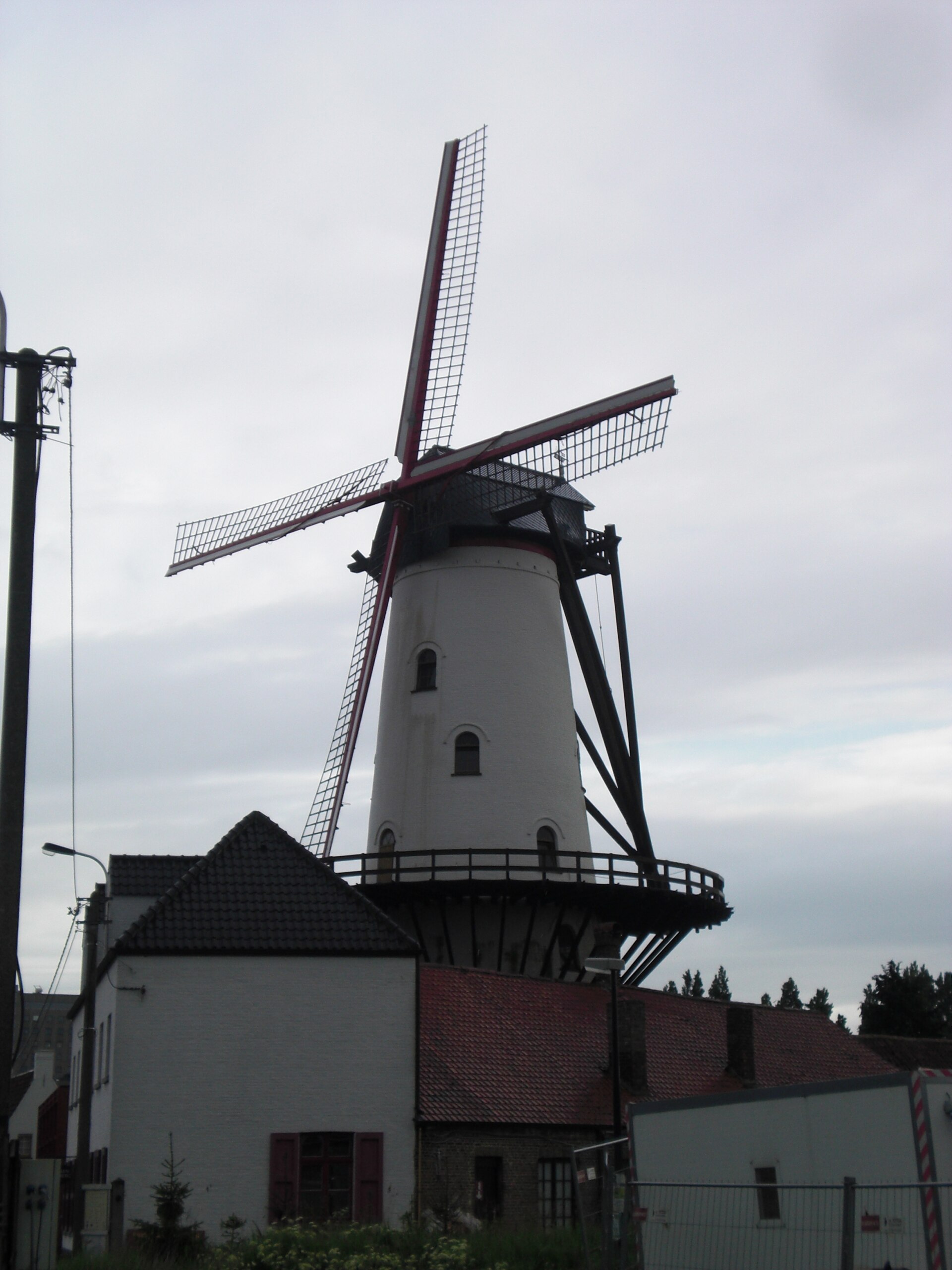
Poldermolen is a historic water-pumping windmill standing at the edge of the former Meetkerkse Moeren wetlands, on Biezenstraat in Meetkerke, a village within the municipality of Zuienkerke in the province of West Flanders. Also known as Grote Molen (Great Mill), it is one of the last surviving witnesses to this region's centuries-long struggle against water.
Why was a mill needed here at all?
The Meetkerkse Moeren area was once a peat bog, dug up intensively in the 10th and 11th centuries to supply the city of Bruges with fuel. Removing the peat lowered the already waterlogged ground even further, leaving the area even more vulnerable to flooding. As early as 1502, plans were drawn up to drain these lands, which in practice meant building a network of ditches and mechanisms capable of lifting excess water into higher-lying drainage channels.
How did the windmill actually work?
The answer to that problem was a polder mill — a structure built not to grind grain, but to power a mechanism that scooped water out of low-lying ditches and polders and lifted it into a higher drainage canal. The Poldermolen in Meetkerke is a round, stone-built mill of the grondzeiler type, meaning it sits directly on the ground rather than on the raised earthen mound typical of many Flemish grain mills. It drove a bucket wheel (a paddle-and-scoop wheel) that physically raised the water to a higher level — today it is the only surviving polder mill in Belgium equipped with this kind of wheel, making it a genuinely unique piece of technical heritage.
The building's history
The mill's current form dates from 1811. An earlier structure on the site burned down in 1810, and the following year a stone water mill was built in its place — the very building that still stands today. The Poldermolen remained in continuous operation until 1927, when it was finally taken out of service, likely as mechanical pumps gradually replaced wind-driven drainage systems across Flanders.
What makes this site significant?
The Poldermolen is one of only two water-pumping windmills still surviving in Flanders, which alone makes it a rarity in a region otherwise dominated by former grain-grinding mills. Because of its historical and technical value, the structure has been officially protected as a heritage monument since 1942 — decades before the protection of industrial heritage became common practice.
What can visitors expect to see?
Today the Poldermolen serves as a landmark within a flat, open landscape shaped by the former marshland — the surrounding countryside still retains the character of drainage-ditch-crossed polder land typical of this part of West Flanders. The mill's round, masonry structure sets it visibly apart from the more familiar wooden grain windmills found elsewhere in the region. This is a destination for those interested in the history of water engineering and the cultural landscape of Flanders rather than a conventional tourist site with built-up visitor infrastructure — its value lies primarily in the rarity of the surviving technology and in the story of a centuries-long fight against water.
Frequently asked questions
How does a polder mill differ from an ordinary windmill? A polder mill didn't grind grain — it powered a mechanism (here, a bucket wheel) that lifted excess water from low-lying land into higher drainage canals.
Is this the only mill of its kind in Belgium? Yes, it is the only surviving polder mill in Belgium fitted with a bucket wheel, and one of just two remaining water-pumping windmills in all of Flanders.
When was the current building constructed? The present stone mill was built in 1811, after the previous structure burned down in 1810.
Nearby places

Earn badges for the places you visit
Download NextOnTrip, discover new places and check off your trails.