About this place
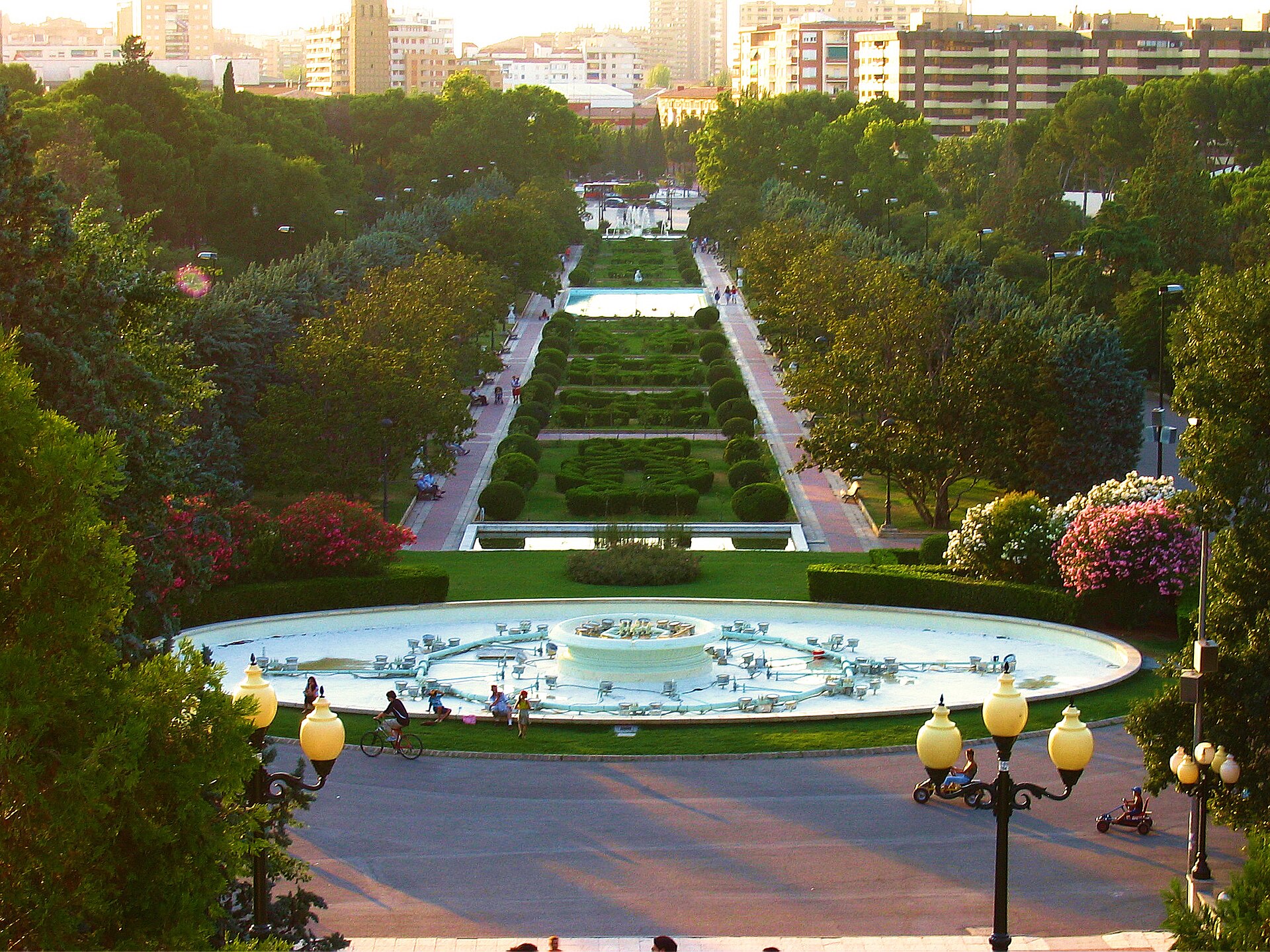
Pignatelli Park is the oldest urban park in Zaragoza, stretching along Avenida de Cuéllar between Plaza de Aragón and the Torrero district. It was laid out on the site of former tree nurseries belonging to the Imperial Canal of Aragon, following a design drawn up in 1892 by the city's municipal architect, Ricardo Magdalena. The park opened to the public in 1920 and has remained one of the city's most recognizable green spaces ever since.
How do you get there?
The park sits close to the historic center of Zaragoza, within easy walking distance of Plaza de Aragón and Paseo de Sagasta. Avenida de Cuéllar runs along one edge, making it simple to reach on foot from the surrounding neighborhoods. It functions as a natural stopping point between downtown and the Torrero district, and the Church of San Antonio stands nearby.
What will you see inside?
At the heart of the park stands a monument to Ramón Pignatelli (1734–1793), a canon and vice-chancellor of the University of Zaragoza who drove several of the city's major public works, including the construction of the Imperial Canal of Aragon, the bullring, and the Casa de Misericordia (House of Mercy). The bronze figure, three meters tall and set on a stone pedestal, was created by sculptor Antonio Palao in 1859. It originally stood in Plaza de Aragón before being moved to its current spot in the park in 1904, where it now serves as the park's visual centerpiece.
In 1985 a circular fountain was built around the statue, adding to its monumental presence as part of a broader renovation that reorganized the park's walking paths and modernized a space that already had nearly a century of history behind it. The park holds two ornamental fountains in total. Beyond the fountains and monument, the grounds are defined by broad, densely planted tree-lined avenues, with additional outdoor sculptures placed among the greenery — strolling between them is one of the park's main draws.
The park's layout reflects the ambitions of late-19th-century Zaragoza, when the city sought to match other European capitals by creating public green space as a marker of progress and civic prestige. That is why it was designed generously from the start, with wide avenues and shaded spots meant for lingering rather than just passing through.
When should you visit?
Spring and autumn are the best seasons to explore the park, when the trees are at their fullest and temperatures make for a comfortable, unhurried walk. In summer, the dense tree cover provides welcome shade, making it a good place to escape Zaragoza's characteristic heat. The park is open to the public with no entrance fee, so it can be visited at any time of day.
Frequently Asked Questions
Who designed Pignatelli Park? The original design dates to 1892 and was drawn up by Ricardo Magdalena, Zaragoza's municipal architect. The park opened in 1920 and underwent a major renovation in 1985 that shaped its current layout.
Who was Ramón Pignatelli, the park's namesake? Ramón Pignatelli (1734–1793) was a canon and vice-chancellor of the University of Zaragoza, remembered for promoting major civic projects such as the Imperial Canal of Aragon, the city's bullring, and the Casa de Misericordia.
Is there more to see than greenery? Yes — alongside its extensive tree-lined avenues, the park contains the 1859 monument to Pignatelli, a circular fountain added in 1985, a second ornamental fountain, and other pieces of public art set throughout the grounds.
Is entry to the park free? Yes, Pignatelli Park is a public municipal space and is free to enter at any time.
Nearby places

Earn badges for the places you visit
Download NextOnTrip, discover new places and check off your trails.