About this place
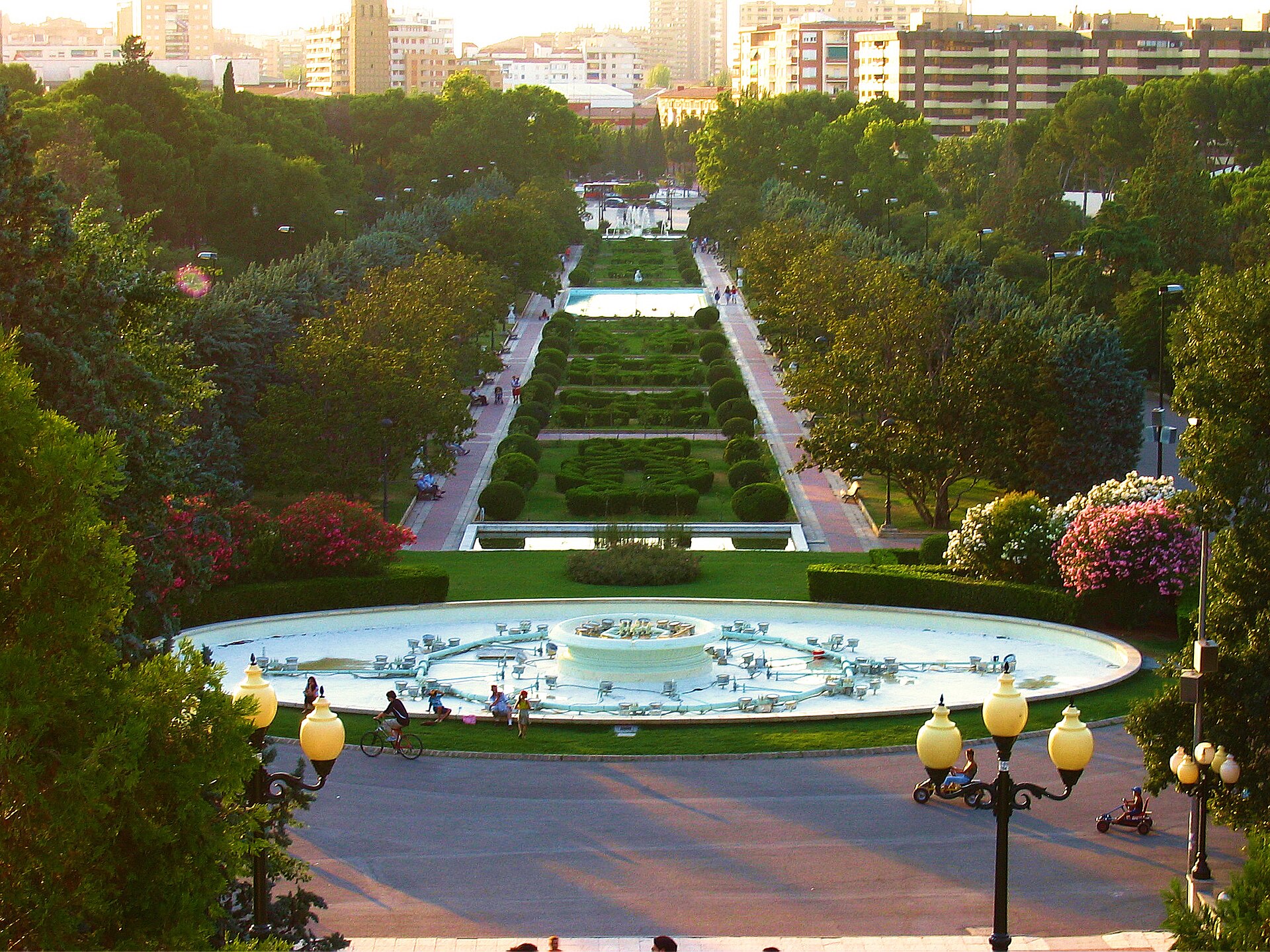
Jardín de Invierno ("Winter Garden") is a historic garden and open-air concert venue set within José Antonio Labordeta Park (Parque Grande) in Zaragoza, one of the largest and most cherished public parks in Aragón. The space blends the character of a landscaped garden with the function of a cultural stage, hosting concerts and outdoor events for decades while keeping the intimate feel of a carefully designed green enclave.
History
The garden was inaugurated in 1959, following the transformation of a former gravel pit located in the area known as Cabezo de Buenavista. The redevelopment turned this disused ground into a venue suited for hosting performances and open-air spectacles. Since then, the site has remained one of Zaragoza's key outdoor cultural landmarks.
Layout and architecture
The defining feature of Jardín de Invierno is its masonry stage, over 20 meters long and eight meters deep, raised on a platform about 1.6 meters high. Facing it is seating capacity for up to three thousand people, making the venue one of the larger open-air performance spaces in the city.
The garden's overall design draws on the belle époque style, reflecting the romantic, refined character typical of French-style gardens laid out in the 1950s. Symmetrical pathways, carefully arranged greenery, and an atmosphere reminiscent of a more genteel past set this corner of the park apart from the rest of its grounds.
Vegetation
Jardín de Invierno hosts a varied collection of trees and shrubs, including beeches, dwarf fan palms, magnolias, Himalayan cedars, Arizona cypresses, oleanders, brooms, and thujas, alongside pines and palm trees. This dense, layered mix of species provides shade in summer and gives the garden a distinct microclimate throughout the year.
Thanks to its position within the park, the garden is naturally sheltered from the Cierzo, the strong, dry wind characteristic of the Ebro valley that regularly sweeps through Zaragoza. This shelter means conditions inside Jardín de Invierno tend to be milder than in the more exposed parts of the city, reinforcing its reputation as a space with its own microclimate.
Cultural significance
Since the 1960s, the stage at Jardín de Invierno has hosted numerous music festivals and cultural events, becoming a recognizable name in the local concert scene's history. Some of the most memorable photographs of bands connected to Zaragoza were taken here, further cementing the venue's place on the city's cultural map.
Frequently asked questions
Where is Jardín de Invierno located? It sits within José Antonio Labordeta Park (Parque Grande) in Zaragoza, in an area historically known as Cabezo de Buenavista.
When was the garden created? It opened in 1959, after a former gravel extraction site was converted into a performance venue.
How many people can the audience area hold? The seating area in front of the stage can accommodate around three thousand people.
What kind of vegetation grows here? The garden features beeches, magnolias, Himalayan cedars, Arizona cypresses, oleanders, pines, and palm trees, forming a dense and varied green landscape.
Why is this garden known for having its own microclimate? The terrain and surrounding vegetation shield the garden from the Cierzo, the region's strong prevailing wind, resulting in milder conditions than in the city's more open areas.
Nearby places

Earn badges for the places you visit
Download NextOnTrip, discover new places and check off your trails.