About this place
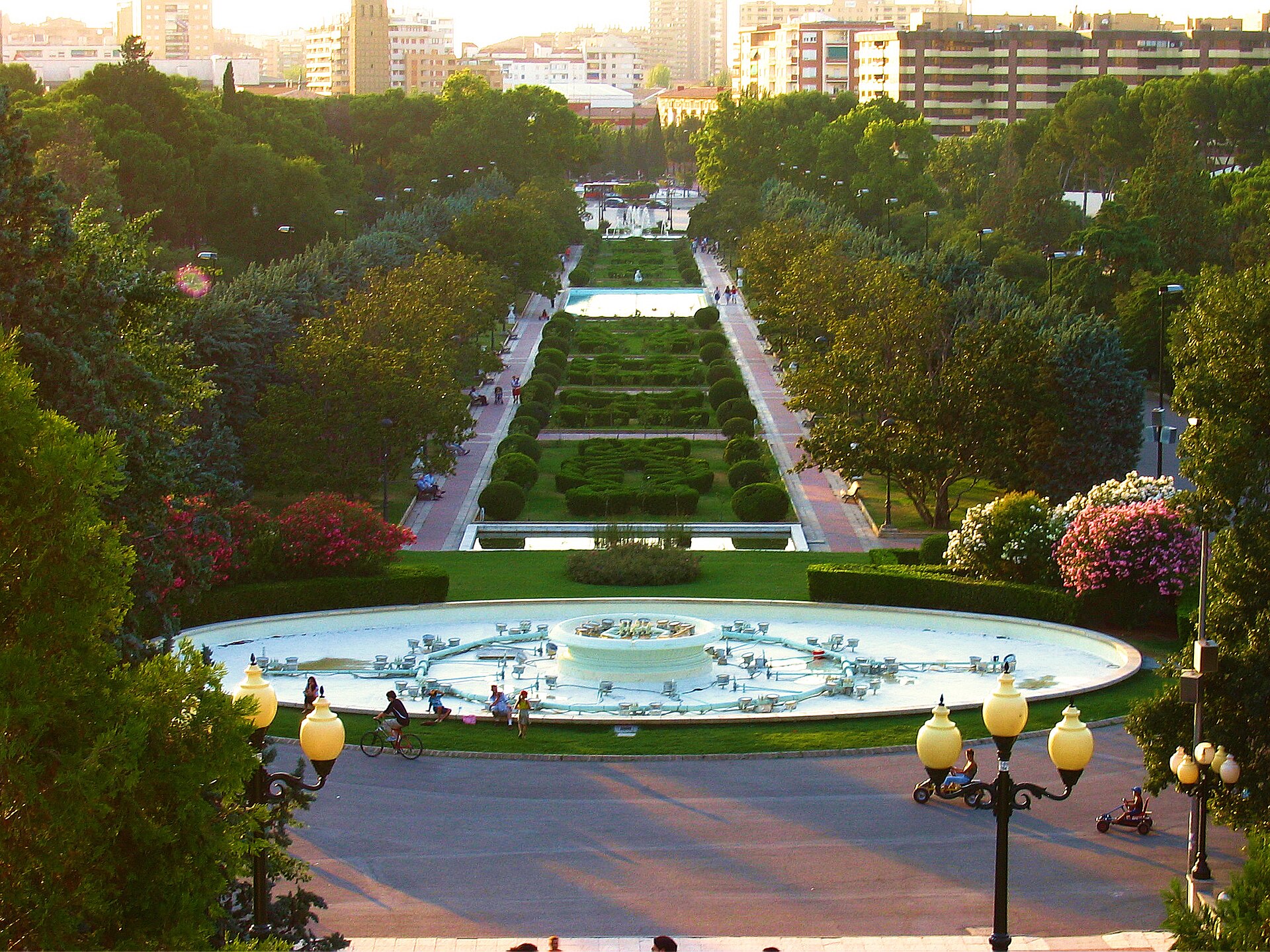
The Botanical Garden of Zaragoza sits inside Parque Grande José Antonio Labordeta, the largest urban park in the Aragonese capital. Easy to walk past as just another green corner of the park, it actually carries a history stretching back to the late eighteenth century, tied to the city's earliest organized effort to gather plants for scientific study rather than pure decoration.
How did the garden come to be?
The idea of creating a botanical garden in Zaragoza took shape in 1796, driven by the Real Sociedad Económica Aragonesa de Amigos del País, a society of local figures interested in advancing regional science and economy. The practical groundwork fell to a pharmacist connected to the city's college of apothecaries, who arranged for seeds and cuttings to be brought in from distant Spanish cities — Valencia, Seville, Madrid, Barcelona — as well as from Paris and the Americas. From its earliest days, then, the collection was never purely local; it reflected a deliberate effort to bring together plant material from across a wide geography.
The garden's history was far from smooth. Between 1808 and 1809, during the Peninsular War, much of the original planting was destroyed. In the years that followed, a naturalist and physician who directed the institution took charge of rebuilding and reorganizing the collection, restoring its scientific purpose.
What is there to see today?
Following a thorough renovation that recovered the garden's eighteenth-century character — an investment of around 1.3 million euros — the present-day garden is organized into more than a dozen thematic collections. Visitors can walk through sections devoted to aromatic and medicinal plants, aquatic species, mountain flora, and edible and ornamental varieties. Among the older, surviving specimens are cedars, cypresses, plane trees, elms, lindens, ash trees, pines, ginkgos, oaks and walnuts — trees that predate the recent overhaul and connect the garden to its earlier incarnations.
Particular attention has been given to native Aragonese flora, which stands out as one of the garden's main draws alongside species brought in from other parts of Spain and the world. The renovation also restored the ceramic benches characteristic of Parque Grande, and, as part of a broader push for biodiversity, small shelters for insects and reptiles have been added throughout the grounds.
Where exactly is it located?
The garden lies in the southern part of Zaragoza, within the university district, inside Parque Grande — a park covering roughly 40 hectares and often described as the city's green lung. Because of this setting, a visit to the botanical garden pairs naturally with a longer walk through the park, one of the most popular recreational spaces for residents of Zaragoza.
Frequently asked questions
Is there an entrance fee? The garden is part of Zaragoza's municipal green infrastructure and is managed by the city council as an open park space.
How old is the garden? Its roots go back to 1796, making it one of the older botanical gardens in Spain, though its history includes a significant destruction and later reconstruction.
How is it different from the rest of the park? Unlike the surrounding parkland, the botanical garden is organized as a scientific collection — plants are grouped by theme (aromatic, medicinal, aquatic, mountain) rather than arranged purely for visual effect.
Is it worth visiting with children? Yes — the presence of small wildlife shelters and the variety of thematic collections make it a good spot for an educational walk with younger visitors.
Nearby places

Earn badges for the places you visit
Download NextOnTrip, discover new places and check off your trails.