About this place
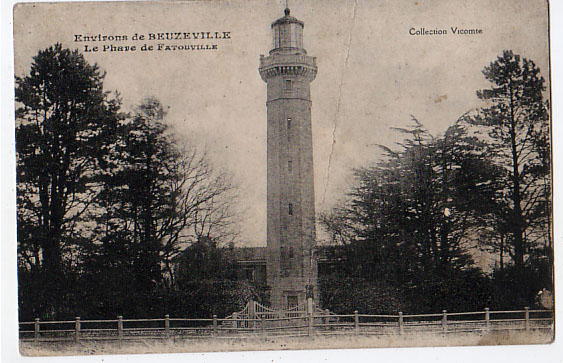
Phare de Fatouville is a historic lighthouse in the commune of Fatouville-Grestain in Normandy, standing today at some distance from the Seine, even though it was originally built to watch over the river's estuary. It is an unusual case of a lighthouse that lost its navigational role and turned into a private family home, while still keeping its 19th-century character and heritage status.
Why was a lighthouse built at Fatouville?
Construction began in 1839 and was completed in 1850, with most of the building work carried out between 1849 and 1850. The design came from Léonce Reynaud, one of the most respected lighthouse architects of the 19th century, known for his work lighting the French coast. The Fatouville lighthouse was part of a wider network of navigational lights guiding ships along the lower Seine, helping vessels find a safe course upriver toward Rouen.
The tower stands 33 metres tall, and its light could once be seen from more than 40 kilometres away — an impressive range even set against larger coastal lighthouses of the period. Fatouville was not built directly on the open sea but above the river, so its job was to guide both coastal and inland shipping through a tricky stretch near the Seine's mouth.
How did a lighthouse become someone's home?
The lighthouse remained active until 1907. As embankment works reshaped the course of the Seine, the river's channel shifted and the lighthouse's original position lost its navigational relevance. In 1923 the building was sold, and its first private owner, Gaston David, converted the tower and its outbuildings into a family residence.
The lighthouse has stayed in the same family ever since. Since 2000, part of the building has operated as guest rooms, giving visitors the chance not just to admire the tower from outside but to actually stay overnight in a place with such an unusual past. In 2011, Phare de Fatouville was officially listed as a historic monument, recognising its value as a surviving example of 19th-century lighthouse engineering.
What is there to see on site?
The main draw is the lighthouse's architecture itself: a solid stone tower with the proportions typical of Reynaud's design work, surrounded by outbuildings that have been adapted for residential and hospitality use. It is a rare chance to encounter a lighthouse not as a museum piece, but as a lived-in building where history and everyday life sit side by side.
Fatouville-Grestain lies near the Seine estuary, not far from other lighthouses along the same stretch of coast, making it easy to combine a visit here with a broader tour of Normandy's lighthouses.
How do you get to Phare de Fatouville?
Fatouville-Grestain is located in the Eure department of Normandy, close to Honfleur and the Pont de Normandie. Travelling by car is the most practical option, since the village sits on local roads connecting the coast with Pont-Audemer and Honfleur. Because the lighthouse is now a private property that also runs guest rooms, going inside is generally reserved for overnight guests; the exterior, however, can be viewed freely.
When is the best time to visit?
Spring and summer are the best seasons to visit, as longer days make it easier to enjoy the surroundings of the Seine estuary and the grounds around the lighthouse are more accessible. Anyone planning to stay in the guest rooms should book ahead, especially during the summer holiday season.
Frequently asked questions
Is Phare de Fatouville still an active lighthouse? No. It stopped functioning as a navigational aid in 1907 and no longer guides ships.
Who owns the lighthouse today? Since 1923 it has belonged to the family of Gaston David, who turned it into a private residence and, since 2000, has also run guest rooms there.
Can visitors go inside the lighthouse? Since it is a private home with a small guesthouse operation, the interior is mainly accessible to overnight guests.
Why did the lighthouse stop being needed? Embankment works changed the course of the Seine, shifting the river channel and leaving the lighthouse's original position without navigational purpose.
Nearby places

Earn badges for the places you visit
Download NextOnTrip, discover new places and check off your trails.