About this place
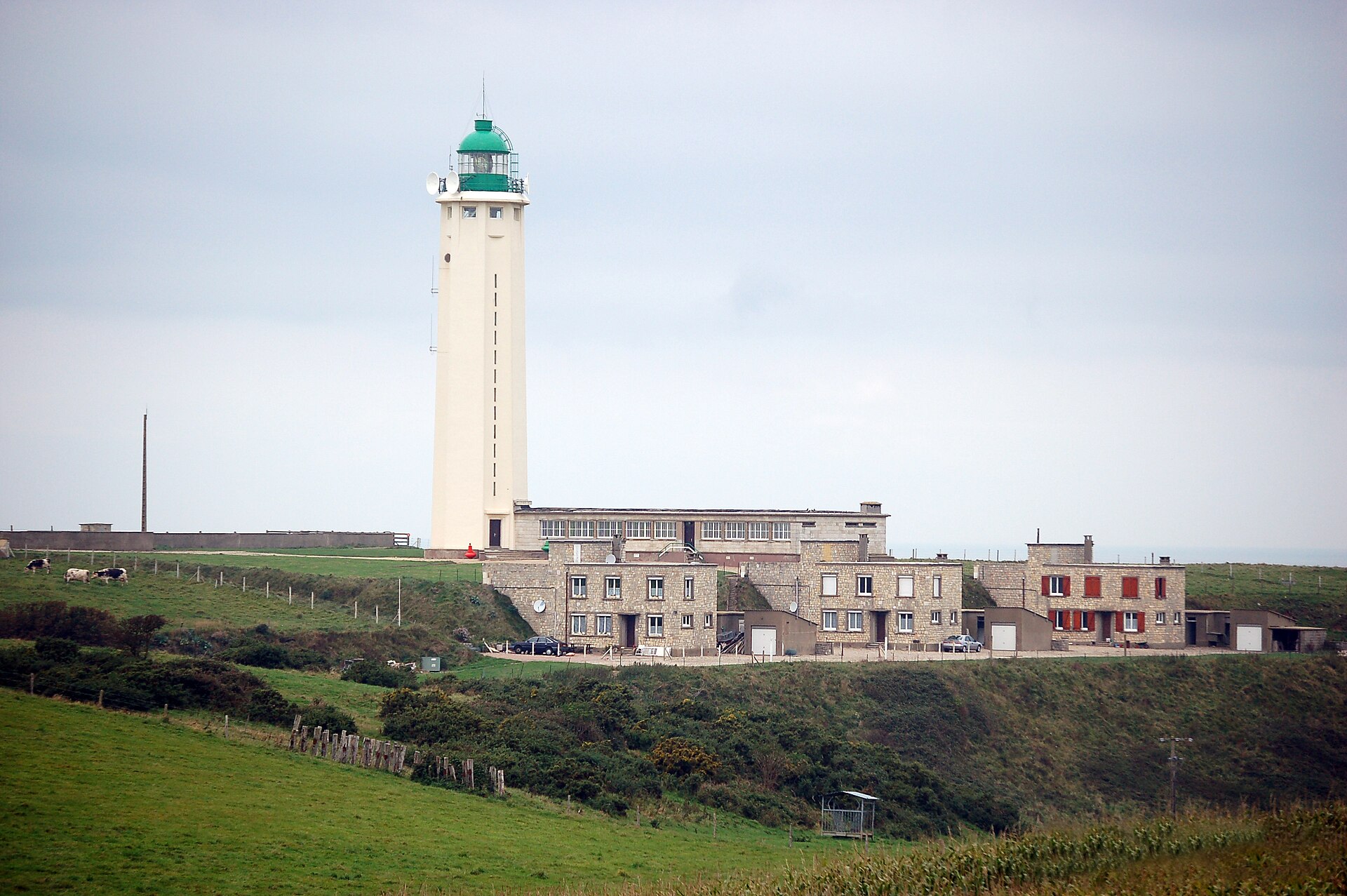
The de la Hève Lighthouse stands on the tall white cliffs above the English Channel in Sainte-Adresse, right beside the entrance to the port of Le Havre. It's one of the defining landmarks of this stretch of the Normandy coast — visible from far out at sea, surrounded by windswept clifftop grass.
What is the history behind this lighthouse?
A beacon has guided ships from this cliff for centuries. In 1364, on the order of King Charles V, a simple fire tower was raised here — a mast topped with a burning brazier, warning sailors away from the rocks at the mouth of the Seine. It stayed in service for nearly four hundred years.
In the 18th century, after part of the cliff collapsed into the sea, authorities decided to build a new pair of lighthouses set back from the edge. Two identical 17-metre towers were lit in 1775, standing side by side so ships could recognise this exact point on the coast at a glance. In 1863, the Hève lighthouses earned a notable place in engineering history: they became the first lighthouses in France to be electrified.
Those twin 1775 towers stood for more than 150 years, but they didn't survive the war. Both were destroyed in the 1944 bombing raids, when Le Havre and its surroundings became one of the most heavily bombed areas in France during the Liberation. After the war, a completely new lighthouse was built as part of the region's reconstruction — designed by architect Henri Colboc and brought into service in 1951.
What does the lighthouse look like today?
The current tower is a slim structure reached, at the top, by a staircase of 161 steps leading up to the lantern room. Its light carries roughly 50 kilometres out to sea, making it one of the key markers for ships heading into the Seine estuary and the port of Le Havre. The lighthouse has run fully automatically since 1988 — there's no lighthouse keeper on site any more, and the building isn't open for visits inside. It was listed as a historic monument on 24 November 2010.
How do you get there?
The lighthouse sits in Sainte-Adresse, the town next to Le Havre, on the Cap de la Hève headland. From central Le Havre it's a short drive or bus ride toward the coast. The area is a popular spot for walking — clifftop paths run along the coastline with views over the Channel and the shipping lanes into the port.
What can you see around it?
The lighthouse itself can only be admired from the outside, but the setting is the real draw: the steep white chalk cliffs of Cap de la Hève, sweeping views over the Seine estuary, and a steady stream of ships entering one of France's largest ports. It's also a good vantage point for taking in the skyline of Le Havre, the city rebuilt after the war according to architect Auguste Perret's masterplan.
When is the best time to visit?
Clear days give the best views, and spring and summer are ideal for walking the clifftop paths, though the lighthouse and coastline are striking year-round. Sunset is worth timing for — the low light on the cliffs and the tower makes for the best views and photos.
Frequently asked questions
Can you go inside the de la Hève lighthouse? No. It has operated automatically since 1988 and its interior is not open to visitors.
How old is the current lighthouse? The tower standing today dates from 1951, built after the previous lighthouses were destroyed in the 1944 bombing raids.
Was this the first lighthouse on this site? No. A fire tower first stood on the cliff from 1364, and in 1775 a pair of twin lighthouses was built here — the same pair that became the first electrified lighthouses in France in 1863.
How many steps lead up to the light? A staircase of 161 steps leads to the lantern room, though the interior is reserved for technical staff and not open to the public.
Nearby places

Earn badges for the places you visit
Download NextOnTrip, discover new places and check off your trails.