About this place
Parc d'Avroy is one of the most recognizable city parks in Liège, spreading over roughly five hectares in the Avroy district right on the edge of the city centre. It works both as a green retreat for locals and as a kind of open-air museum, where the story of nineteenth-century Liège quietly overlaps with the everyday rhythm of a modern Belgian city.
How did the park come to exist?
For centuries, the land the park now occupies formed part of the main course of the Meuse river. It was only during river-straightening works carried out in the second half of the nineteenth century that the river's path shifted, freeing up a large stretch of land close to the city centre. This coincided with a period of rapid transformation in Liège, when old fortifications were being cleared away to make room for modern boulevards and public spaces. The creation of Boulevard d'Avroy and the park beside it became a statement piece of that era — a visible symbol of bourgeois prosperity and the city's liberal outlook at the time.
What is there to see inside the park?
At the heart of the park stands the Trink-Hall, a pavilion built in a distinctly Moorish architectural style — an unexpected touch of exoticism for this part of Belgium. Since 1992 the building has housed MADmusée, an institution dedicated to exhibiting art created by people with intellectual disabilities. It's an unusual pairing: a nineteenth-century garden pavilion repurposed as a contemporary art space.
Walking through the park's paths, several monuments are worth pausing at, each telling a different chapter of the city's history. An equestrian statue of Charlemagne nods to the region's medieval roots and its ties to the Frankish ruler. The National Resistance Monument commemorates residents of Liège who resisted occupation during the Second World War. Nearby stands a quieter but no less moving memorial dedicated to Vietnamese boat people, those who fled by sea after the end of the Vietnam War. Together, these monuments turn the park into something closer to an open chronicle of the city's past, spanning from the Middle Ages to the twentieth century.
What is the park like today?
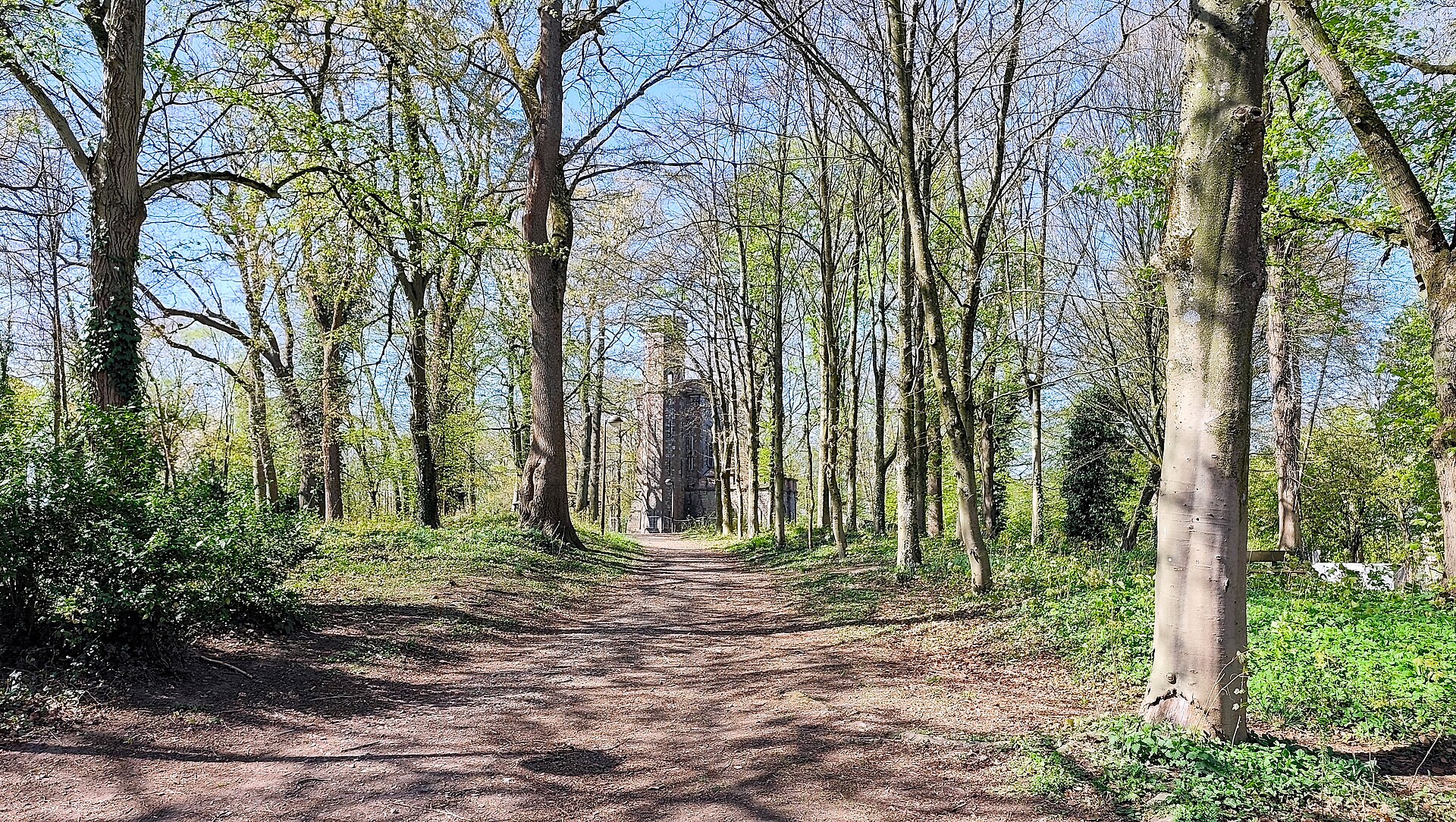
Today, Parc d'Avroy functions primarily as a place for everyday leisure. Its paths draw walkers and joggers, benches shaded by mature trees offer a break from city noise, and the open lawns fill up in summer with people stretched out with a blanket or a book. Its closeness to central Liège also means the park doubles as a natural route between neighbourhoods, giving it a lived-in, urban feel rather than that of an isolated green pocket cut off from city life.
Frequently asked questions
How big is Parc d'Avroy? The park covers around five hectares, making it one of the larger green spaces in central Liège.
What is the Trink-Hall? It's a historic pavilion built in a Moorish architectural style, standing at the centre of the park. Since 1992 it has housed MADmusée, a museum showcasing art made by people with intellectual disabilities.
What monuments can be found in the park? The best known are the equestrian statue of Charlemagne, the National Resistance Monument, and a memorial dedicated to Vietnamese boat people.
Why is the park called Avroy? The name comes from the Avroy district where it is located, and from the adjoining Boulevard d'Avroy, one of the grand avenues built during the city's nineteenth-century redevelopment.
Is the park suitable for a walk with children? Yes — its wide, paved paths, open lawns and generally calm atmosphere make it a popular choice for a family stroll close to the centre of Liège.
Nearby places

Earn badges for the places you visit
Download NextOnTrip, discover new places and check off your trails.