About this place
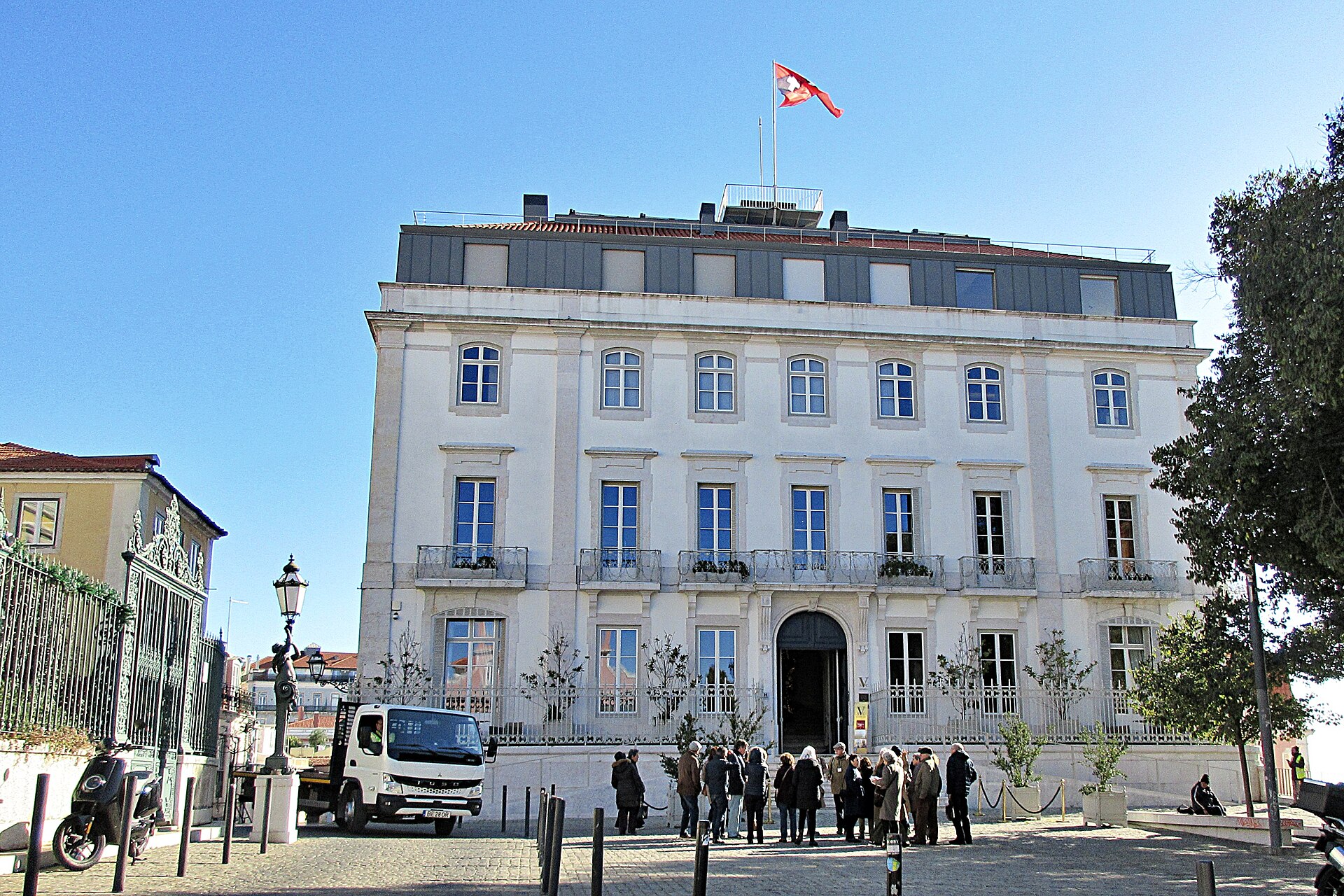
Palácio Iglésias is a neoclassical palace in central Lisbon, today also known as the Palácio das Belas Artes. It stands at Largo da Academia Nacional de Belas Artes 2, in the historic district near Chiado, and is one of the more interesting examples of nineteenth-century urban residential architecture in the Portuguese capital.
Who designed Palácio Iglésias?
Construction began in 1859 to a design by Giuseppe Cinatti, an Italian architect (1808-1879) who worked in Portugal and left several notable buildings there. The palace was raised on land belonging to the Iglésias family, a family of businessmen, military figures and bankers, as their main residence.
What does the architecture look like?
Portuguese heritage records describe the building as an example of neoclassical residential architecture: restrained, ordered forms rather than the lavish ornament of earlier periods. A plan for an extension was already drawn up in 1862, so the building kept evolving during its first years of use.
What stood here before?
The palace was built over the site of the seventeenth-century Mártires church. The church was destroyed in the great earthquake of 1755, which levelled much of Lisbon. During repair works in 1976, relics and human remains linked to the old church were uncovered. This gives the site a historical layer that goes beyond the architecture itself.
How did the building's use change?
The palace passed from a family home into state hands. In 1936 part of it was rented to the General Directorate for Livestock Services (Direcção-Geral dos Serviços Pecuários). In 1971 it was sold to the Portuguese State and became home to the Ministry of Economy. The path from a banking family's private house to a government department's headquarters shows how many Lisbon palaces changed function during the twentieth century.
Is it worth a visit?
If you are walking around Chiado and Largo da Academia Nacional de Belas Artes, the palace is worth a pause, even if only to admire the exterior. It suits visitors interested in nineteenth-century architecture, the rebuilding of Lisbon after 1755, and the fortunes of old financial families. Access to the interiors may change, so check the official Palácio das Belas Artes website before you go.
Frequently asked questions
Where is Palácio Iglésias? In central Lisbon, at Largo da Academia Nacional de Belas Artes 2.
Who designed it? The Italian architect Giuseppe Cinatti; construction began in 1859.
Who owned it? First the Iglésias family, and from 1971 the Portuguese State.
What style is it? Neoclassical, in the form of a residential mansion.
What stood here before? The seventeenth-century Mártires church, destroyed in the 1755 earthquake.
Nearby places

Earn badges for the places you visit
Download NextOnTrip, discover new places and check off your trails.