About this place
Palácio de Xabregas, also called the Palácio dos Marqueses de Olhão, is a listed heritage palace in Lisbon, Portugal. It stands in the historic Xabregas district in the east of the city, and its modest street front hides richly decorated interiors.
Where is it and what does it look like from outside?
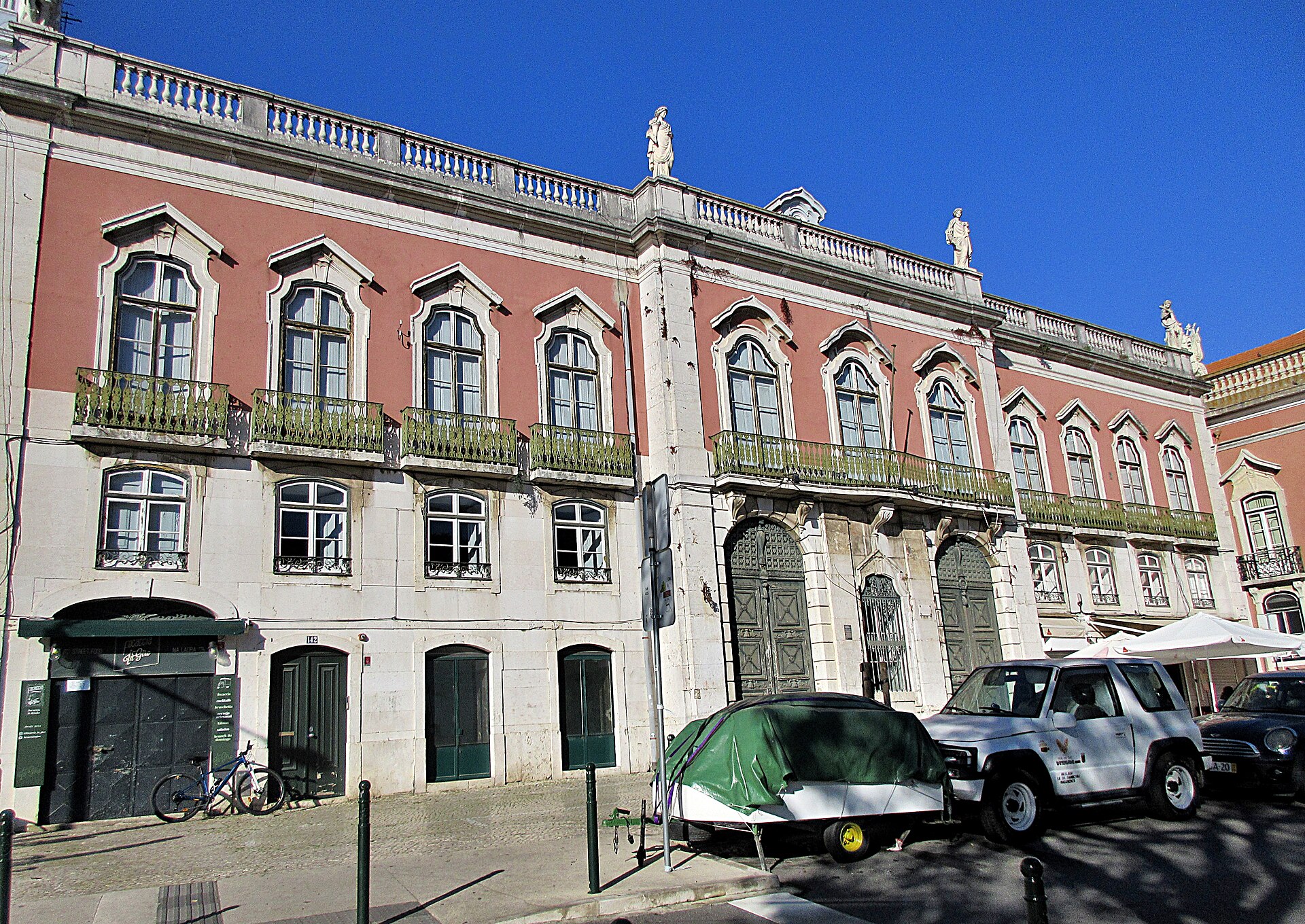
The palace sits in Lisbon's Xabregas area, near Beato, at roughly 38.7277 N, 9.1105 W. From the street it looks restrained. The facade has fourteen windows and gives little hint of the decoration inside.
What is the history of the palace?
The story of the site begins in the early 16th century. In 1524 Tristão da Cunha, who led King Manuel I's famous embassy to Pope Leo X, took possession of the land and houses in Xabregas. When he died in 1540 the property passed to his son Nuno da Cunha, viceroy of Portuguese India.
The current palace was built between the late 17th and early 18th centuries on the site of the old Cunha houses. It came through the 1755 earthquake, which destroyed much of Lisbon.
What political events are linked to it?
In the 17th century the palace belonged to the Melo family, hereditary chief huntsmen of the kingdom (monteiros-mores). Historical accounts say several meetings of the conspirators who prepared the restoration of Portuguese independence in 1640 took place within its walls. This makes it an important site in the country's history.
Why is it called the Marqueses de Olhão palace?
The name comes from Francisco de Melo da Cunha de Mendonça e Meneses (1741–1821), chief huntsman of the kingdom, 1st Count of Castro Marim and 1st Marquis of Olhão. Between 1819 and 1823 he commissioned works on the palace. The most notable result is a set of murals by Alexandre Pereira dos Santos.
What is inside?
The interiors contrast sharply with the plain exterior. The highlight is the azulejo tile panels with secular themes: gallant social scenes, battles and mythological subjects. Together with the early 19th-century murals, they show how Portuguese nobility combined tilework and wall painting.
Is the palace privately owned?
Yes. It still belongs to the Mendonça and Meneses family, descendants of the counts of Castro Marim and marquises of Olhão. Because of this, visiting can be limited. Access is usually possible during events, guided tours or activities held at the palace, so check current information before you go.
Frequently asked questions
Is Palácio de Xabregas the same as Palácio dos Marqueses de Olhão? Yes, they are two names for the same palace. It is also known as the Palácio dos Melo.
When was it built? The current building dates from the late 17th and early 18th centuries, with decorative work carried out in 1819–1823.
Did it survive the 1755 earthquake? Yes, the palace came through the disaster.
What is the most valuable part of the decor? The secular-themed azulejo panels and the murals by Alexandre Pereira dos Santos.
Can I go inside? The palace is privately owned, so access depends on events and guided visits. Check current dates before visiting.
Nearby places

Earn badges for the places you visit
Download NextOnTrip, discover new places and check off your trails.