About this place
The Palace of the Dukes of San Carlos is a Renaissance mansion standing in the historic center of Trujillo, a small town in the province of Cáceres, Extremadura, just steps from the town's famous main square.
What is this building and why does it matter?
The palace was built in 1557 for Diego Galíndez de Carvajal, who married Beatriz de Vargas y Sotomayor — hence the building's other name, the Carvajal Vargas Palace. Architectural historians rank it as the most monumental civil residence of the Extremaduran Renaissance, raised in the ornate plateresque style on the site of a former Visigothic stronghold. For over two and a half centuries, from 1514 to 1768, the family living here held the hereditary post of Postmasters General of the Indies, overseeing correspondence between Spain and its American colonies — it was this royal appointment that eventually earned the family the ducal title of San Carlos.
The building also carries a scar from its past: on 15 July 1595 a fire tore through the palace and destroyed its Flemish timber ceilings. What survives inside today largely dates from the mid-17th century reconstruction that followed. In 1978 the palace was formally declared a Bien de Interés Cultural, Spain's top heritage protection category for monuments.
How do you get there?
The palace sits right in Trujillo's old quarter, immediately next to the Plaza Mayor, so any walk through the historic center will bring you past it. The easiest way to reach Trujillo itself is by car via the A-5 motorway, which links Madrid with Extremadura and Portugal — roughly a two-hour drive from the Spanish capital. Long-distance buses from Madrid and Cáceres also serve the town; the nearest major train station is in Cáceres, from where a half-hour bus ride completes the journey. It's best to park on the edge of the old town and continue on foot, since the cobbled streets around the Plaza Mayor are narrow and largely closed to traffic.
What will you see there?
For several decades the palace has served as a convent for a community of Hieronymite nuns, who settled here in the 1960s with the permission of the owning family, the Dukes of San Carlos. In practice this means the interior is closed to visitors, and sightseeing is limited to admiring the façade from the street — which is still well worth the stop. The standout feature is a corner balcony crowned with a double-headed eagle, a rare heraldic symbol the Carvajal Vargas family was personally granted permission to display by Emperor Charles V. Look also for the Ionic columns and the richly carved medallions framing the main doorway, details that set this palace apart from Trujillo's other Renaissance buildings.
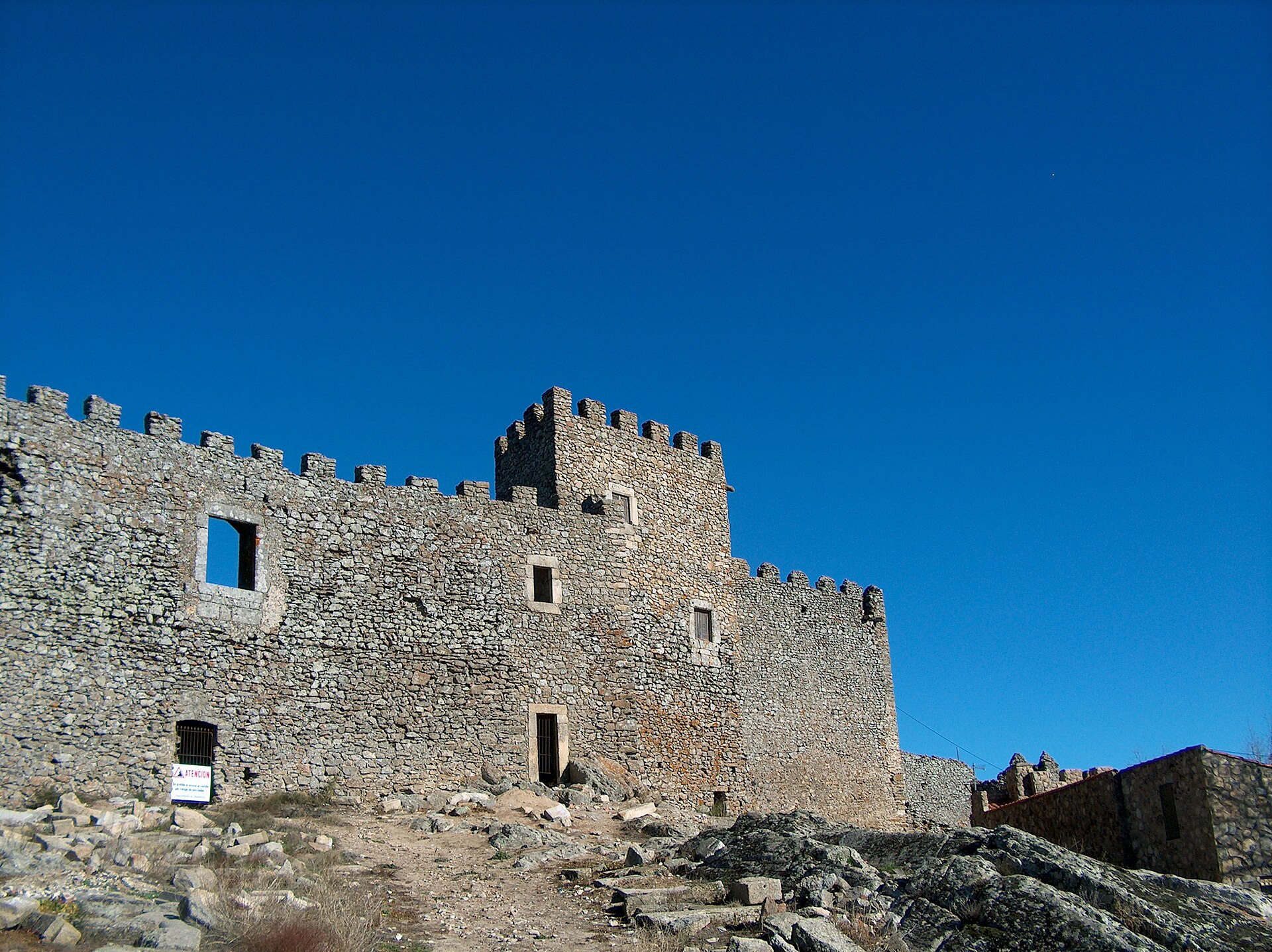
A visit here pairs naturally with a walk around the adjoining Plaza Mayor, home to a monument to Francisco Pizarro, and a climb up to the hilltop castle nearby, which offers sweeping views over the rooftops and chimneys of the old town.
When is the best time to visit?
Extremadura's summers run hot, so spring (April–May) and early autumn (September–October) offer the most comfortable conditions for exploring, with milder temperatures and light that flatters the stone carving on the façade. Since the palace can only be seen from outside, time of day matters mostly for photography: early morning or late afternoon sun hits the balcony and portal at an angle that brings out the relief carving best.
Frequently asked questions
Can you go inside the palace? No — the building houses a community of cloistered Hieronymite nuns and is closed to the public. Only the façade and exterior can be visited.
Why is it called the "Palace of the Dukes of San Carlos"? After the title held by the descendants of the Carvajal Vargas family, who served as hereditary Postmasters General of the Indies from 1514 to 1768.
What does the double-headed eagle on the balcony represent? A rare heraldic privilege granted to the family by Emperor Charles V — one of the few surviving examples of this symbol on a private residence in Spain.
How much time should I set aside? Viewing the exterior takes only a few minutes, but it's worth allowing an hour or two to also stroll the Plaza Mayor and climb to the neighboring hilltop castle.
Nearby places

Earn badges for the places you visit
Download NextOnTrip, discover new places and check off your trails.