About this place
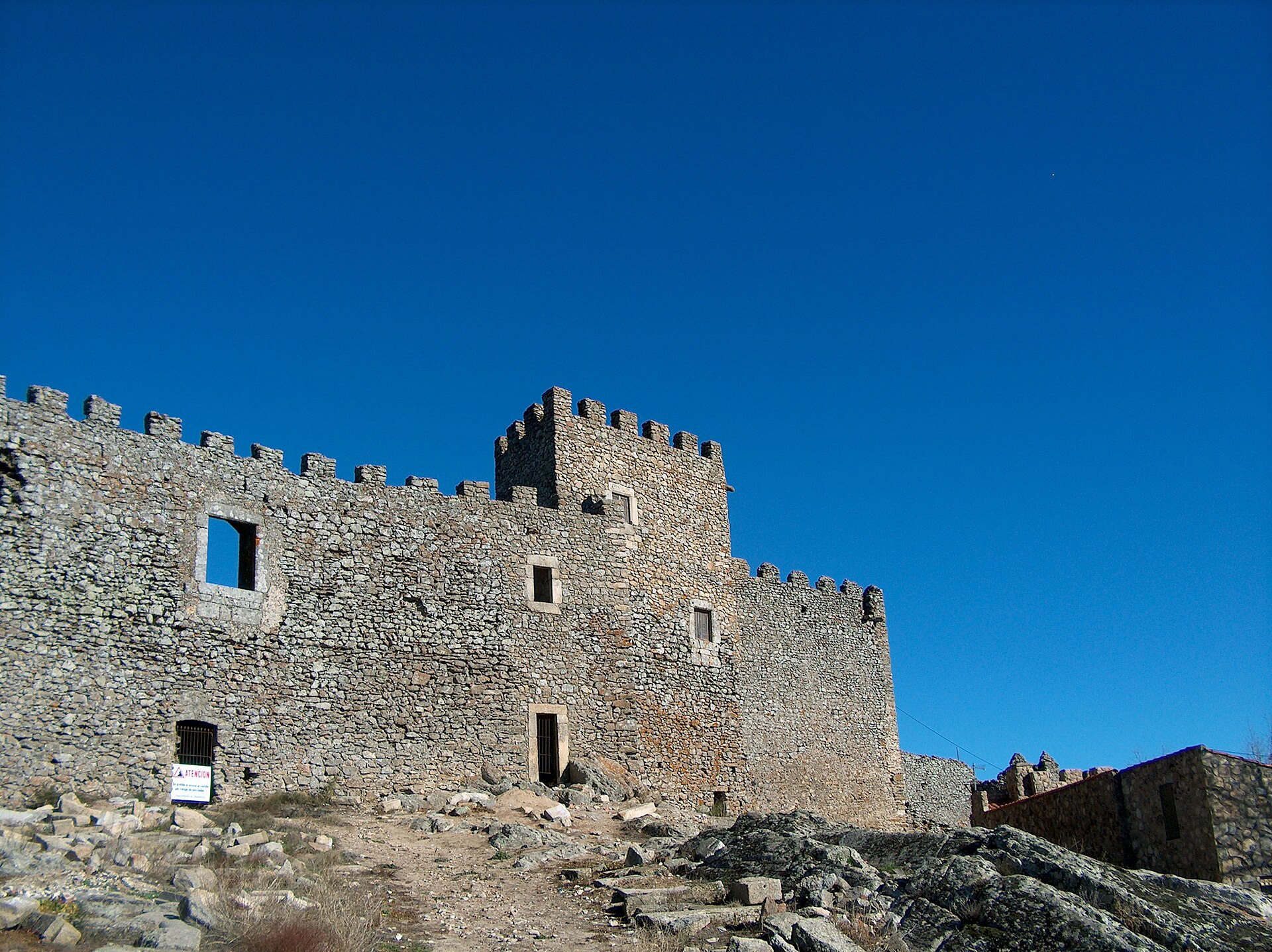
Montánchez Castle sits on a hilltop above the small town of Montánchez, in the province of Cáceres, in the Spanish region of Extremadura. From its walls the fortress has watched over the surrounding oak-covered hills for centuries, while the town below is now best known for its cured jamón.
How old is the site?
The hill has been fortified since Roman times, when the first defensive works were built here. The structure visitors encounter today, however, is largely the work of the Almohads, the Muslim dynasty that controlled the region and reshaped the fortress in the 12th century into the form that has survived to the present. Like many Iberian castles, it grew in layers, with each ruling power adding to what came before rather than starting from scratch.
What survives from the Almohad period?
The clearest physical evidence of Almohad building work is a set of three cisterns, or aljibes, still standing inside the fortress. These held rainwater and were essential to keeping a garrison supplied in the dry, hilly terrain of Extremadura, where a reliable water source could determine whether a stronghold could withstand a prolonged siege.
What happened after the Christian reconquest?
Once the area passed into Christian hands, the castle came under the administration of the Order of Santiago, one of the Spanish military orders responsible for defending and governing reconquered territory. It was during this period that additional rings of walls were added around the original Almohad core, extending the fortification well beyond its earlier footprint.
Why is the castle linked to a famous prisoner?
Montánchez Castle has one episode in its history that goes beyond its purely military role. In 1620 it served as a place of confinement for Don Rodrigo Calderón, an influential Spanish nobleman and royal favourite whose downfall was one of the more notorious political scandals of the period. The fact that a figure of his standing was held here shows that the fortress carried real strategic weight rather than functioning as a minor provincial outpost.
What can visitors see from the hill today?
Because of its elevated position, the castle offers wide views over the Sierra de Montánchez and the surrounding Extremaduran countryside. It is recognised as part of Spain's historical heritage, and walking around its perimeter makes it possible to trace its different building phases, from the Roman foundations through the Almohad reconstruction to the later Christian-era walls.
Frequently asked questions
How old is Montánchez Castle? Its origins go back to Roman times, but the structure seen today mainly dates from the Almohad period, in the 12th century.
What are the aljibes, and can they still be seen? They are three rainwater cisterns built during the Almohad occupation, and they remain one of the castle's most recognisable surviving features.
Who administered the castle after the reconquest? Once the region returned to Christian control, the Order of Santiago took charge of the fortress and extended its defensive walls.
What historical event is the castle known for? In 1620 it was used as a prison for Don Rodrigo Calderón, an influential nobleman at the Spanish royal court.
Is Montánchez known for anything besides the castle? The town below is widely known for its traditional cured jamón, making it a popular stop for food-focused travel through Extremadura.
Nearby places

Earn badges for the places you visit
Download NextOnTrip, discover new places and check off your trails.