About this place
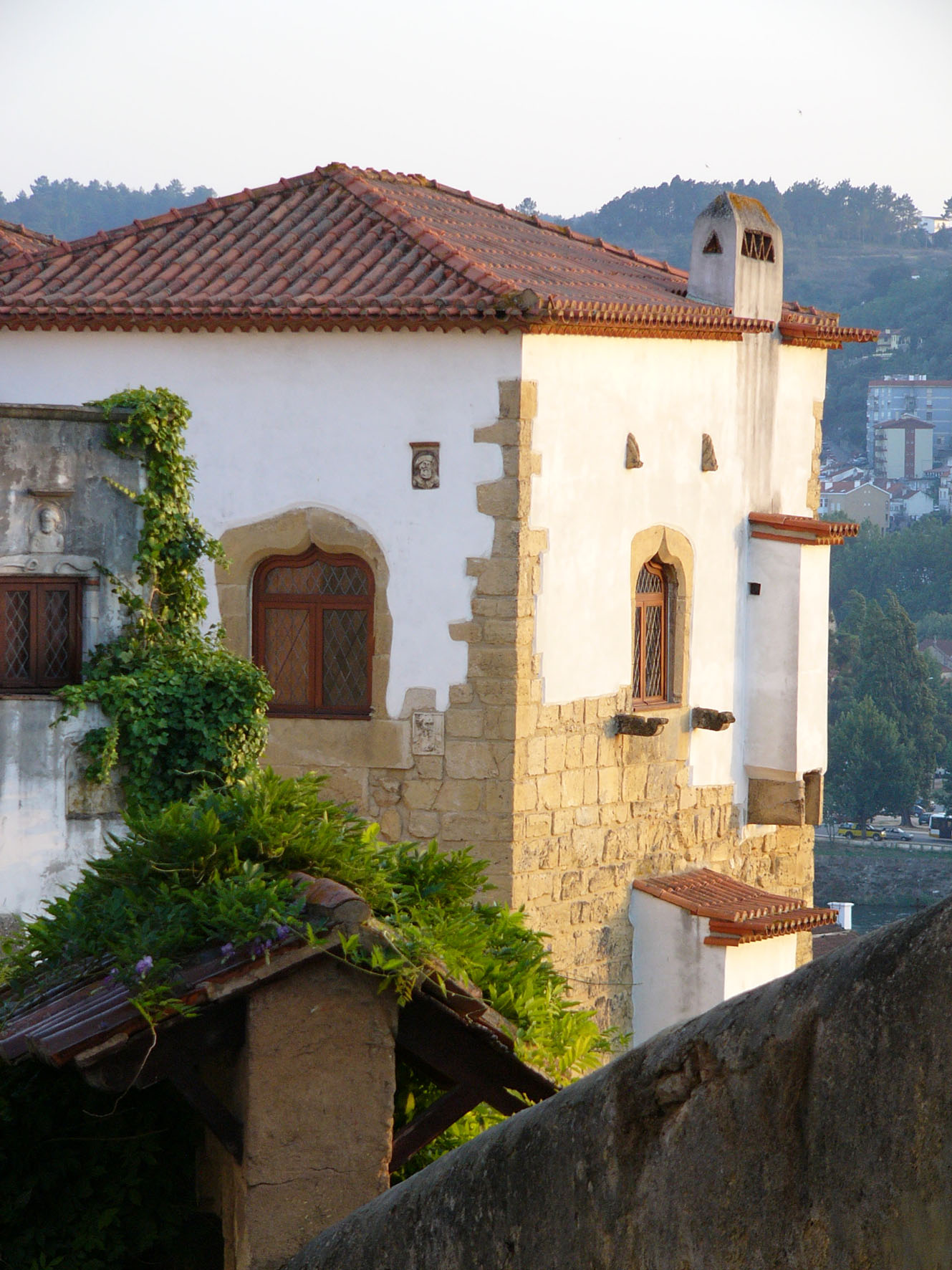
Paço do Infante D. Pedro in Tentúgal is the ruin of a medieval residence in central Portugal, in the municipality of Montemor-o-Velho near Coimbra. Of the original complex, the walls of a late-Gothic chapel and of a granary (celeiro) survive, along with part of the palace itself. It suits travellers who like history that shows its scars rather than a polished museum restoration.
Who founded the palace at Tentúgal, and when?
In 1413, King João I gave the young Infante Pedro (D. Pedro) the settlement of Tentúgal together with its palace and royal lands (reguengo). In 1417 Pedro obtained jurisdiction over the town. As its lord he promoted the building of the parish church and had a chapel built beside his residence. The major works at the palace are attributed to master Estevão Gomes.
The original property comprised a dwelling house, a threshing floor, a granary and a chapel. The chapel lies to the left and the granary to the right of today's main entrance.
What is there to see?
The chapel of Saint Michael
The late-Gothic chapel, dedicated to Saint Michael, still has unusually tall walls and a pointed-arch portico. Scholars suggest this portico may be the first example of an architectural cycle that also includes the church of the Convent of Santiago in Palmela, likewise sponsored by Pedro. For architecture fans, it is the most interesting part of the site.
The late 16th-century granary
The granary dates from the end of the 16th century. It has a classical portal, and its interior is divided into three naves with Doric columns and round arches. The contrast between a working building and its dignified form shows how important the estate was to its owners.
Why is the palace a ruin today?
By the 18th century the residence was already abandoned. In the following century it was set on fire by liberals. Today mainly the walls of the chapel and granary stand, plus part of the palace. Sources also list it as Paço dos Condes de Tentúgal and Paço dos Duques do Cadaval, reflecting the later owners of the estate.
Who is it for?
- Visitors interested in Gothic and 15th–16th-century Portuguese architecture.
- Photographers looking for tall, weathered walls and light among ruins.
- Travellers exploring the Coimbra region who want something off the main routes.
Practical tips
Tentúgal is a small town, so a visit combines easily with a short stroll around the village and other sights in the Montemor-o-Velho municipality. Because parts of the site are ruined, check current access and entry rules before you go, as they can change. Take care around old walls and stay out of areas marked as unsafe. The best photos come in low afternoon side light, which brings out the texture of the stone.
The site lies at roughly 40.217 N, 8.580 W, a short distance from the Mondego valley, in the heart of the Beiras region.
Frequently asked questions
Has Paço do Infante D. Pedro been rebuilt? No. The walls of the chapel and granary and part of the palace survive, and the whole has the character of a ruin.
Who was Infante D. Pedro? A prince to whom King João I gave Tentúgal in 1413. In 1417 he obtained authority over the town and sponsored its parish church and the palace chapel.
What is the granary like inside? It has three naves, Doric columns and round arches, and its classical portal dates from the end of the 16th century.
Why is the palace also called the palace of the Dukes of Cadaval? In later centuries the estate belonged to families linked with Tentúgal and Cadaval, so sources list it under several names.
Nearby places

Earn badges for the places you visit
Download NextOnTrip, discover new places and check off your trails.