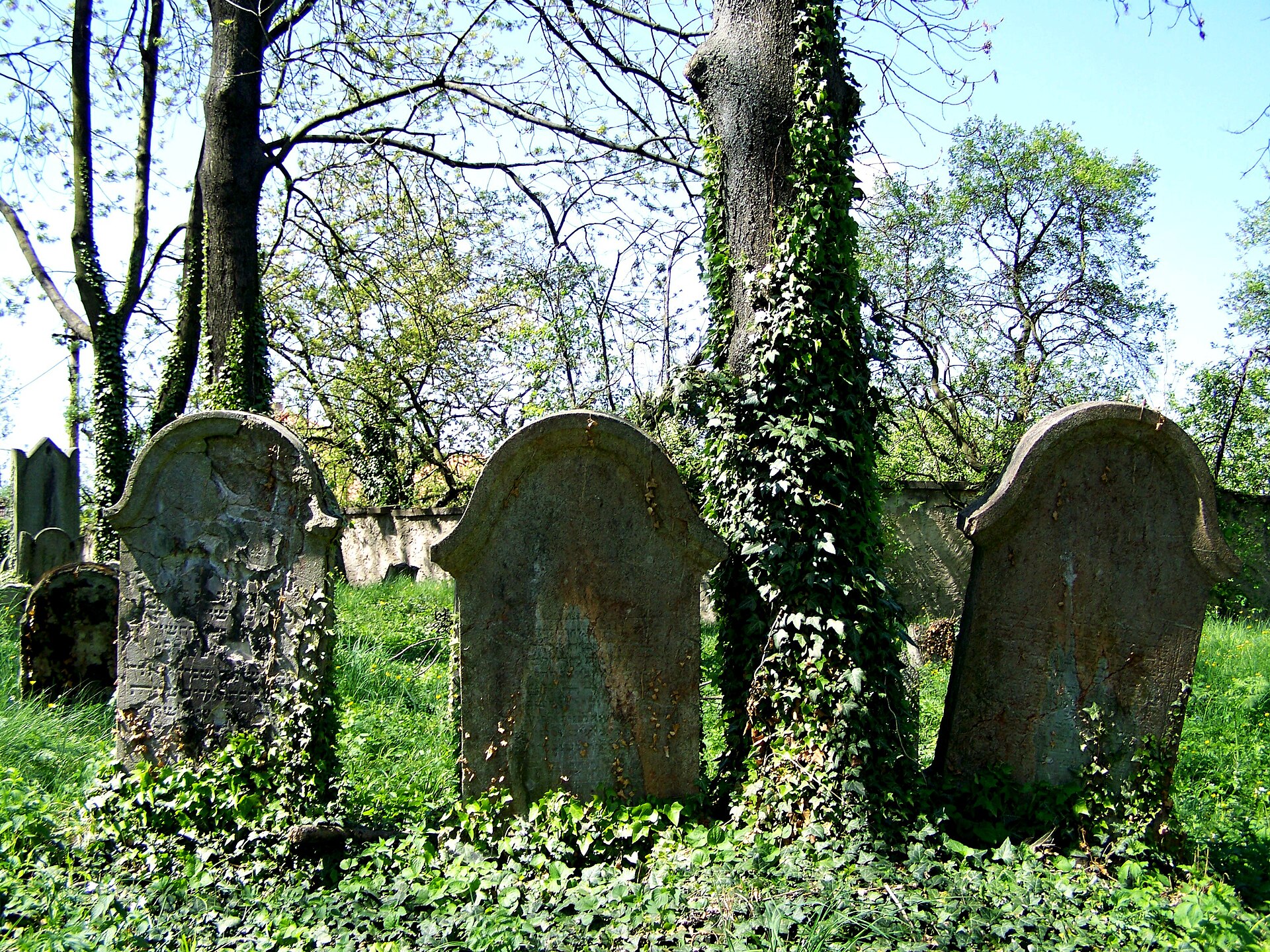
About this place
The Old Jewish Cemetery in Kolín ranks among the most significant Jewish burial grounds in the Czech Republic, second in importance only to the Old Jewish Cemetery in Prague. Located in the Central Bohemian town of Kolín, near the Elbe river, it served as the main burial site for the local Jewish community for centuries.
How long was the cemetery in use?
The burial ground operated from the fifteenth century until 1887, when the community opened a new cemetery across the river in the Zálabí district. The oldest surviving tombstones are believed to date back as far as 1492, making this one of the oldest Jewish cemeteries in the country.
How many gravestones remain?
More than 2,600 gravestones have survived on the site, spread across a plot of just over one hectare. This is a remarkable number for a town the size of Kolín and reflects how large and prominent the local Jewish community once was.
What do the tombstones look like?
The oldest markers are plain and undecorated, with a characteristic rectangular shape topped by an arch. Later, during the Renaissance and Baroque periods, gravestones were carved from sandstone and red marble and decorated more elaborately, including stylized niche covers. Stones from the eighteenth and nineteenth centuries return to simpler forms.
Who is buried at the cemetery?
Among those interred here is a son of the famous sixteenth-century Rabbi Judah Loew ben Bezalel of Prague, the legendary creator of the Golem. The cemetery also holds the grave of Elias ben Samuel Maisel, a relative of the renowned Prague philanthropist Mordecai Maisel, along with numerous rabbis — including Chaim ben Sinai, whose richly decorated Renaissance gravestone echoes the style of Rabbi Loew's own tomb in Prague.
Can visitors tour the cemetery?
Yes — access to the site is arranged through the Regional Museum in Kolín, located on the town's main square. The cemetery forms part of a wider Jewish heritage trail through the town, which also includes a restored sixteenth-century synagogue and remnants of the medieval Jewish quarter. Kolín occasionally welcomes organized tour groups and heritage pilgrims tracing Jewish history in Central Bohemia.
Frequently asked questions
How long was the cemetery used for burials? From the fifteenth century until 1887, when a new cemetery opened in Zálabí.
How many gravestones survive today? More than 2,600, making it the second most significant Jewish cemetery in the Czech Republic.
What is the oldest tombstone date? The oldest surviving stones are believed to date to 1492.
Who is buried at the cemetery? Notable burials include a son of Rabbi Judah Loew of Prague and a relative of philanthropist Mordecai Maisel, alongside many local rabbis.
How can I visit the cemetery? Access is organized through the Regional Museum in Kolín on the town's main square.
Nearby places

Earn badges for the places you visit
Download NextOnTrip, discover new places and check off your trails.