About this place
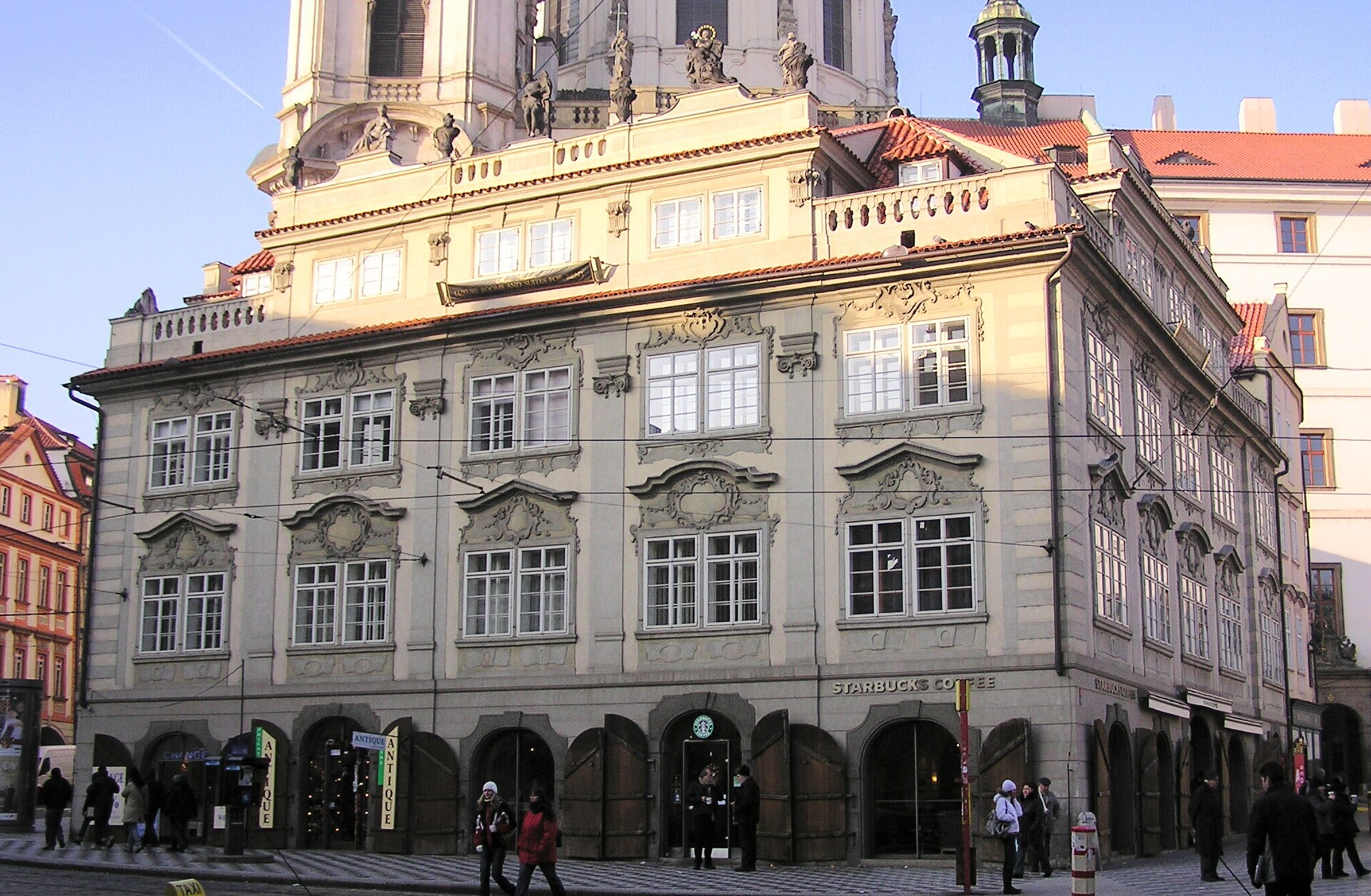
Oettingen Palace (Oettingenský palác) is a Baroque building in Prague's Lesser Town, standing on the corner of Letenská and Josefská streets, a short walk from Malá Strana Square and the Wallenstein Palace. Although the building carries the name of its 19th-century owner, construction on this plot goes back to the early 15th century.
Where does the palace's name come from?
The palace owes its current name to Prince Friedrich Oettingen-Wallerstein, who bought the property in 1841. He was the last private owner to give the building the identity it still carries today; before him the site had changed hands and purpose many times, so the name is considerably younger than the building itself.
How did the site begin?
The earliest records of construction on this plot date to 1406. The Gothic building from that period, traces of which survive in today's cellars, did not survive the Hussite Wars — it was destroyed, and the Lesser Town community only handed the empty plot over for new construction in 1456. For a time, a slaughterhouse operated in the building that replaced it, a use hard to reconcile with the palace's present, more formal character.
Who rebuilt it in Renaissance and Baroque style?
The turning point came in 1548, when the plot was acquired by Marshal Ladislav of Lobkowicz. It was Jan Václav of Lobkowicz who commissioned a Renaissance palace built on the medieval foundations. Further building phases, carried out from 1635 onward, are credited to Giovanni Marini, a builder associated with the Wallenstein family, with Campione de Bossi continuing the work between 1667 and 1669. After a fire in 1723, the palace underwent a thorough High Baroque reconstruction, attributed to František Maxmilián Kaňka, an architect then in the service of the Lobkowicz family.
What happened to the palace in the 19th and 20th centuries?
After Prince Oettingen-Wallerstein's 1841 purchase, the palace changed hands again toward the end of the century: in the 1890s it was acquired by the Lesser Town community, which set up a grammar school there. The building served an educational function for decades; once that use ended, it was converted into rental apartments. The way people moved through the palace also changed over time — a pedestrian passage was opened in 1927, and in 1948 it was turned into a passage for vehicles, while the former service passage was converted into a new pedestrian route. The building has been protected as a cultural monument since 1958.
What survives from the original interiors?
The ground-floor rooms still preserve Renaissance and Baroque vaulting, evidence of the successive building campaigns. Visitors can also find Classicist doors and Neo-Rococo stoves inside — traces of the later modernizations the building went through before it came under heritage protection.
Where exactly is the palace located?
The palace stands in Malá Strana, one of Prague's historic districts on the west bank of the Vltava, close to Malá Strana Square and Prague Castle. This is a typical setting for the city's aristocratic architecture — several other noble palaces from the same era stand within a few hundred meters.
Frequently asked questions
Where does the name Oettingenský palác come from? From Prince Friedrich Oettingen-Wallerstein, who purchased the building in 1841. Before that it was associated with other families, chiefly the Lobkowiczs.
Has the building kept its original Gothic form? No. The early-15th-century Gothic structure was destroyed during the Hussite Wars, and the palace's current appearance results from Renaissance and Baroque rebuilding carried out between the 16th and 18th centuries.
What is the palace used for today? After housing the Lesser Town grammar school, the building was converted into rental apartments.
Is the palace a protected monument? Yes, it has been protected as a cultural monument of the Czech Republic since 1958.
Nearby places

Earn badges for the places you visit
Download NextOnTrip, discover new places and check off your trails.