About this place
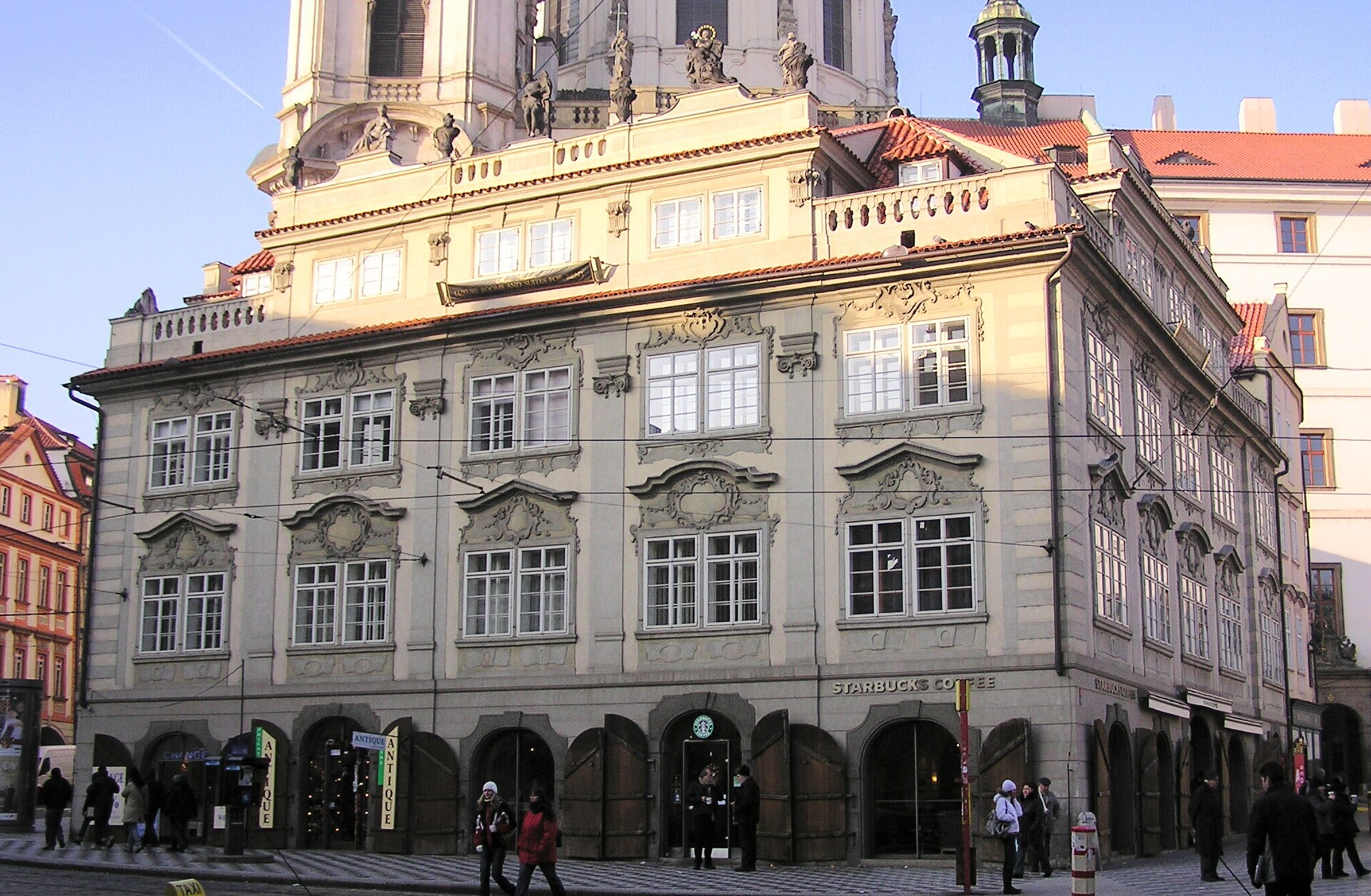
Grömlingovský palác stands in Prague's Malá Strana district, right by Malostranské náměstí, one of the most striking squares on this side of the river. Easy to walk past without noticing, it sits directly along the route most visitors take between Charles Bridge and Prague Castle, and it's one of the finer, lesser-flagged examples of Prague Rococo architecture.
How did this palace come together?
The building isn't a single original structure — it's the result of merging five separate houses dating back to Gothic, Renaissance and Baroque times. After 1786, a lawyer named Karel z Grömlingu bought up all five properties and commissioned architect Josef Jäger to rebuild them as one. The result was a unified Rococo facade that gave the whole complex the look it still has today. The palace's name comes directly from Grömling; before that, one of the original houses on the site was known as "At the Stone Table."
What does the architecture actually show?
Grömlingovský palác is considered one of the more artistically significant works of Prague Rococo. Its facade is marked by portals with scalloped upper corners, dense Rococo stucco work, and decorative rocaille and garland motifs. The roofline is topped with stone vases and sculptures, attributed to Ignác František Platzer, one of the leading sculptors of Prague's Baroque-into-Rococo period, dated to around 1787. Behind the unified 18th-century front, though, the building still carries traces of its older past — cellars and sections of wall, including vaulting, survive from the original Gothic and Renaissance houses that were absorbed into it.
How has the ground floor been used over the centuries?
The building's street level has been in commercial and hospitality use for a very long time. As early as 1740 — decades before the Rococo rebuild — there was already an establishment here selling food and drink alongside tobacco and newspapers. In 1874, that same space became Café Radetzky, first frequented by military officers and later a gathering place for figures of Czech cultural life, among them writer Jan Neruda, opera singer Ema Destinnová, and painter Jan Zrzavý.
What's in the palace today?
The space once occupied by Café Radetzky now houses a branch of Starbucks — in fact, it was the location of the chain's very first store in the Czech Republic, opened in 2008. So while the name over the door has changed, the ground floor is still doing what it has done for centuries: serving as a coffee stop for a steady flow of visitors passing through Malá Strana.
Frequently asked questions
Where exactly is Grömlingovský palác located? In Prague's Malá Strana district, right on Malostranské náměstí, in the heart of this historic neighborhood and close to the main tourist routes.
Where does the palace's name come from? From Karel z Grömlingu, the lawyer who bought up five existing houses on the site after 1786 and had them rebuilt into a single Rococo palace.
Who designed the current facade? Architect Josef Jäger, who carried out the rebuilding completed in 1786 that merged the five older buildings into one.
Can visitors go inside today? Yes — the ground floor houses a Starbucks café, occupying the same space once used by the historic Café Radetzky, which opened there in 1874.
What's the most notable architectural feature? The Rococo facade itself, with its scalloped portals, stucco ornamentation, rocaille and garland decoration, plus the stone vases and sculptures on the roofline attributed to Ignác František Platzer.
Nearby places

Earn badges for the places you visit
Download NextOnTrip, discover new places and check off your trails.