About this place
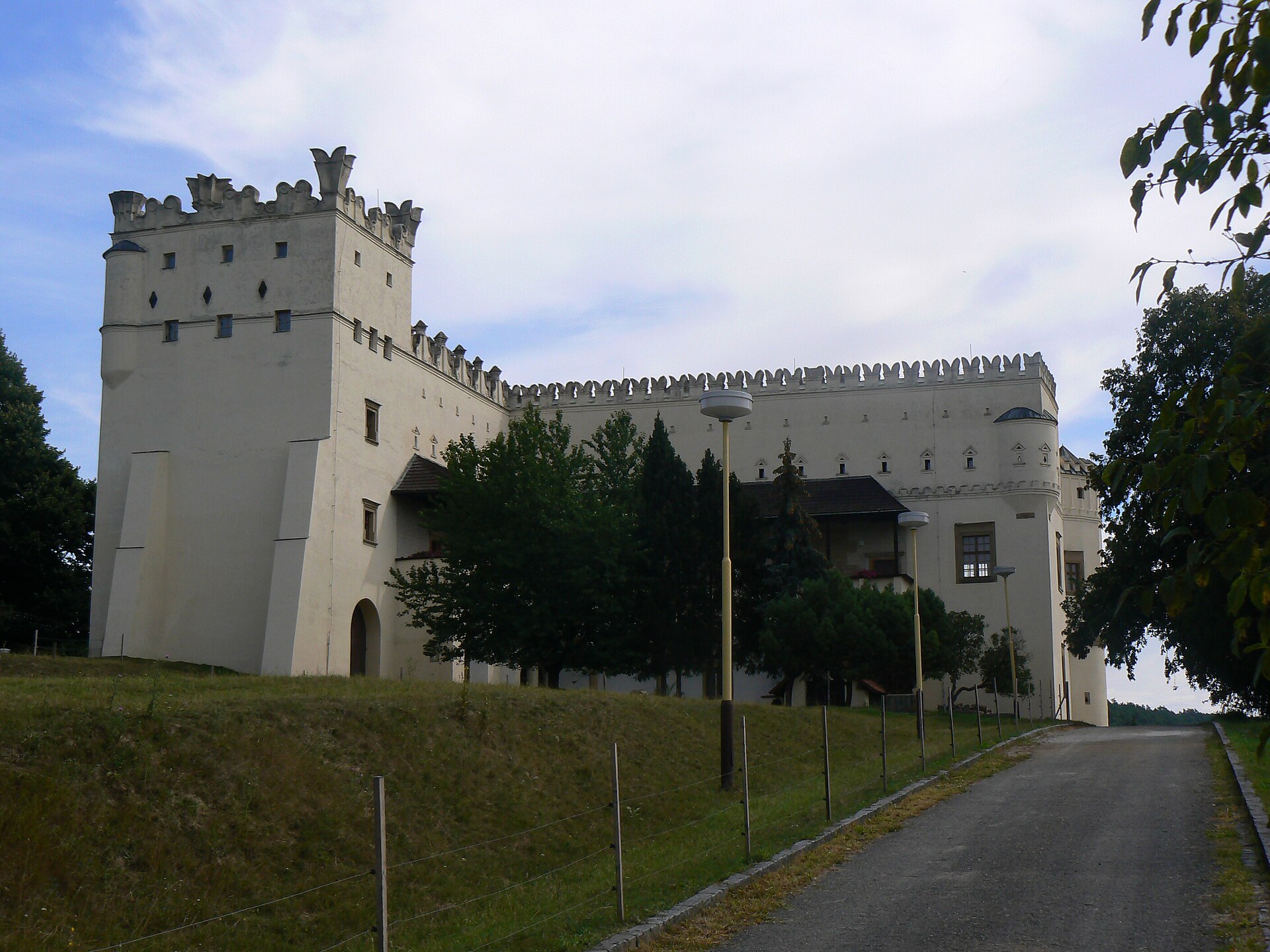
Nové Zámky is an unfinished Renaissance castle standing on a hill above the Litava River, on the eastern edge of the village of Nesovice in the Vyškov District of the South Moravian Region. Built in the second half of the sixteenth century, it was meant to become an ambitious noble residence, and its surviving two-wing, single-storey structure still bears witness to a project that was never completed.
Where is Nové Zámky located?
The castle sits on the eastern edge of Nesovice, a small village in the Vyškov District of Moravia, on a hill overlooking the Litava valley. The site was chosen deliberately for its defensive and scenic qualities, typical of Renaissance noble residences of the period.
What is the history of the castle?
Construction was launched by the knight Záviš z Víckovic, who in 1561 set out to build a new, prestigious seat to replace the more modest structures that had stood there before. A commemorative plaque above the entrance gate of the tower still records that the building was founded on the Monday before the feast of St. George in 1561.
Záviš oversaw the works until his death in 1569. His son Přemek carried the project forward, but as early as 1575 the estate was sold to the brothers Jindřich and Zikmund of Zástřizly, who soon passed it on to the Martinovský z Rozseče family. The design came from an architect of northern Italian origin, likely in contact with the builders of the nearby Bučovice chateau - a connection that shows in the stylistic similarities between the two residences.
The original plan called for a much larger, multi-wing complex inspired by the fortified Italian villa type known as "barco," blending the already-fading castello tradition with a modern, representative residence. Only a fraction of that ambition was ever built - today just the eastern wing and half of the northern wing remain standing.
Who owned the castle over the centuries?
Since its founding, Nové Zámky changed hands dozens of times, with historians counting roughly twenty different owners over the centuries. In 1798 the estate was bought by Prince Alois Josef von Liechtenstein, who folded it into the larger Bučovice dominion. That move effectively ended the castle's role as an independent noble seat, reducing it to a subordinate part of a larger estate.
After the Second World War the building lost its representative function and was put to practical use as a poultry farm and grain store. Its fortunes turned in 2002, when the Florián family reclaimed Nové Zámky through restitution and briefly opened it to the public. Faced with the high cost of repairs, the family later sold the property to its current owner, Tomáš Novotný, who took on a general reconstruction of the site.
What can visitors see today?
Nové Zámky stands out as a rare example of early Renaissance architecture in Moravia - unfinished, and precisely for that reason of particular interest to architecture enthusiasts. The castle remains privately owned and has been undergoing restoration aimed at preserving this unusual building. Public access has varied over the years depending on the state of the renovation, so visitors planning a trip should check the current status locally or through regional tourist information beforehand.
Frequently asked questions
Where exactly is Nové Zámky located? On the eastern edge of the village of Nesovice, in the Vyškov District of the South Moravian Region, on a hill above the Litava River.
When was the castle built? Construction began in 1561 on the initiative of the knight Záviš z Víckovic and continued until his death in 1569, but the castle was never completed according to its original design.
Who designed the castle? The design came from an architect of northern Italian origin, likely in contact with the builders of the nearby Bučovice chateau.
Why was the castle left unfinished? The founder's death in 1569, followed by a series of ownership changes, interrupted the original multi-wing plan - only a portion of the intended building survives today.
Can the castle be visited today? The site is privately owned and has been closed to the public at various times during renovation work, so it is worth checking current access before planning a visit.
Nearby places

Earn badges for the places you visit
Download NextOnTrip, discover new places and check off your trails.