About this place
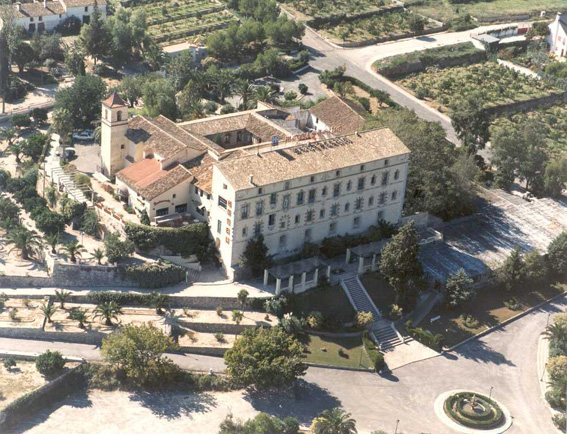
Monestir de Santa Maria d'Aigües Vives is a former Augustinian monastery in the La Barraca d'Aigües Vives district on the outskirts of Carcaixent, in the Valencian Community. Listed as a Bien de Interés Cultural, the building blends Renaissance and Baroque architecture with a history stretching back to the 13th century, making it one of the region's most distinctive heritage sites.
Where does this place come from?
The religious community at Aigües Vives dates back to the 13th century, though the structure visitors see today was largely built during the 16th and 17th centuries. The north wing was added later, in the 18th century, and its slightly different architectural details still mark it out from the older sections. The monastery belonged to the Augustinian order, whose monks safeguarded the image of the Virgin of Aigües Vives — patron of the local population, venerated for generations by residents of Carcaixent and neighboring towns.
The monastery's fortunes changed dramatically in the mid-19th century. Mendizábal's disentailment — a sweeping secularization of Church property across Spain — forced the monks to abandon the building, which then passed into private hands, eventually belonging to the barons of Casanova, who used it as a country residence. Another turning point came in 1977, when the property was acquired and renovated by Antonio Vidal Bellver, a photographer and businessman from Carcaixent, who converted it into a residential hotel.
What will you see there?
The main draw is the architecture itself — the contrast between the sober Renaissance volumes and the more ornate Baroque elements added in later centuries. The complex retains a layout typical of large monastic communities: a church, cloisters, and residential wings, with the 18th-century north wing standing out among them. The surroundings, set within the Valencian huerta landscape and its characteristic orange groves, give the monastery a quiet, rural feel despite its proximity to larger towns in the region.
It's worth knowing that the building has faced ongoing deterioration in recent years, and regional authorities have made efforts to acquire and restore it. Before visiting, it's a good idea to check the current access status, as parts of the building may be closed or undergoing conservation work.
How to get there and when to visit?
Monestir de Santa Maria d'Aigües Vives sits on the outskirts of Carcaixent, a town in the province of Valencia well connected to both Valencia city and nearby Alzira. The easiest way to arrive is by car — local roads lead directly to the vicinity of the monastery, and parking nearby is generally straightforward outside of holiday periods.
Spring and autumn are the best times to visit, when temperatures across the Valencia region are milder and the orange groves surrounding the monastery look their most picturesque, especially during the early spring blossom. Summers can bring intense heat, worth factoring in if you plan a longer walk around the complex.
Frequently asked questions
Is the monastery open to visitors? Access can be limited due to the building's condition and ongoing restoration efforts — it's best to check current opening hours and visiting rules on-site or with the local tourist information office before your trip.
What architectural style does the building represent? The monastery combines Renaissance and Baroque elements, with the main structure built in the 16th and 17th centuries and the north wing added in the 18th century.
Why is the monastery significant to the people of Carcaixent? For centuries it housed the image of the Virgin of Aigües Vives, patron of the local population, which gave the site major religious and cultural importance for the region.
Are there other attractions nearby worth visiting? Yes — Carcaixent and neighboring Alzira offer historic town centers and a landscape of typical Valencian huerta with numerous citrus farms that can be explored alongside a visit to the monastery.
Nearby places

Earn badges for the places you visit
Download NextOnTrip, discover new places and check off your trails.