About this place
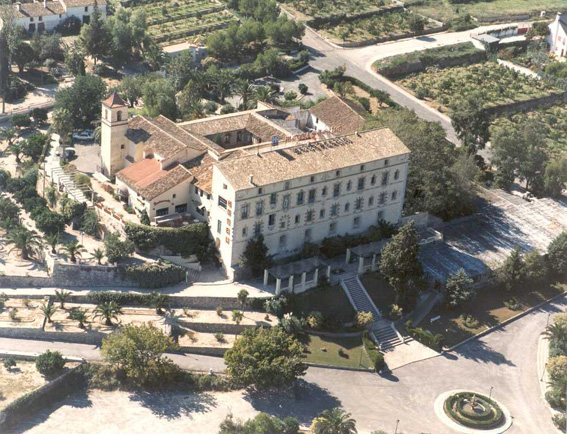
Ermita dels Sants de la Pedra is a small hilltop chapel above Cullera, rising over a sea of surrounding rice paddies and visible from much of the flat plain below. It combines the role of a rural sanctuary with that of a small museum dedicated to rice farming, making it one of the more unusual stops in the Valencia region.
How do you get there?
The chapel sits on a hill just off the road connecting Cullera with the Albufera Natural Park, a few kilometers from the town center. Driving or cycling is the easiest option — the access road, known locally as Camino de la Ermita dels Sants de la Pedra, ends at a small parking area at the base of the hill. From there, a short but steep footpath leads up to the hermitage itself. The climb can also be folded into a longer walk through the hills around Cullera, since the local trail network is well marked and popular with hikers and cyclists alike.
What will you see there?
The current building is the result of joining two originally separate structures: an older section, now used as the former hermit's residence, and a newer wing added in later centuries. The earliest construction dates back to the 13th century, with expansion work carried out over subsequent periods, including the 17th century — a history still visible in the differing architectural styles between the two parts of the building.
Inside, the hermitage now houses the Rice Museum (Museu de l'Arròs), which traces the history and traditional process of rice cultivation, a crop deeply tied to the lands surrounding the Albufera lagoon. The exhibition displays farming tools and working methods used in the paddies, along with the economic role rice has played for local communities over the centuries.
Right next to the chapel is the Mirador Sants de la Pedra viewpoint, offering a sweeping panorama over the rice fields, irrigation channels, and, in the distance, the waters of the Albufera. It is one of the best spots in the area to appreciate the scale and geometry of the paddies that define this stretch of coastline.
When should you visit?
The site is worth a visit at any time of year, though the surrounding landscape changes with the seasons — vivid green during spring and summer growth, then shifting to golden and brown tones around harvest time. A particularly notable date is July 26th, when the hermitage hosts its annual romería, a pilgrimage honoring the patron saints Abdon and Senen, protectors of Valencian farmers. On that day the site comes alive with local tradition, music, and custom, giving visitors a rare glimpse of living regional culture.
Because the final approach is steep and there is little shade along the way, it is best to avoid visiting during the hottest hours of a summer afternoon — morning or late afternoon light also tends to make for better photos of the panorama.
Frequently asked questions
Is there an entrance fee for the Rice Museum? The museum operates as a local cultural facility attached to the hermitage; opening hours and admission conditions are worth checking directly before a visit, as they can vary by season.
Is the walk up the hill difficult? The stretch from the parking area to the chapel is short but steep, so visitors with limited mobility should plan accordingly.
Who is the hermitage dedicated to? Saints Abdon and Senen, patrons of farmers in the Valencia region, honored every year during the July romería.
Is it worth combining with a trip to the Albufera? Yes — given its proximity to the Albufera Natural Park, the viewpoint by the hermitage makes a natural addition to a longer outing through the surrounding rice fields and canals.
Nearby places

Earn badges for the places you visit
Download NextOnTrip, discover new places and check off your trails.