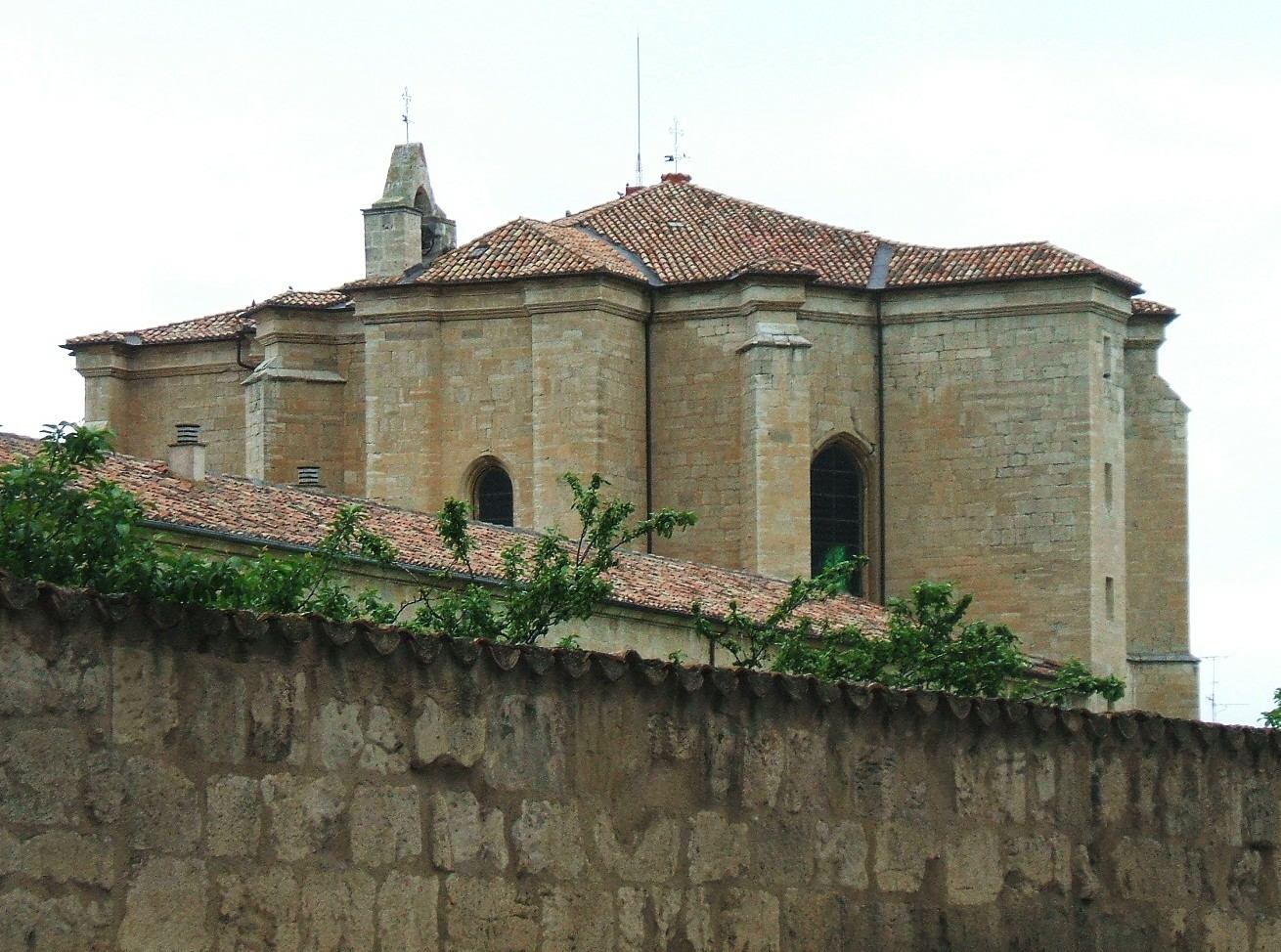
About this place
The Monastery of Santa Clara in Briviesca is one of the standout historic complexes in this Castilian town in the province of Burgos, blending Isabelline Gothic and Renaissance architecture into a monument that still carries the weight of nearly five centuries of religious life.
How did the monastery come to be?
The story predates the building itself. As early as the start of the 15th century, a community of religious women was already active in Briviesca. In 1438 Pope Eugene IV granted approval to formalize their status canonically, but a lack of funds to build a proper convent forced the community to join the Third Order of Saint Francis in 1445. The turning point came through the efforts of the Franciscan friar Lope de Salazar y Salinas: in 1460, Pope Pius II issued a bull elevating the sisters to the status of Poor Clares, part of the Second Franciscan Order.
Construction of the actual monastery only began decades later. In 1511, Mencía de Velasco — one of six daughters of the Constables of Castile, Pedro Fernández III de Velasco and Mencía de Mendoza — commissioned the building. The following year, in 1512, the first stone was laid on land she had purchased in the Valdeprado valley. Her death in 1523 briefly halted progress, but work on the monastic complex resumed in earnest in 1524.
What can you see there today?
The monumental ensemble of Santa Clara brings together several connected structures: the convent itself, its church, a former hospital, and the so-called casa solariega, an ancestral manor house. The entire complex dates from the 16th century and mixes late Isabelline Gothic with Renaissance elements, visible both in the massing of the buildings and in their decorative detail.
The true highlight inside the church is the Renaissance high altarpiece, crafted between 1551 and 1569. It's regarded as one of the finest works of art in Briviesca and is usually what draws visitors most interested in tracing the artistic patronage of Castile's noble families.
The site's historical importance was formally recognized in 1931, when the conventual church was declared a national historic-artistic monument, a status that today makes it a protected asset of cultural interest (Bien de Interés Cultural).
How do you get there?
Briviesca sits in the province of Burgos, in northern Castile, well connected by national roads to both Burgos and Logroño. The monastery lies within the town itself, so once you arrive the easiest way to see it is on foot, as part of a walk through Briviesca's historic centre.
When is the best time to visit?
The monastery and its surrounding buildings can be visited year-round, but it's worth knowing about the site's living history: the community of Poor Clares occupied the monastery continuously until 2005, when the last eight sisters, by then elderly, relocated to the monastery of the Ascension in Lerma. That nearly five-hundred-year continuity of religious use makes the site a rare witness to monastic life in Castile.
Frequently asked questions
Who founded the Monastery of Santa Clara in Briviesca? Mencía de Velasco, daughter of the Constables of Castile, commissioned the monastery in 1511 and purchased the land for it in the Valdeprado valley.
What architectural style does the monastery represent? The complex combines Isabelline Gothic with Renaissance elements, visible in both the building structures and their interior decoration.
What is the most valuable feature inside? The church's Renaissance high altarpiece, made between 1551 and 1569, considered one of the most important works of art in Briviesca.
Is the monastery still an active religious community? No — the Poor Clares left in 2005 for the monastery in Lerma, though the building has held protected cultural-heritage status since 1931.
Nearby places

Earn badges for the places you visit
Download NextOnTrip, discover new places and check off your trails.