About this place
San Salvador de Asma Monastery stands right next to Chantada, in the heart of Galicia's Ribeira Sacra region. Only the church has survived from the original complex, but the site's history stretches back to the 9th century, making it a rewarding stop for anyone exploring the canyons carved by the Miño river.
What is the history behind the monastery?
Its foundation is credited to the counts Ero Ordóñez and Adosinda, a fact known from a document written in 1073 by their great-granddaughter. Some architectural elements of the church, however, suggest the building itself may predate that account. In its early years, San Salvador de Asma was a family-run "double" monastery, housing both nuns and monks together — a common arrangement in early medieval Galicia.
The community likely adopted the Rule of Saint Benedict around 1100, though it may have kept its double character for some time afterward. By the 12th century, Cluniac influence was already shaping daily life within its walls, and it remained so until the monastery's eventual end. For centuries, the monastery was not merely a place of worship but the seat of real territorial power, holding civil and criminal jurisdiction over the surrounding lands.
The mid-14th century brought a marked decline, with the community struggling through economic hardship. Recovery came only at the end of the 15th century, when a reform placed the monastery under the Congregation of San Benito de Valladolid. Monastic life finally ended in 1835, swept away by the Spanish confiscation (desamortización) that dissolved church property across the country.
What can you see there today?
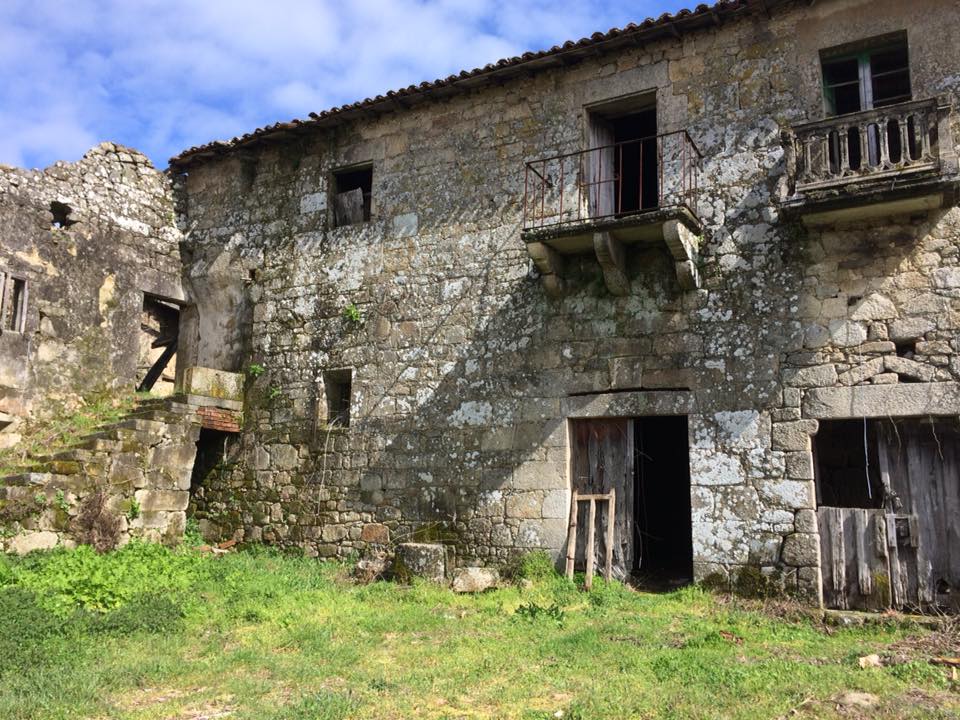
The main surviving structure is the monastery church — a modest stone building typical of Galician Romanesque religious architecture, though it bears the marks of later alterations reflecting the site's turbulent history. It offers a tangible example of how small monastic communities once shaped both the landscape and local power structures long before today's administrative borders existed.
The site pairs naturally with a visit to Chantada and, more broadly, to Ribeira Sacra — a region famous for its terraced vineyards, the canyons of the Miño and Sil rivers, and a network of monasteries that once governed this territory. San Salvador de Asma makes a fitting stop on such a route, especially for travelers interested in the history of Galician monasticism.
How do you get there and when should you visit?
The site sits right by Chantada, a town in Lugo province, and is best reached by car — the most practical way to explore Ribeira Sacra's scattered landmarks. Spring and early autumn are the best times to visit, when temperatures are mild and the surrounding hills and vineyards look their most picturesque. Summers in the region can get hot, while in winter some of the roads to more remote viewpoints may be less comfortable to drive.
Frequently asked questions
Is San Salvador de Asma still an active monastery? No — monastic life ended in 1835 as a result of the Spanish confiscation. Today, mainly the church remains.
Who founded the monastery? Its foundation is attributed to counts Ero Ordóñez and Adosinda, based on a document written in 1073 by their great-granddaughter.
What was a "double monastery"? It was a community where nuns and monks lived and worshipped together, usually in separate quarters — a practice found in early medieval Galicia.
What else is worth seeing nearby? Combine your visit with Chantada and the wider Ribeira Sacra region — the Miño and Sil river canyons, terraced vineyards, and other historic monasteries in the area.
Nearby places
-

Mosteiro de San Paio de Diomondi
O Saviñao
-
Mosteiro de Santo Estevo de Atán
Pantón
-
Monastery of San Miguel de Eiré
Pantón
-
Convent of San Martiño de Pantón
O Castro de Ferreira
-
Monastery of San Salvador, Ferreira de Pantón
O Castro de Ferreira
-
Monastery of Santa María la Real of Oseira
San Cristovo de Cea
Earn badges for the places you visit
Download NextOnTrip, discover new places and check off your trails.