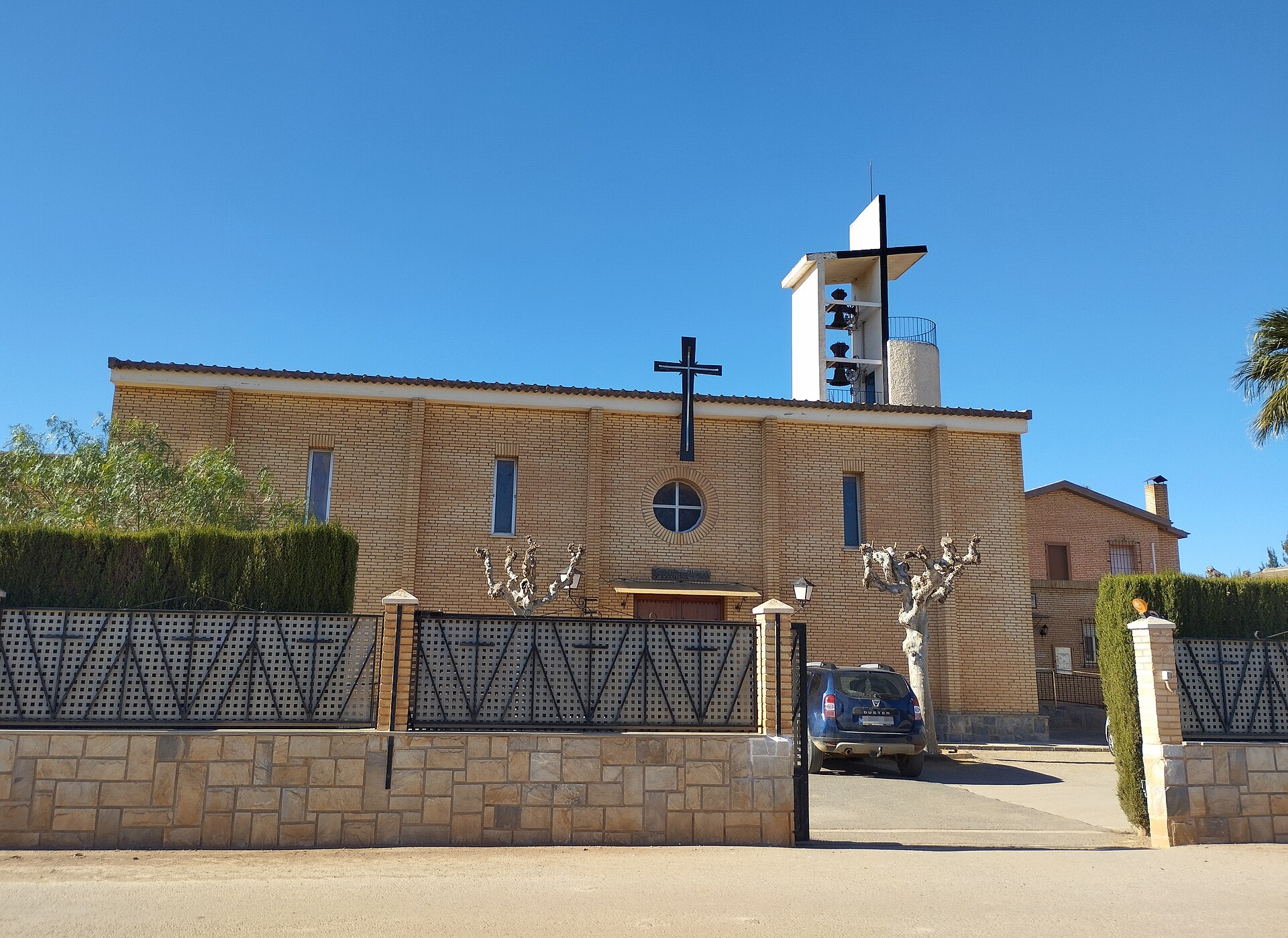
About this place
The Monastery of Nuestra Señora de la Paz is a Cistercian community of the Strict Observance, better known as Trappist nuns, located in the La Palma district of Cartagena, in Spain's Murcia region. It's a place of quiet and contemplation rather than a headline sight, offering visitors a different side of a city best known for its Roman ruins and fortresses.
How did this community come to be?
The monastery was founded by the Cistercian Abbey of Santa María de San José in Alloz, Navarre, which set out to establish a new community in southern Spain. The decisive factor was a donation from Josefa Atienza Sánchez, a Murcian woman who had dreamed since her youth of supporting exactly this kind of foundation. Thanks to her contribution, the nuns settled near Los Vidales, in the Campo de Cartagena area. The monastery was inaugurated on 1 January 1977, and its adjoining church was consecrated on 9 April 1978.
What will you actually see?
This isn't a monument in the usual sightseeing sense — it's a living, active religious community, so a visit feels different from touring a museum piece. Expect the plain, functional architecture typical of Trappist houses: a simple monastery church and outbuildings set against the dry, stony landscape of Campo de Cartagena. The mood is subdued and reflective — this is a place to experience slowly rather than photograph quickly.
The nuns also run a small craft workshop, hand-painting ceramics and occasionally baking pastries. These are sometimes sold directly at the monastery, making for a more meaningful souvenir than the usual trinkets from downtown Cartagena.
How to get there and when to visit
The monastery sits at Pasaje los Vidales 20, in the La Palma district, a short drive from central Cartagena — a car is the most practical option, since the surrounding area is rural and residential rather than a tourist strip. It's worth checking visiting hours for the church in advance, since the community follows a monastic schedule rather than standard tourist opening times.
Murcia's summers run hot, so spring (March–May) and autumn (September–November) offer the most comfortable conditions for a visit, with the dry Campo de Cartagena landscape looking its best in the soft light of morning or late afternoon.
Who is this for?
This stop suits travelers looking for a quiet moment on the road, or anyone curious about monastic life and religious architecture away from the main tourist circuit. It isn't a two-hour guided-tour attraction — think of it as a brief, contemplative pause while exploring the area around Cartagena.
Frequently asked questions
Can visitors enter the monastery? The church is open to visitors during set hours, since this is an active religious community rather than a museum — expect some limitations tied to the nuns' schedule of prayer.
Which religious order do the nuns belong to? They are Cistercian nuns of the Strict Observance (Trappists), a community founded by the Abbey of Santa María de San José in Alloz, Navarre.
Can you buy anything from the sisters? Yes — the nuns hand-paint ceramics and occasionally make pastries, both sometimes available for purchase at the monastery.
How far is it from central Cartagena? The monastery is in the La Palma district on the outskirts of Cartagena, surrounded by the Campo de Cartagena countryside — a car is the easiest way to reach it.
Nearby places

Earn badges for the places you visit
Download NextOnTrip, discover new places and check off your trails.