About this place
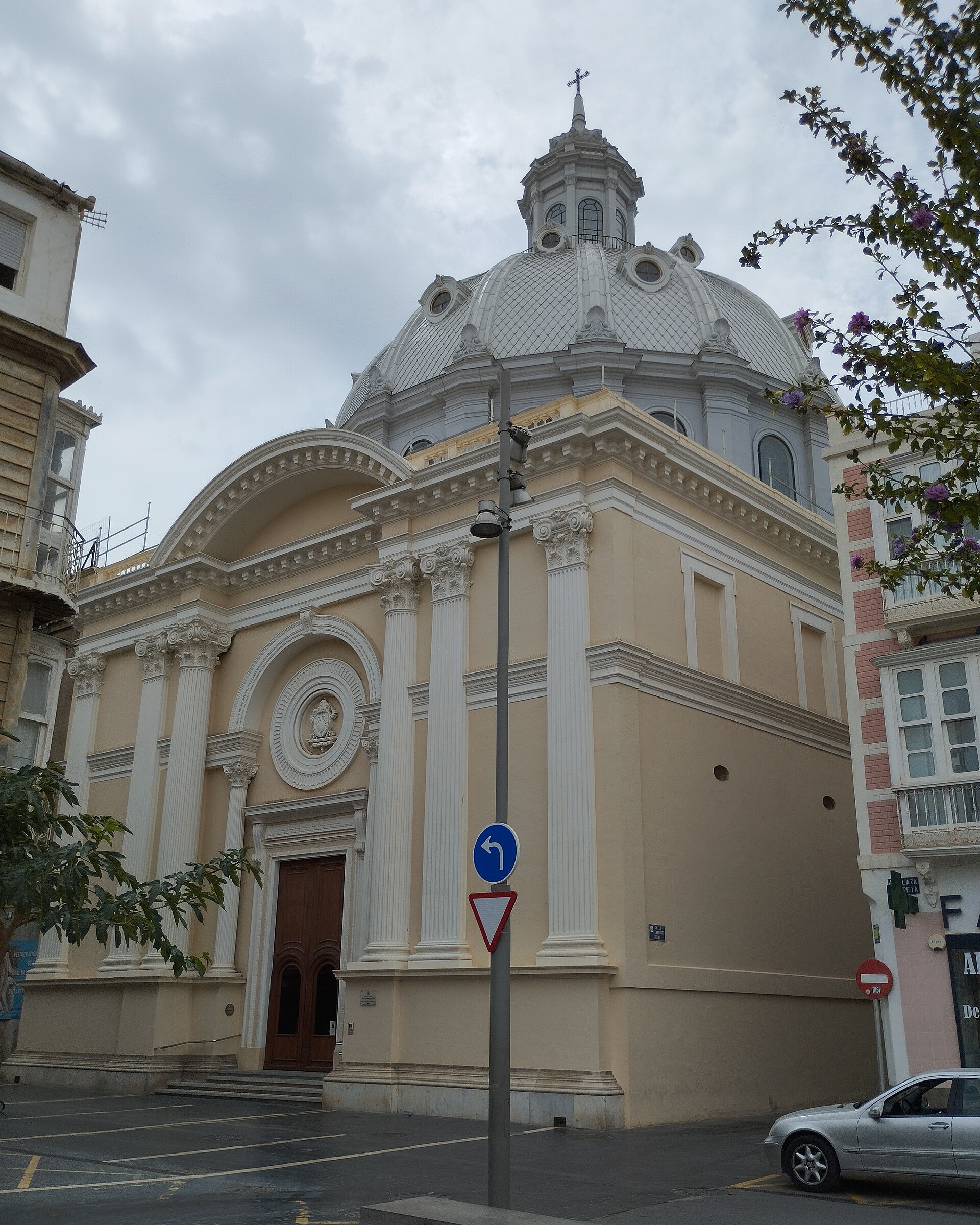
The Church of Santo Domingo stands on Calle Mayor in Cartagena, in Spain's Murcia region. From the outside it might look like just another old-town chapel, but its story stretches back to the late 16th century and links a mendicant religious order, a Holy Week brotherhood, and the Spanish Navy.
How did the church come to be?
The building began life as the church attached to the convent of San Isidoro, raised in 1580 to house the Dominican friars who had newly settled in Cartagena. The parish's first priest was Fray Bartolomé de Torquemada. Over the following centuries the complex was altered and repurposed repeatedly, and traces of those different eras are still visible in the structure today.
What role has it played in the city's life?
In 1690 the Marrajos brotherhood built its own chapel inside the church and made it their headquarters — and it's still from here that the brotherhood's Good Friday procession sets out, one of the centerpieces of Cartagena's Holy Week. The church has therefore long been more than a place of worship: it's a hub of local religious tradition tied to Semana Santa.
The building's history hasn't always been peaceful. In 1823, during the intervention of the so-called Hundred Thousand Sons of Saint Louis in support of Spanish absolutism, French troops used it as a stable. A little over a decade later, on 25 July 1835, a royal decree ordering the suppression of monastic property affected the convent as well.
How did the church end up with the Navy?
The turning point came on 21 July 1875, when the Diocese of Cartagena handed the church over to the Spanish Navy, which wanted a temple of its own for religious ceremonies. Since then the building has functioned as a garrison church (iglesia castrense) under the Military Ordinariate. Its last major restoration took place in 1973, and it still serves its military role today.
What's worth seeing inside?
Visitors should look out for the Marrajos brotherhood's chapel — the starting point of the Good Friday procession that draws crowds of locals and tourists every year. The building itself is modest compared with some of Cartagena's grander monuments, but it carries the marks of centuries of change: from Dominican convent, through suppression and wartime damage, to its current life as a naval garrison church.
How do you get there?
The church sits on Calle Mayor, Cartagena's main representative street, right in the heart of the historic center. It's an easy stop on foot — other old-town sights, such as the Roman theatre and the harbor, are all within a few minutes' walk. The simplest approach is on foot from the port or the city's main square.
When's the best time to visit?
The most memorable time to see the church "in action" is Holy Week (Semana Santa), when the Good Friday procession sets out from the Marrajos chapel — one of the most recognizable religious traditions in the Murcia region. Outside that period, the church is a quiet garrison place of worship, easily worked into a walking tour of the old town.
Frequently asked questions
Is the Church of Santo Domingo open to visitors? Yes. Although it's a garrison church under Navy administration, it can be visited during standard church opening hours — it's worth checking the current schedule locally before you go.
Why is it called a "castrense" church? The term means the church falls under the Military Ordinariate, the church structure dedicated to the armed forces — in this case the Spanish Navy, which took over the building in 1875.
What is the Marrajos procession? It's the Good Friday procession organized by the Marrajos brotherhood, which has had its chapel inside the Church of Santo Domingo since 1690. It's one of the oldest and most highly regarded Holy Week traditions in Cartagena.
Is this the same Santo Domingo church as the one in Cartagena, Colombia? No — this is a separate church, located in the Spanish city of Cartagena in the Murcia region, with its own history tied to the Dominican order and the Spanish Navy.
Nearby places

Earn badges for the places you visit
Download NextOnTrip, discover new places and check off your trails.