- Sacred Monuments
- Religious monuments
Monasterio de Santa María de Valdeiglesias
About this place
The Monasterio de Santa María de Valdeiglesias is a medieval Cistercian abbey standing in the valley of the Alberche river, in the municipality of Pelayos de la Presa in the Community of Madrid, close to the Pantano de San Juan reservoir. Today it survives mainly as an atmospheric ruin, but the site carries more than eight centuries of history and ranks among the oldest religious complexes in the whole Madrid region.
Where did the site come from?
Long before the monastery took its present form, the Alberche valley was dotted with small Mozarabic-era hermitages scattered along the river, one of which was dedicated to the Holy Cross. Local tradition ties these earliest beginnings to a nobleman named Teodomiro, said to have given up court life under King Witiza, around the turn of the 8th century, to settle in the valley as a hermit alongside other noblemen seeking seclusion.
When and how was the monastery founded?
The formal abbey was established in 1150 by King Alfonso VII, who brought together twelve scattered hermitages of the valley into a single religious community. The new foundation followed the Benedictine rule and was placed under the patronage of the Virgin Mary, which is where the name Santa María comes from. In 1177, however, the community switched allegiance to the Cistercian order: monks arrived from the abbey of La Espina, which became its motherhouse from that point on, bringing with it the Cistercian rule and the building conventions typical of the order.
What does the building itself look like?
Work on the monastery church is thought to have begun around 1180. Three original apses survive today, datable to around 1200, following a layout typical of Cistercian chancels of the period: the central apse is semicircular in plan, while the two flanking apses end externally in a flat wall. This scheme appears in a number of other Cistercian foundations across the Iberian Peninsula, placing Valdeiglesias within the wider pattern of Cistercian building at the turn of the 12th and 13th centuries.
What happened after the monastery's centuries of activity?
The community's long history came to an end in 1836, when the government's Mendizábal disentailment programme forced the secularisation of church property across Spain. The monks left the abbey at that point, and the abandoned complex gradually fell into ruin over the following decades, losing its roof and parts of its structure.
What does it look like today, and who looks after it?
A turning point came in 2004, when the site's owner donated it to the municipality of Pelayos de la Presa. Since then the ruins have been managed by the Fundación Monasterio Santa María la Real de Valdeiglesias, which carries out conservation work and keeps the site open to visitors as a surviving example of Romanesque-Cistercian architecture set in the Alberche valley.
Frequently asked questions
Where exactly is the monastery located? In the municipality of Pelayos de la Presa, in the Community of Madrid, in the Alberche river valley near the Pantano de San Juan reservoir.
Who founded the monastery, and when? King Alfonso VII founded it in 1150, uniting twelve existing hermitages into a single monastic community.
Which religious order lived there? The community initially followed the Benedictine rule, then joined the Cistercian order in 1177, when monks arrived from the abbey of La Espina.
Why is the monastery in ruins today? The buildings were abandoned after 1836, when the Mendizábal disentailment forced the monks out and began a long process of decay.
Can visitors see the ruins today? Yes. Since 2004 the site has belonged to the municipality of Pelayos de la Presa, and a local foundation manages the ruins and keeps them open to visitors.
Nearby places
-

Church of San Martín Obispo, San Martín de Valdeiglesias
San Martín de Valdeiglesias
-
Church of Our Lady of the Star, Navalagamella
Navalagamella
-
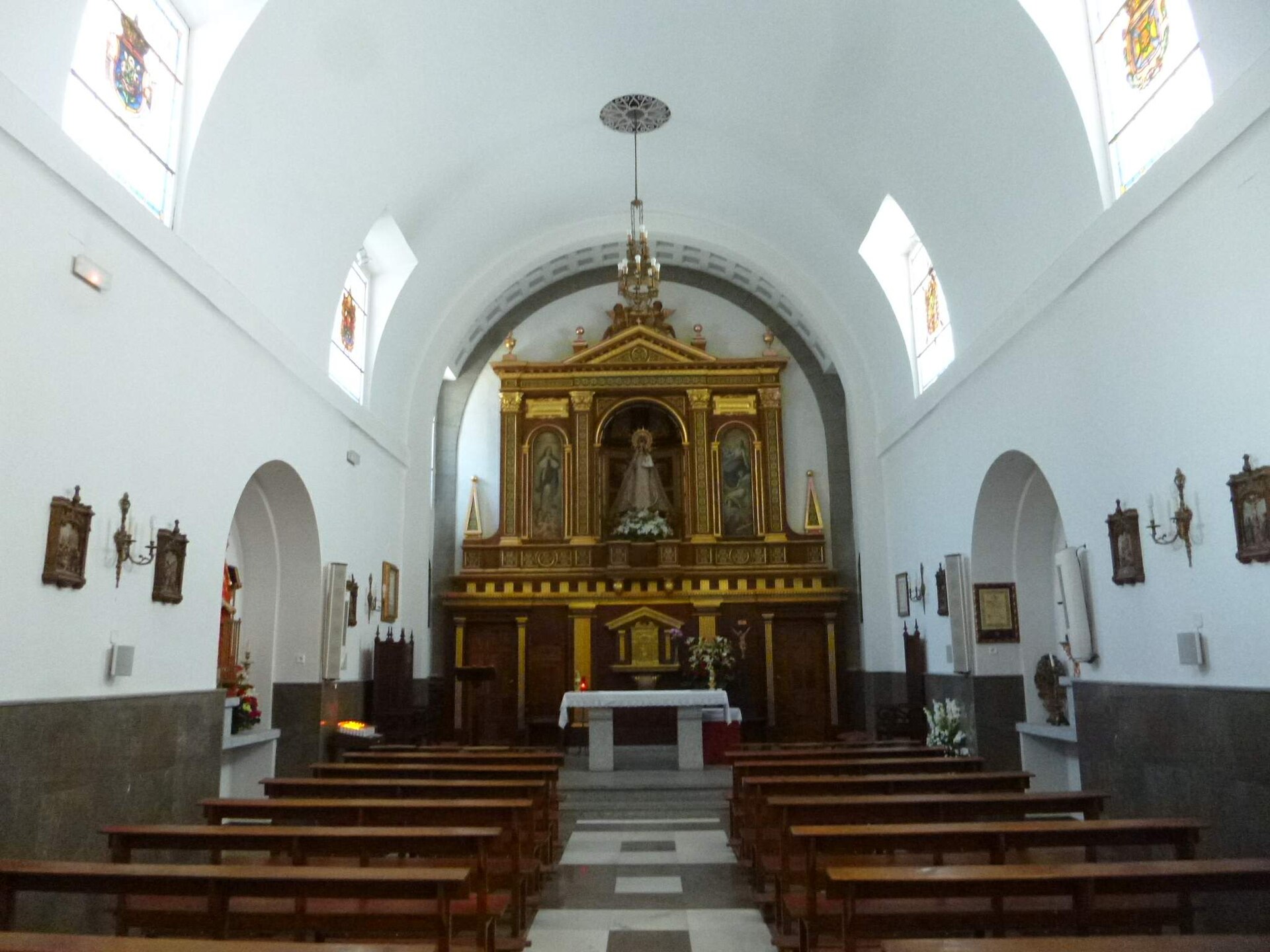
Sanctuary of Nuestra Señora de Gracia, San Lorenzo de El Escorial
San Lorenzo de El Escorial
-
Church of Santa María de los Alcázares, Maqueda
Maqueda
-
Cementerio San Lorenzo de El Escorial
San Lorenzo de El Escorial
-
Convent of Santa Isabel, El Espinar
El Espinar
Earn badges for the places you visit
Download NextOnTrip, discover new places and check off your trails.